
Simvastatin and Grapefruit: What You Need to Know About the Dangerous Interaction
When you take simvastatin, a cholesterol-lowering statin medication used to reduce LDL and prevent heart disease. Also known as Zocor, it works by blocking an enzyme your liver uses to make cholesterol. But if you eat grapefruit or drink grapefruit juice while on simvastatin, your body can’t break down the drug properly. This causes dangerous levels to build up in your blood—leading to muscle breakdown, kidney damage, or even liver failure.
The problem isn’t just grapefruit—it’s how it interferes with an enzyme called CYP3A4 in your gut. This enzyme normally helps clear simvastatin from your system. Grapefruit shuts it down. One glass of juice can mess with your body’s ability to process the drug for over 24 hours. That’s why even taking simvastatin at night and eating grapefruit in the morning isn’t safe. This isn’t a myth or a warning you can ignore—it’s backed by real cases of rhabdomyolysis, a condition where muscle tissue breaks down and floods your bloodstream with toxins.
Not all statins react this way. Atorvastatin (Lipitor) has a smaller risk. Rosuvastatin (Crestor) and pravastatin (Pravachol) are mostly unaffected. But simvastatin? It’s one of the worst offenders. The FDA and Health Canada have both issued strong warnings. If you’re on simvastatin, your pharmacist should have flagged this. If they didn’t, ask. And don’t assume "a little" grapefruit is okay. Even a single grapefruit can trigger a reaction.
Some people think switching to a different statin solves everything. But that’s not always the answer. Your doctor needs to check your kidney function, muscle enzymes, and other meds you’re taking. Many people on simvastatin also take blood pressure pills or anti-inflammatories—some of which also interact with grapefruit. It’s not just about fruit. It’s about your whole medication picture.
What about orange juice? Sweet oranges are fine. Seville oranges, pomelos, and tangelos? Avoid those—they act like grapefruit. And don’t trust labels that say "grapefruit-free" on supplements. Some herbal products still contain it. Read every ingredient list.
If you’ve been eating grapefruit for years and just found out this is risky, don’t panic. Stop the fruit right away. Talk to your doctor about switching to a safer statin or adjusting your dose. They might test your muscle enzymes or check your liver function. Most people feel better within days after cutting grapefruit out.
Below, you’ll find real stories and science-backed advice from people who’ve dealt with this exact issue. Some had muscle pain so bad they couldn’t walk. Others nearly ended up in the hospital. These aren’t hypotheticals—they’re lived experiences. You’ll also find clear guides on how to read your prescription label, spot hidden grapefruit in products, and choose alternatives that won’t put your health at risk. This isn’t about fear. It’s about control. You deserve to manage your cholesterol without risking your body.
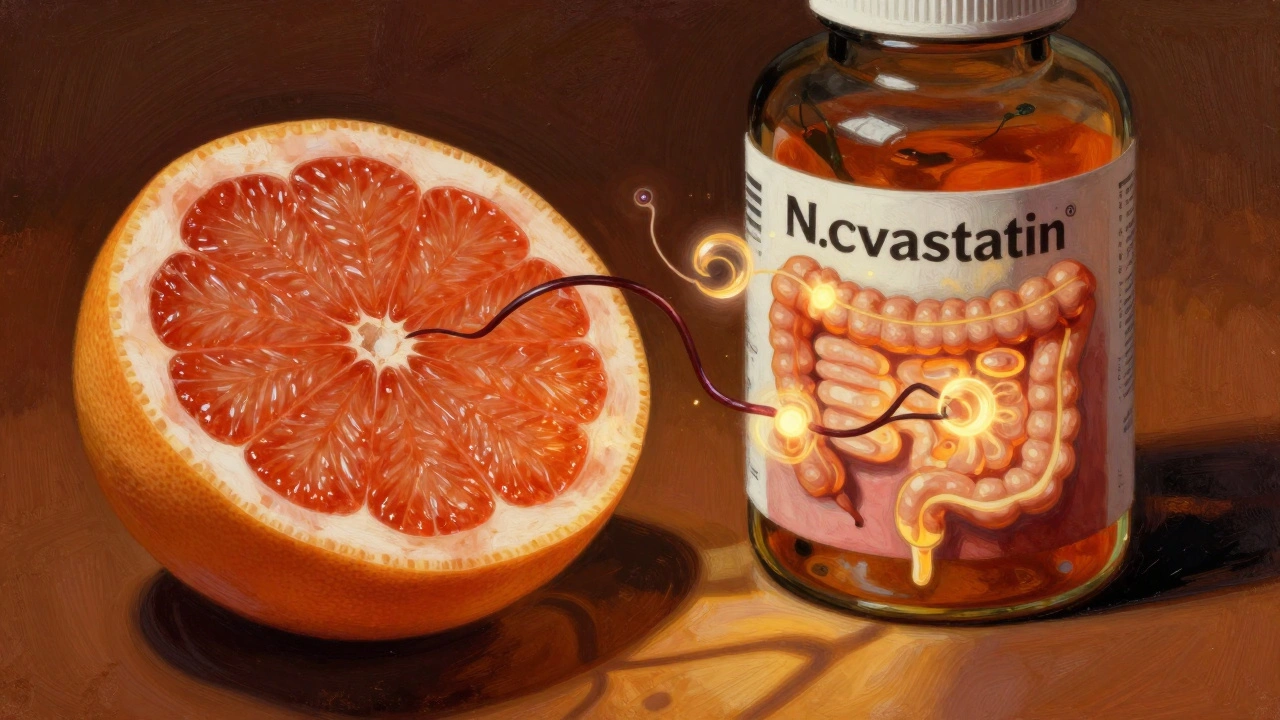
Grapefruit and Statins: How Much Grapefruit Is Safe to Eat with Your Cholesterol Medication
Grapefruit can dangerously raise statin levels in your blood, increasing muscle damage risk. Learn which statins are affected, how little grapefruit is risky, and safer alternatives.
Read more