
Statin-Grapefruit Safety Checker
If you take a statin for high cholesterol and love grapefruit, you’re not alone. But here’s the thing: grapefruit can turn your safe, everyday dose of statin into a risky one - even if you only eat half a fruit or drink one glass of juice. It’s not about being careful. It’s about knowing which statins are dangerous with grapefruit, how little it takes to cause harm, and what to do instead.
Why Grapefruit and Statins Don’t Mix
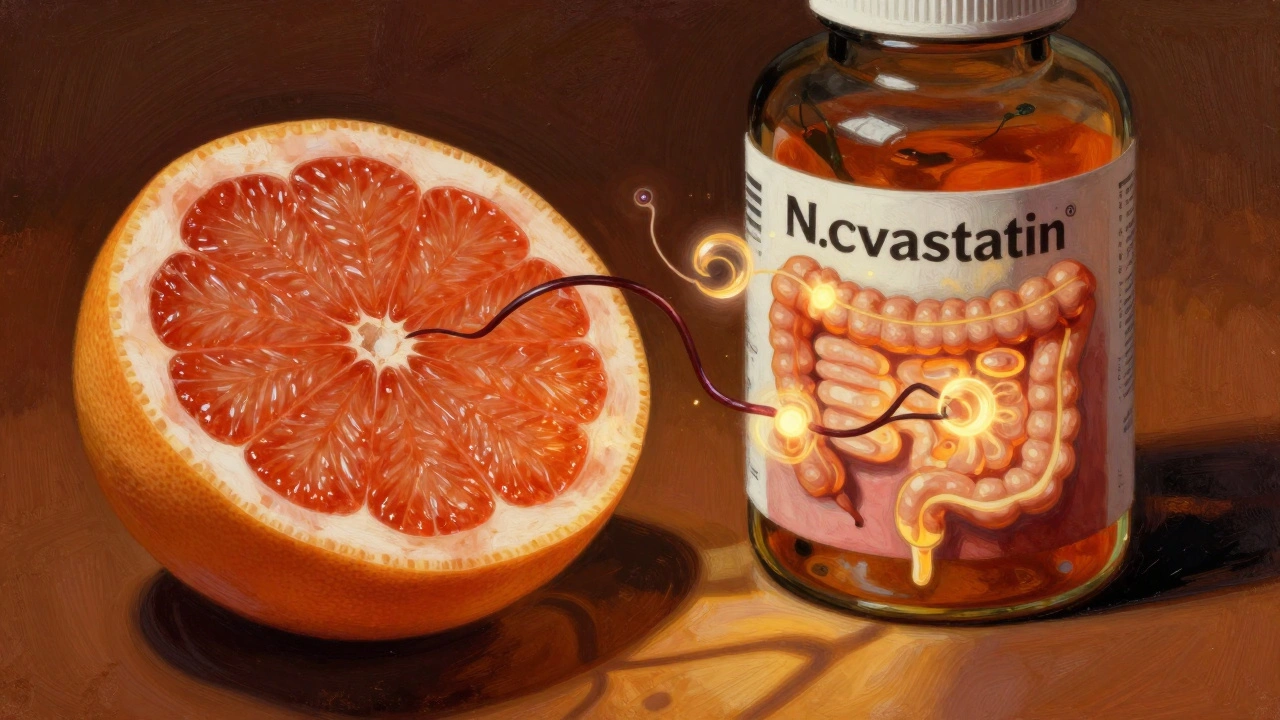
Grapefruit doesn’t just taste tangy - it’s packed with chemicals called furanocoumarins, mainly bergamottin and 6',7'-dihydroxybergamottin. These compounds shut down an enzyme in your gut called CYP3A4. That enzyme is supposed to break down certain statins before they enter your bloodstream. When it’s blocked, your body absorbs way more of the drug than it should.That might sound like a good thing - more drug means better cholesterol control, right? Wrong. Too much statin in your blood doesn’t improve results. It just raises your risk of muscle damage. In rare but serious cases, it can lead to rhabdomyolysis - a condition where muscle tissue breaks down and floods your kidneys with toxic proteins. That can cause kidney failure. It’s rare, but it happens.
Which Statins Are Safe? Which Are Not?
Not all statins react the same way. This isn’t a blanket warning. It’s targeted. Here’s the breakdown:- High risk: Simvastatin (Zocor), lovastatin (Mevacor), atorvastatin (Lipitor) - these rely heavily on CYP3A4. Grapefruit can triple or even quadruple their levels in your blood.
- Low to no risk: Pravastatin (Pravachol), rosuvastatin (Crestor), fluvastatin (Lescol), pitavastatin (Livalo) - these use different metabolic pathways. Grapefruit won’t touch them.
A 2006 study in the British Journal of Clinical Pharmacology found that just 200 ml (about 8 oz) of grapefruit juice daily increased simvastatin levels by 3.6 times. Peak levels jumped nearly fourfold. That’s not a small bump. That’s a red flag.
On the flip side, a 2004 study in the Journal of Clinical Pharmacology showed that even with high-dose simvastatin (60 mg) and large amounts of grapefruit juice (400 ml three times a day), the drug levels spiked by 700%. But here’s the catch: most people don’t drink that much. So the real question isn’t about extreme cases. It’s about what happens with normal, everyday use.
How Much Grapefruit Is Too Much?
The FDA says the danger zone starts at 200-250 ml of grapefruit juice - roughly one 8-ounce glass. That’s it. One glass. One day. And it doesn’t matter if you drink it in the morning and take your statin at night. The enzyme inhibition lasts for 24-72 hours. Grapefruit doesn’t just affect the dose you take that day. It affects every dose for days after.That’s why some doctors say: if you’re on simvastatin or atorvastatin, skip it entirely. But others, like Dr. Stanley Hazen at Cleveland Clinic, take a more practical view. He says if you really love grapefruit, having half a fruit or one glass of juice occasionally might be okay - especially if you’re on a low dose and not taking other meds that also interact with CYP3A4.
But here’s the problem: we don’t all react the same. A 2012 study in the Canadian Medical Association Journal showed that after one 250 ml serving of grapefruit juice, some people saw their simvastatin levels go up by 8 times. Others? Barely a change. Why? Genetics. Age. Liver health. Other medications. Even your gut bacteria. One person’s safe amount is another person’s danger zone.

What About the FDA’s ‘Excessive’ Label?
You might see labels warning against “excessive consumption” of grapefruit. The FDA defines that as 1.2 liters per day - that’s five 8-ounce glasses. That’s a lot. But here’s the thing: you don’t need to drink five glasses to be at risk. That number was set for regulatory clarity, not safety. The real risk starts with one glass.For people on high-dose statins - like 80 mg simvastatin - the European Medicines Agency says: avoid grapefruit completely. There’s no safe threshold. The risk of muscle damage is too high.
What Should You Do?
If you’re on a statin and you eat grapefruit, here’s your action plan:- Know your statin. Check the bottle. If it’s simvastatin, lovastatin, or atorvastatin - proceed with extreme caution.
- Don’t guess. If you’re unsure, ask your pharmacist. They can tell you in seconds whether your statin is at risk.
- If you’re on a high-risk statin: switch to a safer one. Rosuvastatin or pravastatin work just as well for most people. No grapefruit warning. No guesswork.
- If you really want to keep eating grapefruit: stick to half a fruit or one small glass of juice - max. And never make it a daily habit.
- Watch for warning signs. Muscle pain, weakness, dark urine - these aren’t normal. Call your doctor immediately if you notice them, especially in the first 30 days after starting grapefruit.
Why Switching Statins Is Often the Best Move
The American College of Cardiology’s 2023 guidelines say this clearly: if you regularly consume grapefruit, don’t try to manage the interaction. Just switch to a statin that doesn’t interact with it.That’s easier than you think. Rosuvastatin (Crestor) is just as effective as simvastatin at lowering LDL cholesterol. Pravastatin (Pravachol) is gentler on the liver and has fewer drug interactions overall. Pitavastatin (Livalo) is newer but just as potent, and it’s not broken down by CYP3A4.
Switching isn’t about giving up. It’s about removing risk. You’re still getting the same cholesterol-lowering benefit - without the hidden danger.
The Bottom Line
Grapefruit isn’t evil. Statins aren’t dangerous when used right. But together, they can be a quiet threat. You don’t need to give up fruit forever. But you do need to know which statin you’re on, how much grapefruit you’re eating, and whether you’re playing with fire.If you’re on simvastatin or atorvastatin, and you drink grapefruit juice daily - stop. Even one glass is enough to push your drug levels into risky territory. If you’re on a safe statin like rosuvastatin or pravastatin - enjoy your grapefruit. No problem.
And if you’re not sure? Talk to your pharmacist. They’ve seen this a hundred times. They can tell you in five minutes whether your morning grapefruit is a habit - or a hazard.
Can I drink grapefruit juice if I take atorvastatin?
It’s not recommended. Even one 8-ounce glass of grapefruit juice can increase atorvastatin levels in your blood by up to 3 times. That raises your risk of muscle damage. If you love grapefruit, ask your doctor about switching to rosuvastatin or pravastatin - both are just as effective and don’t interact with grapefruit.
Is it safe to eat grapefruit if I take my statin at night?
No. The enzyme-blocking effect of grapefruit lasts 24 to 72 hours. Taking your statin at night doesn’t protect you if you drank grapefruit juice in the morning. The interaction isn’t about timing - it’s about the enzyme being shut down for days.
What if I only eat half a grapefruit once a week?
For most people on low-dose simvastatin or lovastatin, occasional half a grapefruit may not cause harm. But it’s still risky. Your body’s response varies. Some people see a 5-fold increase in drug levels from just that amount. If you’re over 65, have kidney issues, or take other meds, even that small amount could be dangerous. Safer to avoid it entirely.
Are there other fruits that interact with statins like grapefruit does?
Yes - Seville oranges (used in marmalade), pomelos, and some tangelos also contain furanocoumarins and can cause the same interaction. Regular sweet oranges and lemons are safe. If you’re on a high-risk statin, avoid anything that looks like a grapefruit’s cousin.
How do I know if I’m having muscle damage from grapefruit and statins?
Watch for unexplained muscle pain, tenderness, or weakness - especially in your shoulders, thighs, or lower back. Dark urine - like cola-colored - is a red flag for rhabdomyolysis. If you notice these, stop eating grapefruit and call your doctor right away. Blood tests can check for elevated creatine kinase (CK) levels, which signal muscle breakdown.
Can I take grapefruit supplements or extracts instead of the fruit?
No. Grapefruit supplements and extracts are often concentrated forms of furanocoumarins. They can be even more dangerous than the juice or fruit. If you’re on a statin, avoid all grapefruit-derived supplements. They’re not regulated like food, and their potency is unpredictable.
Does grapefruit affect all cholesterol medications?
No. Only statins that are metabolized by CYP3A4 - simvastatin, lovastatin, and atorvastatin. Other cholesterol drugs like ezetimibe (Zetia), bile acid sequestrants (Welchol), or PCSK9 inhibitors (Repatha, Praluent) don’t interact with grapefruit. If you’re on one of these, grapefruit is safe.
Sarah Clifford
December 9, 2025 AT 13:31I ate half a grapefruit with my Lipitor this morning and now I’m just waiting for my muscles to turn into jelly. 🍊💀
Regan Mears
December 9, 2025 AT 22:46Hey, I get it-grapefruit is delicious, and statins are a necessity for so many of us. But please, please, please don’t treat this like a gamble. The science here is crystal clear: even one glass can trigger dangerous spikes in drug levels. I’ve seen patients end up in the hospital over this. It’s not worth the risk. Switch to Crestor or Pravachol-it’s not a sacrifice, it’s a smart upgrade. Your body will thank you.
And if you’re worried about cost? Ask your pharmacist about generics. They’re cheap, effective, and grapefruit-safe. You’ve got options.
Stay safe out there.
Stephanie Maillet
December 10, 2025 AT 04:45It’s funny how we treat food like a villain when it’s really just a chemical actor in a much larger biological drama. Grapefruit doesn’t ‘attack’ statins-it simply disrupts a metabolic pathway that evolved for entirely different purposes. The real issue isn’t the fruit. It’s that we’ve outsourced our body’s regulation to synthetic molecules, then act shocked when nature pushes back.
Maybe the question isn’t ‘how much grapefruit is safe?’ but ‘why are we relying on drugs that are so easily thrown off balance by a single fruit?’
Switching statins is pragmatic. But maybe we should also ask: what if the problem isn’t the grapefruit… but the system?
Just thinking out loud.
Kaitlynn nail
December 10, 2025 AT 22:07So… grapefruit = bad. Crestor = good. Done. Move on. Life’s too short for fruit drama.
Michelle Edwards
December 11, 2025 AT 04:34I was so scared after reading this-I’ve been having grapefruit with my Lipitor for years. But I called my pharmacist today, and they helped me switch to pravastatin. No more anxiety. No more guessing. And I still get my morning citrus fix (just… not that one).
It’s not about giving up. It’s about choosing safety. You’re not weak for switching. You’re smart.
And hey-if you’re reading this and feeling overwhelmed? You’re not alone. Just reach out. Someone’s got your back.
Jack Appleby
December 11, 2025 AT 06:13Let’s be brutally precise: the CYP3A4 inhibition by furanocoumarins-specifically bergamottin and 6',7'-dihydroxybergamottin-is non-linear, dose-dependent, and irreversible in the gut epithelium. A single 250mL serving of grapefruit juice can inhibit >90% of intestinal CYP3A4 activity for up to 72 hours. This isn’t ‘maybe dangerous’-it’s a pharmacokinetic landmine.
And yes, the FDA’s ‘excessive’ threshold of 1.2L is laughably inadequate-it’s a regulatory fig leaf, not a safety standard. The real threshold? 200mL. Period.
Also: Seville oranges? Pomelos? Tangelos? All contain the same compounds. If you’re on simvastatin and you’re eating anything that looks like a citrus grenade, you’re not being ‘careful’-you’re being negligent.
Switch. Now. Your liver will thank you.
Nikki Smellie
December 11, 2025 AT 17:53Have you ever wondered why grapefruit is the ONLY fruit they warn about? 🤔
What if it’s not the fruit… but the pharmaceutical industry’s way of controlling what you eat? Think about it-they profit from your confusion. They want you to buy a new statin instead of just avoiding the fruit. And what if the ‘enzyme inhibition’ is exaggerated? What if the real danger is corporate greed disguised as science? 🍊👁️
I’ve been eating grapefruit with my meds for 12 years. No muscle pain. No kidney issues. Just a healthy body and a suspicious mind.
Question everything. Even the ‘experts.’
P.S. I’m not saying you should eat it. I’m saying… maybe they’re lying.
Neelam Kumari
December 12, 2025 AT 19:34Wow. So you’re telling me people still eat grapefruit with statins? Like… in 2025? 🙄
Did you skip the part where one glass triples your drug levels? Or the part where rhabdomyolysis can kill you? Or the part where switching statins costs $5 and takes 5 minutes?
You’re not ‘lifestyle-challenged.’ You’re just lazy. And now you’re risking your kidneys for a tangy snack.
Go buy a banana. Or an apple. Or a rock. At least a rock won’t kill you.
And yes, I’m judging you. Hard.