
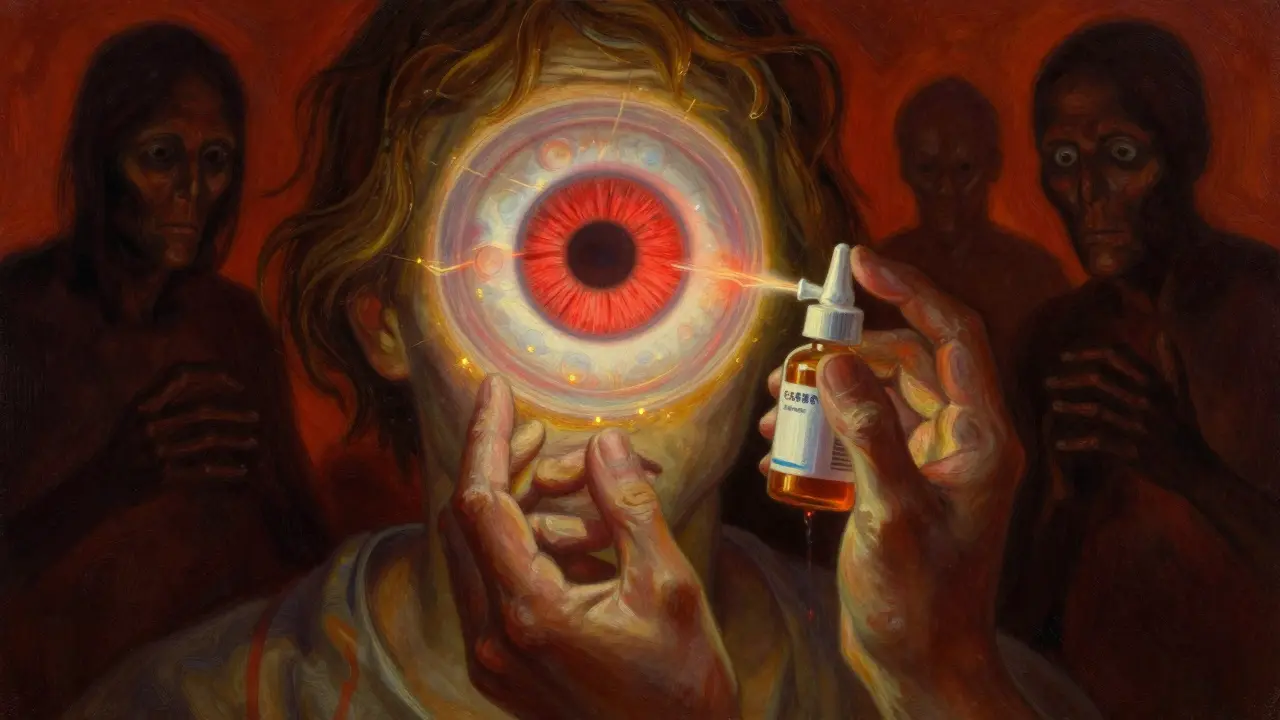
What Steroid Eye Drops Actually Do
Steroid eye drops, like prednisolone, dexamethasone, and loteprednol, are powerful anti-inflammatory tools used to calm down angry, swollen eyes. They work by shutting down the body’s immune response in the eye - the same response that causes redness, pain, and blurred vision during conditions like uveitis, allergic conjunctivitis, or after eye surgery. These drops aren’t antibiotics; they don’t kill germs. Instead, they silence the inflammation that can damage your vision if left unchecked.
For someone with acute anterior uveitis - a painful inflammation deep inside the eye - steroid drops can mean the difference between keeping their sight and losing it. Many patients notice improvement within days. That’s why doctors still rely on them, even with the risks. But here’s the catch: they’re not meant to be used for weeks or months unless absolutely necessary.
The Real Benefits: When They Save Your Vision
Steroid eye drops are most effective when inflammation is the main problem - not infection. They’re commonly prescribed after eye surgery to prevent swelling. They’re the go-to treatment for autoimmune-related uveitis, where the body attacks its own eye tissue. They also help with severe allergic reactions that don’t respond to antihistamine drops.
Dr. Daniel Bintz, an optometrist with decades of experience, says patients with uveitis typically respond well to short-term steroid use. In many cases, vision clears up quickly, and the inflammation doesn’t return if the treatment is tapered correctly. For some, this means avoiding permanent scarring on the iris or retina. The key is timing: use them early, use them hard, then stop.
The Hidden Dangers: Glaucoma and Cataracts
The biggest risks aren’t obvious. You won’t feel them coming. Steroid eye drops can silently raise the pressure inside your eye - a condition called steroid-induced glaucoma. About 30 to 40% of people experience some increase in eye pressure. For 4 to 6%, it spikes high enough to damage the optic nerve. That damage is permanent. And it often happens without pain or symptoms until it’s too late.
Then there’s cataracts. Long-term use - especially beyond 10 days - increases the risk of posterior subcapsular cataracts. These aren’t the slow, age-related kind. They form right in the center of the lens, right where light passes through. That means blurry vision, glare at night, and faded colors. Studies show that people on steroid drops for more than three months may develop cataracts five to ten years earlier than they otherwise would.
And it gets worse. Steroids suppress your eye’s natural defenses. After just a few days of use, your eye becomes vulnerable to serious infections like herpes simplex keratitis or fungal infections. These can destroy the cornea in days if not caught early.
Who’s at Highest Risk?
Not everyone reacts the same way. Some people are called “steroid responders” - their eyes are extra sensitive to pressure spikes. About 5% of the population falls into this high-risk group. You’re more likely to be one if you:
- Have a family history of glaucoma
- Already have glaucoma
- Have diabetes
- Are over 40
- Have had eye surgery before
If any of these apply to you, your doctor should treat your steroid drops like a controlled substance - not a routine prescription. Even a two-week course needs close watching.
How Often Should You Get Checked?
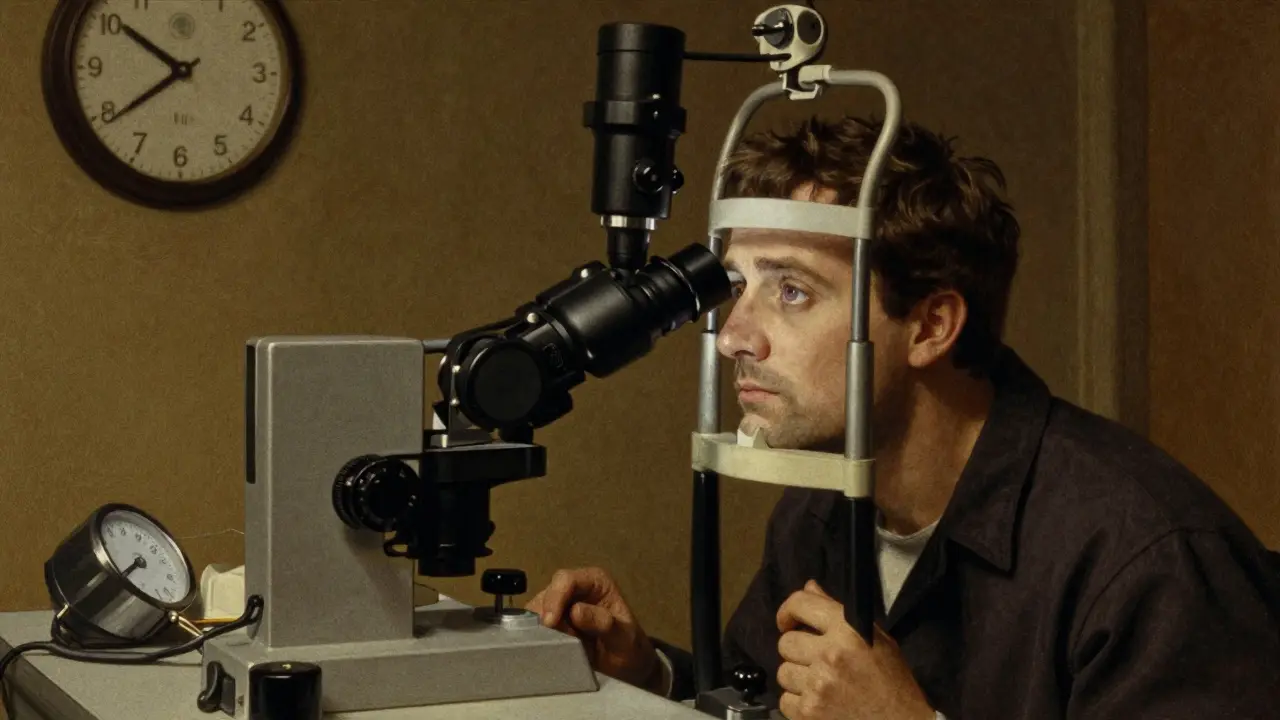
Monitoring isn’t optional. It’s non-negotiable. If you’re using steroid drops for more than 10 days, your eye doctor must check your eye pressure regularly. The standard is every 2 to 4 weeks. For high-risk patients or those on strong drops like prednisolone acetate, it’s every 1 to 2 weeks.
These aren’t quick office visits. They require:
- Goldmann applanation tonometry - the gold standard for measuring eye pressure
- Slit-lamp exam - to look for early signs of cataracts or corneal damage
- Visual field testing - if you’ve been on drops longer than a month
Many patients think, “I feel fine, so I don’t need to come back.” That’s how vision loss happens. Pressure can climb without symptoms. Cataracts can form slowly. By the time you notice blurry vision, the damage may already be done.
How Long Is Too Long?
There’s no universal answer, but general rules apply:
- Less than 2 weeks: Low risk for most people. Side effects are rare.
- 2 to 4 weeks: Moderate risk. Pressure checks become important.
- More than 4 weeks: High risk. Cataracts and glaucoma become likely. Your doctor should be considering alternatives.
- More than 3 months: Very high risk. Permanent damage is possible.
Dr. Bintz says most uveitis patients use steroids for 1 to 2 months - just long enough to get the inflammation under control. After that, the goal is to switch to safer options or taper off.
What Are the Alternatives?
If you need long-term inflammation control, steroids aren’t the only option. Non-steroidal anti-inflammatory drops (NSAIDs) like ketorolac or bromfenac can help with milder cases. They don’t pack the same punch as steroids, but they also don’t raise eye pressure or cause cataracts.
For autoimmune conditions, doctors may turn to immunosuppressants like cyclosporine or tacrolimus eye drops. These take longer to work - weeks instead of days - but they’re safer for long-term use.
In some cases, oral medications or injections are needed. The goal isn’t just to treat the eye - it’s to treat the root cause of the inflammation.
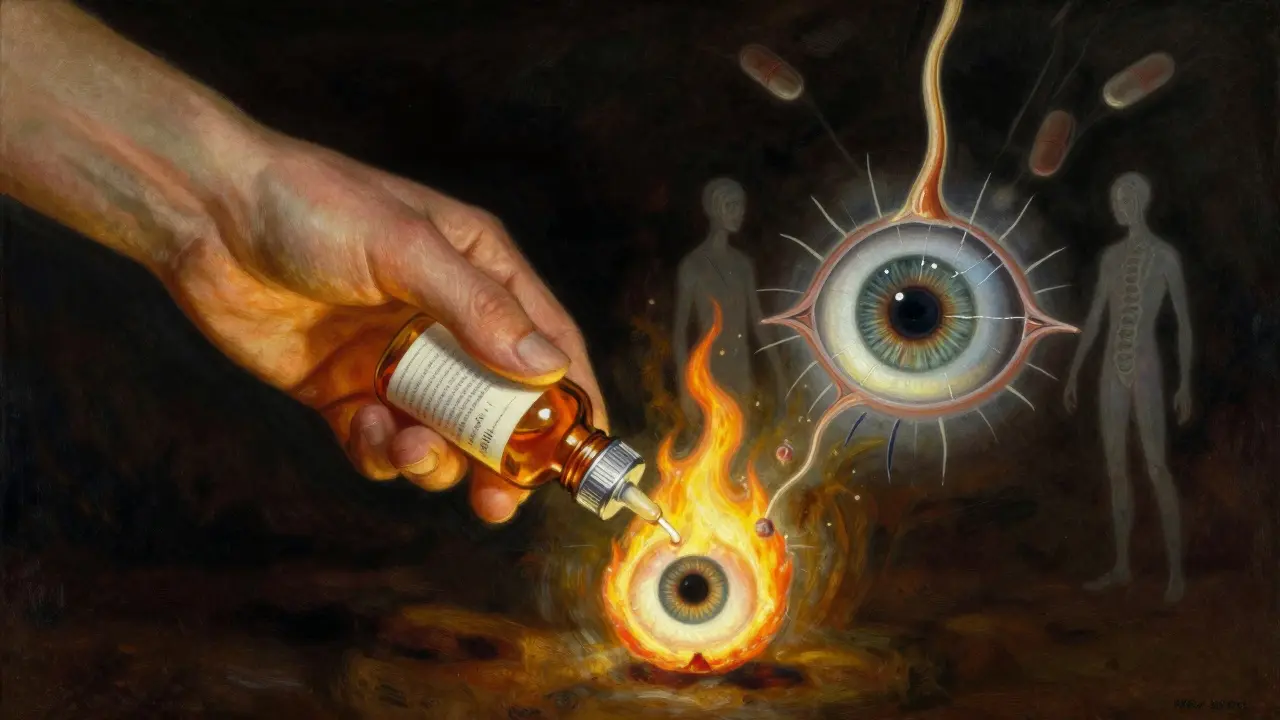
How to Stop Steroid Eye Drops Safely
Never stop them cold turkey. If you’ve been using them for more than a week, your doctor will slowly reduce the dose. Stopping suddenly can cause a rebound effect - the inflammation comes back worse than before.
For example, if you were using the drops four times a day, your doctor might drop you to three times a day for a week, then twice, then once, then every other day. This gives your eye time to restart its own healing process without crashing.
Symptoms That Mean “Call Your Doctor Now”
Even if you’re following the schedule, watch for these warning signs:
- Blurry vision that doesn’t clear up
- Eye pain or pressure behind the eye
- Seeing halos around lights
- Loss of peripheral vision (tunnel vision)
- Redness that gets worse, not better
- Nausea or vomiting with eye pain
These could mean your eye pressure is dangerously high or an infection has started. Don’t wait. Call your eye doctor immediately.
What Happens If You Get Cataracts?
If steroid use leads to cataracts, surgery is usually the only fix. The procedure is common and successful - about 95% of patients regain good vision. But it’s still surgery. Risks include infection (less than 1 in 1,000), bleeding, or posterior capsule opacification - where the back of the lens clouding up again, which happens in about 20% of cases within five years.
That’s why prevention matters more than treatment. Catching the problem early means you might avoid surgery altogether.
Final Takeaway: Use Wisely, Monitor Relentlessly
Steroid eye drops are life-changing when used correctly. They can stop vision loss in its tracks. But they’re not harmless. The risks are real, silent, and often irreversible. The key isn’t avoiding them - it’s using them with discipline.
Ask your doctor: “How long am I on this?” “How often will you check my pressure?” “What are the signs I should watch for?” If they can’t answer clearly, get a second opinion. Your vision isn’t something to gamble with.
Can steroid eye drops cause blindness?
Yes, if used improperly or without monitoring. Steroid eye drops can raise eye pressure to dangerous levels, leading to glaucoma and permanent optic nerve damage. They can also cause cataracts that blur vision. Both conditions can result in blindness if not caught early. Most cases are preventable with regular eye pressure checks and proper use.
How long can you safely use steroid eye drops?
For most people, less than two weeks carries low risk. Between two and four weeks, monitoring becomes necessary. Beyond four weeks, the risk of glaucoma and cataracts rises sharply. Long-term use - more than three months - should only happen under close supervision by an ophthalmologist, with frequent pressure checks and plans to taper off.
Do steroid eye drops affect your whole body?
Yes, even though they’re applied to the eye, a small amount can be absorbed into your bloodstream. This can cause temporary side effects like increased blood sugar, mood changes, or high blood pressure - especially with prolonged use or high doses. People with diabetes or hypertension need to be extra cautious and should inform their doctor.
Are there steroid-free alternatives for eye inflammation?
Yes. Non-steroidal anti-inflammatory eye drops (NSAIDs) like ketorolac are effective for mild to moderate inflammation and don’t raise eye pressure. For chronic conditions, immunosuppressants like cyclosporine or tacrolimus eye drops are safer for long-term use, though they take longer to work. The choice depends on the cause and severity of inflammation.
What should I do if I miss a dose of steroid eye drops?
If you miss a dose, apply it as soon as you remember - unless it’s almost time for the next one. Don’t double up. Missing a dose occasionally won’t ruin your treatment, but inconsistent use can cause inflammation to flare back up. Always follow your doctor’s tapering plan when stopping, even if your eye feels fine.
Can children use steroid eye drops?
Yes, but with extreme caution. Children are more sensitive to the pressure-raising effects of steroids. They’re usually prescribed for short-term use only - like after eye surgery or for severe allergic reactions. Close monitoring is essential, and parents should watch for signs of increased pressure or vision changes. Pediatric ophthalmologists often prefer non-steroid options when possible.
Is it safe to wear contact lenses while using steroid eye drops?
Generally, no. Steroid drops can increase the risk of serious eye infections, and wearing contacts while using them raises that risk even more. Most doctors recommend avoiding contacts until the inflammation is fully controlled and you’ve stopped the drops. If you must wear them, use daily disposables and clean them meticulously - but even then, it’s not advised.
Kasey Summerer
January 17, 2026 AT 17:15john Mccoskey
January 18, 2026 AT 14:52Christina Bilotti
January 18, 2026 AT 16:19brooke wright
January 19, 2026 AT 22:30Nick Cole
January 21, 2026 AT 11:20Cheryl Griffith
January 21, 2026 AT 13:43swarnima singh
January 23, 2026 AT 10:31Jody Fahrenkrug
January 25, 2026 AT 09:53Ryan Hutchison
January 25, 2026 AT 20:27Chelsea Harton
January 27, 2026 AT 05:04Corey Chrisinger
January 27, 2026 AT 23:34Bianca Leonhardt
January 29, 2026 AT 05:46Travis Craw
January 30, 2026 AT 19:34