
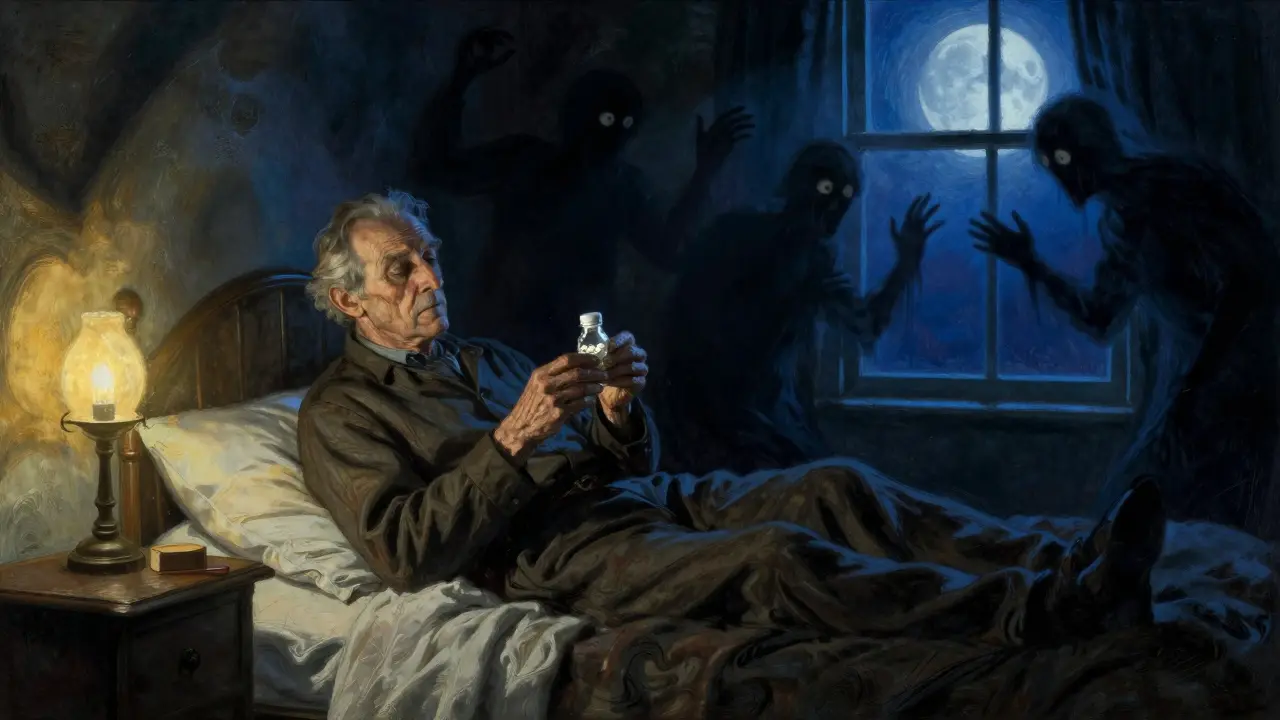
More than 1 in 10 adults over 80 in the U.S. take prescription sleep meds every month. That’s not just a statistic-it’s a daily reality for millions who’ve been told, “Just take this to get some rest.” But what happens when the pill stops working? When you wake up groggy, confused, or worse-remembering nothing after taking it? Sleep medications aren’t harmless quick fixes. They come with real, documented dangers: memory gaps, falls, addiction, and a rebound effect that makes insomnia worse after you quit. And yet, most people don’t know there’s a better way.
How Sleep Medications Actually Work
Sleep meds don’t help you sleep like a warm blanket or quiet room does. They depress your central nervous system. That means they slow down brain activity until you pass out. The most common types are benzodiazepines (like lorazepam), Z-drugs (zolpidem, eszopiclone), and sedating antidepressants (like trazodone). Even over-the-counter options like diphenhydramine (Benadryl) work the same way-by blocking histamine, a chemical that keeps you alert.
Here’s the catch: your brain adapts. After a few weeks, it starts needing more of the drug to get the same effect. That’s tolerance. Then comes dependence-you can’t sleep without it. And when you stop? Rebound insomnia hits hard. Your body, used to being chemically sedated, panics. You lie awake for nights, convinced the problem is worse than before. So you go back to the pill. It’s a cycle, not a cure.
The Hidden Dangers You’re Not Being Told
Side effects aren’t just “a little drowsy tomorrow.” They’re dangerous. A 2015 study found 25% of users had next-day impairment equivalent to a blood alcohol level of 0.05-0.08%. That’s legally drunk in most states. You might not feel it, but your reaction time, balance, and memory are compromised. That’s why older adults are at higher risk of falls-up to 60% more likely, according to the American Geriatrics Society.
Then there’s the weird stuff. The FDA has received hundreds of reports of people sleep-driving, cooking, or even having sex while under the influence of zolpidem (Ambien). These aren’t rare myths-they’re documented events. In 2019, the FDA cut the recommended starting dose for women from 10mg to 5mg because women metabolize the drug slower, leading to higher next-morning levels. Many users still don’t know this.
OTC sleep aids aren’t safer. Diphenhydramine has strong anticholinergic effects. A 2015 JAMA study found people who used it regularly for years had a 54% higher risk of dementia. Doxylamine (Unisom) carries the same risk. These aren’t “natural” or “gentle”-they’re brain-altering drugs with long-term consequences you can’t undo.
Dependence: It Happens Faster Than You Think
People think addiction means needing to shoot up or snort. With sleep meds, it’s quieter. It’s taking the pill every night because you’re afraid you won’t sleep without it. It’s calling your doctor for refills before you’re supposed to. It’s lying to yourself: “I’m just using it for a few weeks.”
Studies show up to 33% of people on benzodiazepines become dependent after just 4-6 weeks. Z-drugs like Ambien and Lunesta have lower dependence rates-around 5-10%-but they’re still controlled substances. Schedule IV, to be exact. That means the government recognizes their abuse potential. And yet, many doctors still prescribe them for months, even years.
One Reddit user wrote: “After 6 months of nightly Ambien, I tried to quit. Couldn’t sleep for three nights. Felt like my brain was screaming. Ended up back on it.” That’s not weakness. That’s pharmacology.
Why CBT-I Is the Gold Standard (And How It Works)
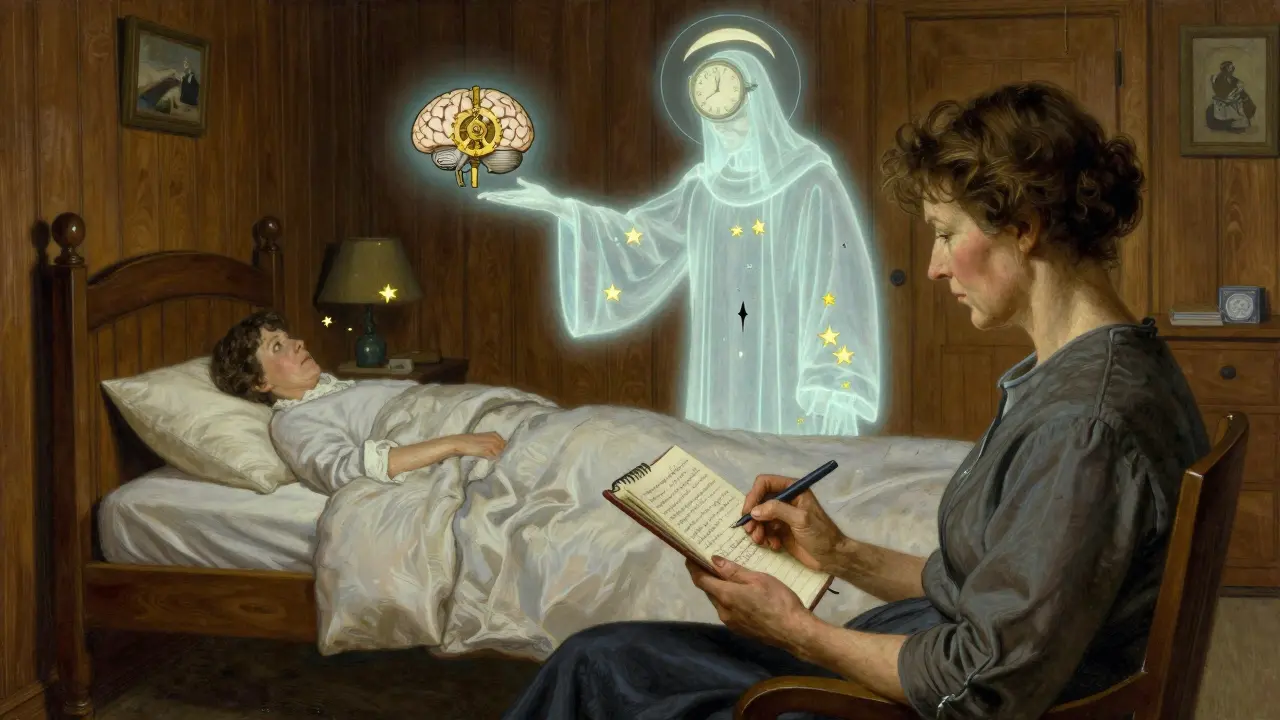
The American Academy of Sleep Medicine says one thing over and over: CBT-I is the first-line treatment for insomnia. Not pills. Not melatonin. Not herbal teas. Cognitive Behavioral Therapy for Insomnia-a structured, evidence-based program that reteaches your brain how to sleep.
It’s not magic. It’s science. CBT-I works in four key ways:
- Stimulus control: Your bed is only for sleep and sex. No scrolling, no watching TV, no lying there worrying. If you’re not asleep in 20 minutes, get up. Go sit in another room. Come back only when sleepy.
- Sleep restriction: You’re not sleeping 8 hours? Then you’re not allowed to spend 8 hours in bed. You limit your time in bed to match your actual sleep time-say, 5 hours. Gradually, you build up efficiency. Your body learns to associate bed with real sleep.
- Cognitive restructuring: You challenge the thoughts that keep you awake: “If I don’t sleep tonight, I’ll be useless tomorrow.” CBT-I helps you replace fear with facts.
- Sleep hygiene: Not just “avoid caffeine.” It’s about timing light exposure, managing stress, and aligning your schedule with your body’s natural rhythm.
Studies show CBT-I works in 70-80% of cases. And the effects last. Unlike pills, which stop working after a few weeks, CBT-I rewires your brain. You don’t need to keep doing it forever-you learn the skills and keep them.
What About Melatonin and Natural Remedies?
Melatonin is a hormone, not a drug. It tells your body it’s time to sleep, but it doesn’t force sleep like a sedative. That’s why it’s safer. Amazon reviews show 4.2 out of 5 stars from over 50,000 users-mostly because people report no grogginess, no dependency, no memory gaps.
But here’s the truth: melatonin doesn’t fix insomnia caused by anxiety, poor habits, or circadian disruption. It helps with jet lag or delayed sleep phase. If you’ve been sleeping poorly for months? Melatonin alone won’t cut it.
Other supplements-valerian root, magnesium, CBD-have weak or inconsistent evidence. Some people swear by them. Others feel nothing. They’re not harmful in typical doses, but they’re not replacements for proven treatment.
What Are the New Alternatives?
There’s a quiet revolution happening. In 2020, the FDA approved Somryst-a digital CBT-I app you can get by prescription. It’s not a game. It’s a full 6-week program with interactive lessons, sleep tracking, and therapist feedback. In trials, 60% of users achieved remission from insomnia. No pills. No side effects.
Then there’s daridorexant (Quviviq), approved in 2022. It’s a new class of drug called an orexin antagonist. Instead of shutting down your brain, it blocks the chemical that keeps you awake. Early data shows less next-day drowsiness than zolpidem. It’s not a cure, but it’s a step toward safer pharmacotherapy.
And the trend is clear: healthcare systems are changing. 73% of major hospitals now require doctors to document a CBT-I referral before approving more than 30 days of sleep meds. That’s huge. It means the system is finally catching up to the science.
When Might Medications Still Make Sense?
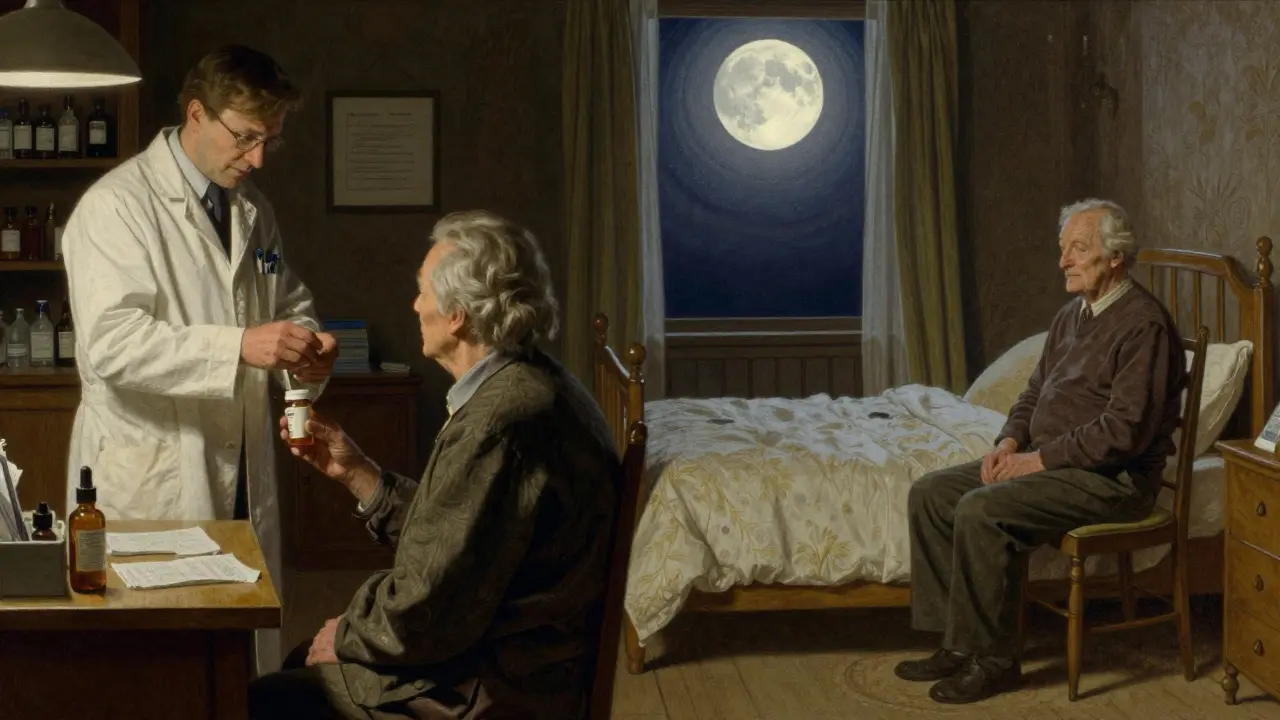
Let’s be real: sometimes, you need a bridge. If you’re in crisis-can’t sleep for weeks, your job is at risk, you’re suicidal-short-term medication can be lifesaving. The goal isn’t to shame people who use them. It’s to make sure they’re used correctly.
Doctors should prescribe:
- The lowest dose possible
- For the shortest time (2-5 weeks max)
- Only after discussing CBT-I
- With clear exit plans
And if you’ve been on them for months? Don’t quit cold turkey. Taper slowly-25% every two weeks-with support. Many need counseling or even short-term therapy to get through the rebound phase.
What You Should Do Right Now
If you’re on sleep meds:
- Don’t panic. But don’t ignore the risks.
- Ask your doctor: “Have I been on this too long?”
- Request a referral to a CBT-I provider. Many are covered by insurance.
- Try a digital program like Somryst or Sleepio. They’re affordable and effective.
- Track your sleep for a week. Use a simple notebook: when you go to bed, when you wake, how you feel. Patterns will show you what’s really going on.
If you’re thinking about starting:
- Try CBT-I first. Even 10 minutes a day of sleep restriction and stimulus control can make a difference.
- Don’t rely on OTC pills. They’re not safer-they’re just unregulated.
- Understand that sleep isn’t a problem to be fixed with a pill. It’s a skill to be rebuilt.
Are sleep medications addictive?
Yes, especially benzodiazepines and Z-drugs like Ambien and Lunesta. Dependence can develop in as little as 2-4 weeks. Your body adapts, and stopping causes rebound insomnia, which makes you feel like you need the drug to sleep. This isn’t weakness-it’s biology.
Can I just stop taking my sleep med cold turkey?
No. Stopping suddenly can cause severe rebound insomnia, anxiety, tremors, or even seizures in rare cases. Always work with your doctor to taper slowly-usually by reducing the dose by 25% every two weeks. Some people need extra support, like therapy or temporary use of non-habit-forming aids.
Is CBT-I really better than pills?
Yes. Multiple studies show CBT-I works for 70-80% of people with insomnia, and the benefits last years after treatment ends. Pills only work as long as you take them-and come with side effects like drowsiness, memory loss, and fall risk. CBT-I teaches your brain to sleep naturally, without chemicals.
Why do doctors still prescribe sleep meds if they’re risky?
Many doctors aren’t trained in CBT-I. It takes time, resources, and referrals-things most clinics don’t have. Also, patients often ask for pills because they want fast results. But guidelines have changed. More hospitals now require CBT-I referrals before prescribing long-term sleep meds. The tide is turning.
What’s the safest OTC sleep aid?
There isn’t one. Diphenhydramine (Benadryl) and doxylamine (Unisom) carry long-term dementia risks. Melatonin is safer, but only helps with circadian issues, not chronic insomnia. The safest option? Not taking anything. Focus on sleep habits instead.
If you’ve been struggling with sleep for months, you’re not broken. You just haven’t found the right tool yet. Pills are a Band-Aid. CBT-I is the cure. And it’s waiting for you-not in a pharmacy, but in your own routine, your own patience, and your own willingness to rebuild what was lost.
Mike Hammer
February 15, 2026 AT 10:54Also, side note: never trust a doctor who says 'just take it for a few weeks' and then keeps refilling it. That’s not care. That’s convenience.
Kapil Verma
February 17, 2026 AT 02:22Charlotte Dacre
February 18, 2026 AT 09:36Wow. The most powerful medicine in the world is patience. And a chair.
Also, I just Googled ‘sleeping on the floor’ and 78% of the results are from people who also believe in crystals. I’m not saying it’s wrong. I’m saying… why does everything have to be so weird?
Erica Banatao Darilag
February 19, 2026 AT 07:43Daniel Dover
February 19, 2026 AT 10:46Sarah Barrett
February 20, 2026 AT 23:51Betty Kirby
February 21, 2026 AT 07:41Esha Pathak
February 22, 2026 AT 00:47Try this: before bed, sit in silence. No phone. No light. Just breathe. Let the thoughts come. Let them go. Do this for 7 days. You will not sleep better. But you will begin to remember how to be human again.
Michael Page
February 22, 2026 AT 02:36Chiruvella Pardha Krishna
February 23, 2026 AT 16:59Joe Grushkin
February 25, 2026 AT 01:33