

Medication Side Effect Monitoring Timeline Calculator
Recommended Monitoring Timeline
Getting a new prescription shouldn’t feel like rolling the dice. You take your medicine as directed, but then-something’s off. A headache that won’t quit. A rash that shows up out of nowhere. Nausea that hits every afternoon. You wonder: is this normal, or is it the drug?
Most people don’t realize that medication side effects often slip through the cracks until they become serious. Clinical trials test drugs on a few thousand people for months. Real life? Millions take the same pills for years, sometimes with other meds, different diets, or aging bodies. That’s where routine monitoring comes in-not as a luxury, but as a necessity.
Why Side Effects Don’t Show Up Until It’s Too Late
Clinical trials are controlled. Participants are healthy, carefully selected, and monitored closely. But once a drug hits the market, it’s used by people with diabetes, kidney issues, liver problems, or those taking five other pills. That’s when hidden side effects emerge.
Take statins, for example. In trials, muscle pain was listed as a rare side effect. But after millions started taking them, doctors noticed a pattern: older adults, especially women, were reporting severe muscle weakness that wasn’t caught early. By the time it was reported to the FDA, some had already developed rhabdomyolysis-a dangerous breakdown of muscle tissue.
Here’s the scary part: only about 6% of serious adverse reactions ever get reported to official systems like the FDA’s FAERS. That means for every 100 people who have a bad reaction, 94 go uncounted. Why? Because patients don’t know if it’s the drug. Doctors are busy. And coded insurance records miss the real clues hidden in doctor’s notes.
What Routine Monitoring Actually Looks Like
Monitoring isn’t just waiting for symptoms. It’s proactive. It’s asking: What should I be watching for, and when?
For many medications, specific tests are built into guidelines:
- Statins: Liver enzymes (ALT, AST) checked at 6-12 weeks after starting, then every 6 months. Muscle enzyme (CK) tested if you report unexplained pain or weakness.
- Antidepressants (SSRIs): Watch for agitation, insomnia, or suicidal thoughts in the first 2-4 weeks. Especially critical for teens and young adults.
- Thyroid meds (levothyroxine): TSH levels checked every 6-8 weeks after a dose change, then annually if stable.
- Antibiotics like vancomycin: Blood levels monitored every 2-3 days to avoid kidney damage.
- Diabetes drugs (metformin): Kidney function (eGFR) checked before starting and yearly after.
These aren’t random checks. They’re based on when side effects are most likely to show up. For example, liver damage from certain antibiotics often peaks between weeks 3 and 8. That’s why testing at week 6 makes sense.
The Power of Patient-Led Tracking
Doctors can’t be with you 24/7. But you can track your own body. A simple log changes everything.
Start by writing down:
- Date and time of each symptom
- What happened (e.g., “dizziness when standing,” “tingling in fingers”)
- Severity on a scale of 1-10
- Duration (minutes? hours? all day?)
- Dose and time you took your medication
- Triggers (did you drink coffee? skip breakfast? take another pill?)
One patient in Melbourne started tracking her new blood pressure pill. She noticed her headaches always hit 3 hours after taking it-right after lunch. Her doctor realized it wasn’t stress; it was a timing issue with food interaction. A simple switch to morning dosing solved it.
Apps like Medisafe or even a notes app on your phone work. The key is consistency. Don’t wait for “something bad” to happen. Record the small stuff.

How Technology Is Changing the Game
Stanford researchers found something surprising: computers can spot side effects faster than humans.
By analyzing millions of doctor’s notes-not just coded diagnoses but actual words like “patient says nausea worsens after pills,” or “fatigue started after starting new med”-they predicted side effects up to two years before the FDA issued warnings. This isn’t sci-fi. It’s happening in hospitals that use advanced EHR systems.
These tools don’t replace doctors. They highlight patterns humans miss. For example, if 20 patients in a clinic all mention “dry mouth” after starting a new antidepressant, the system flags it-even if no one formally reported it.
Another tool, called Clinical Decision Support Systems (CDSS), pops up warnings when a doctor prescribes a new drug. “Warning: Patient on warfarin. This antibiotic increases bleeding risk.” That’s saved lives.
But here’s the catch: not every clinic has this tech. Smaller practices still rely on paper charts and memory. That’s why patient tracking remains vital.
What to Do When You Notice Something Strange
Don’t ignore it. Don’t assume it’s “just aging.” Don’t stop the med without talking to your doctor.
Here’s what to do:
- Check your log. Is this new? Did it start after a dose change?
- Don’t panic. Many side effects are mild and temporary.
- Call your doctor. Send them your log. Say: “I’ve noticed X since starting Y. Can we review this?”
- Ask: “Is this a known side effect? How long should I wait before worrying?”
- Request a test. “Can we check my liver/kidney levels?”
Some side effects are red flags. Go to urgent care if you have:
- Sudden swelling of face, lips, or throat
- Difficulty breathing
- Severe rash with blistering or peeling skin
- Yellowing eyes or skin
- Unexplained bruising or bleeding
These aren’t “wait and see” situations. Act fast.
Why Monitoring Matters More Than Ever
People over 65 take an average of 4-5 prescription drugs daily. That’s called polypharmacy. Each new pill adds risk. One drug might affect how another is processed. A blood thinner and a common painkiller? That combo can cause internal bleeding.
And it’s not just seniors. Young adults on multiple mental health meds, or people with chronic conditions like lupus or rheumatoid arthritis, are also at higher risk. Side effects don’t care about age-they care about combinations.
That’s why routine monitoring isn’t optional. It’s the only way to catch problems before they turn into hospital visits.
What’s Next for Side Effect Detection
The future is layered. It’s not just one system. It’s:
- Patients logging symptoms daily
- Doctors using smart alerts when prescribing
- Hospitals mining notes for hidden patterns
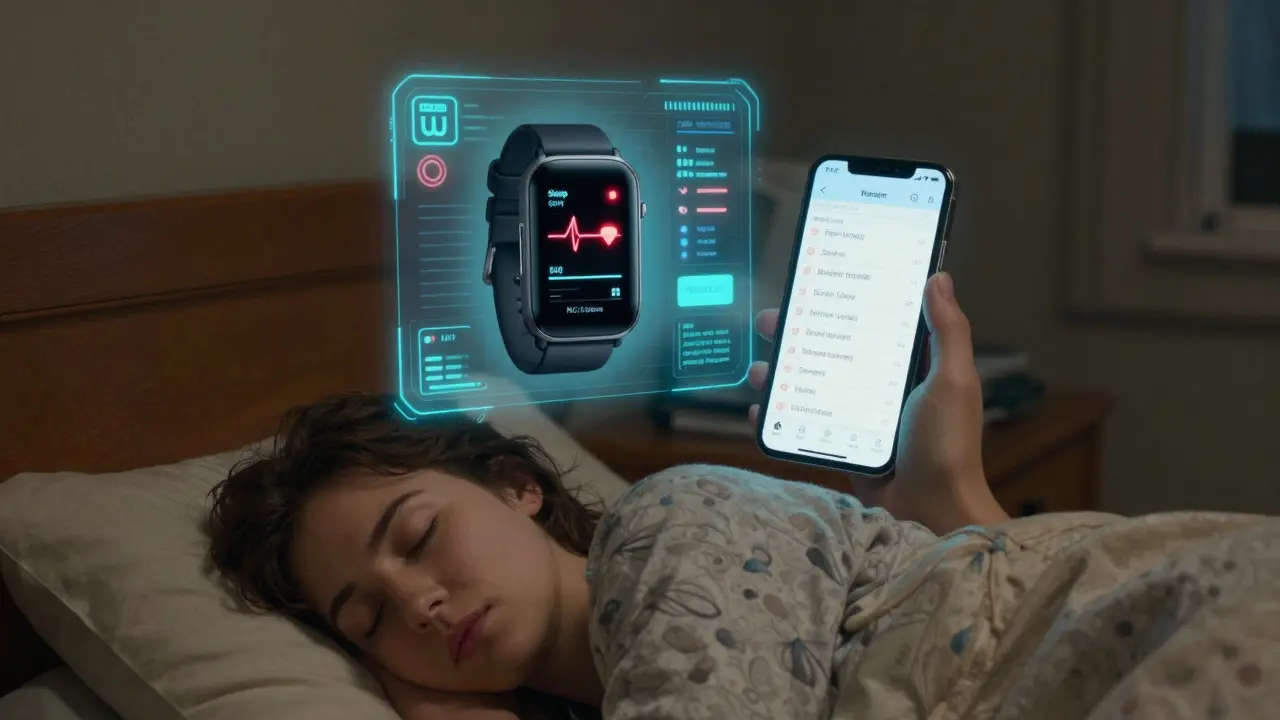
- Wearables tracking heart rate, sleep, or activity drops that signal toxicity
The FDA is already starting to use real-world data from EHRs and patient apps to update drug labels faster. That means side effect warnings might appear months instead of years after a problem emerges.
But none of this works if you don’t speak up. If you don’t track. If you don’t ask questions.
Medication safety isn’t just about the pill. It’s about the person taking it-and the system that’s supposed to protect them.