
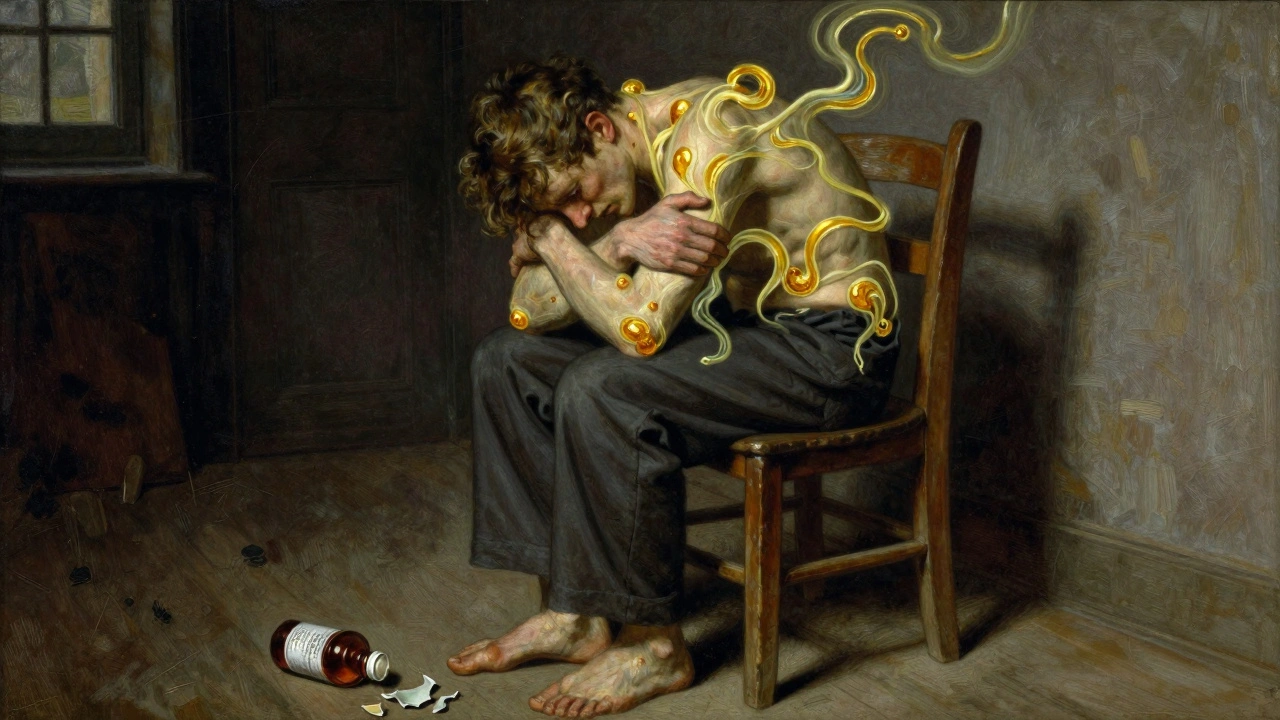
Itching that won’t go away - no matter how much you scratch - can be one of the most exhausting symptoms of liver disease. For people with cholestasis, where bile doesn’t flow properly, this intense itch isn’t caused by dry skin or an allergy. It’s a direct result of toxins building up in the blood. And while many doctors still reach for antihistamines, those rarely help. The real answer lies in understanding bile acids, how they trigger itch, and what treatments actually work.
Why Cholestasis Makes You Itch
Cholestasis happens when bile flow from the liver is blocked or slowed. This can come from primary biliary cholangitis (PBC), primary sclerosing cholangitis (PSC), or even pregnancy-related cholestasis. When bile backs up, substances like bile acids and lysophosphatidic acid (LPA) leak into the bloodstream. These aren’t just waste products - they activate nerve pathways in the skin that send constant itch signals to the brain. Unlike hives or eczema, this itch isn’t driven by histamine. That’s why antihistamines like Benadryl or Zyrtec usually do nothing. Studies show up to 68% of primary care doctors still prescribe them first, despite guidelines from the American Association for the Study of Liver Diseases (AASLD) saying they have no proven benefit. The real culprits are bile acids and LPA, which bind to receptors on skin nerves and fire off the itch response. That’s why treatments need to target the source, not the symptom.First-Line Treatment: Bile Acid Resins
Cholestyramine (brand name Questran) has been the go-to treatment for decades. It’s a powdered resin that works like a sponge in your gut. When you take it, it binds to bile acids before they can be reabsorbed, forcing them out in your stool instead. Less bile acid in the blood means less itching. The standard dose starts at 4 grams once a day, slowly increasing to 16-24 grams spread across two to four doses. Most people notice improvement within a week or two. Studies show it reduces itching by 50-70% in those who stick with it. But there’s a catch. Cholestyramine tastes like chalky sand. Mixing it with juice or applesauce helps, but 65% of patients quit within three months because of the texture and bloating. It also binds to other medications - including thyroid pills, antibiotics, and birth control - so you have to take it at least one hour before or four to six hours after anything else. That’s a lot to manage.Second-Line: Rifampin
When cholestyramine doesn’t cut it, doctors turn to rifampin. Originally an antibiotic for tuberculosis, it turns out to be a powerful liver enzyme inducer. It helps the liver process and eliminate bile acids faster. In PBC patients, it works in about 75% of cases, cutting itch scores by 60-80% within four weeks. The usual dose is 150-300 mg daily. Many patients notice their urine turning orange - a harmless side effect. Some get mild flu-like symptoms or nausea, but only 10-15% stop because of side effects. That’s far better than cholestyramine’s 35% dropout rate. The big downside? Rifampin speeds up how fast your body breaks down other drugs. It can make birth control, blood thinners, and even some antidepressants less effective. If you’re on multiple meds, your doctor needs to check for interactions. Still, for many, it’s the turning point - a patient on Reddit wrote, “Rifampin turned my urine orange but reduced my itching from 8/10 to 3/10 within two weeks. Worth it.”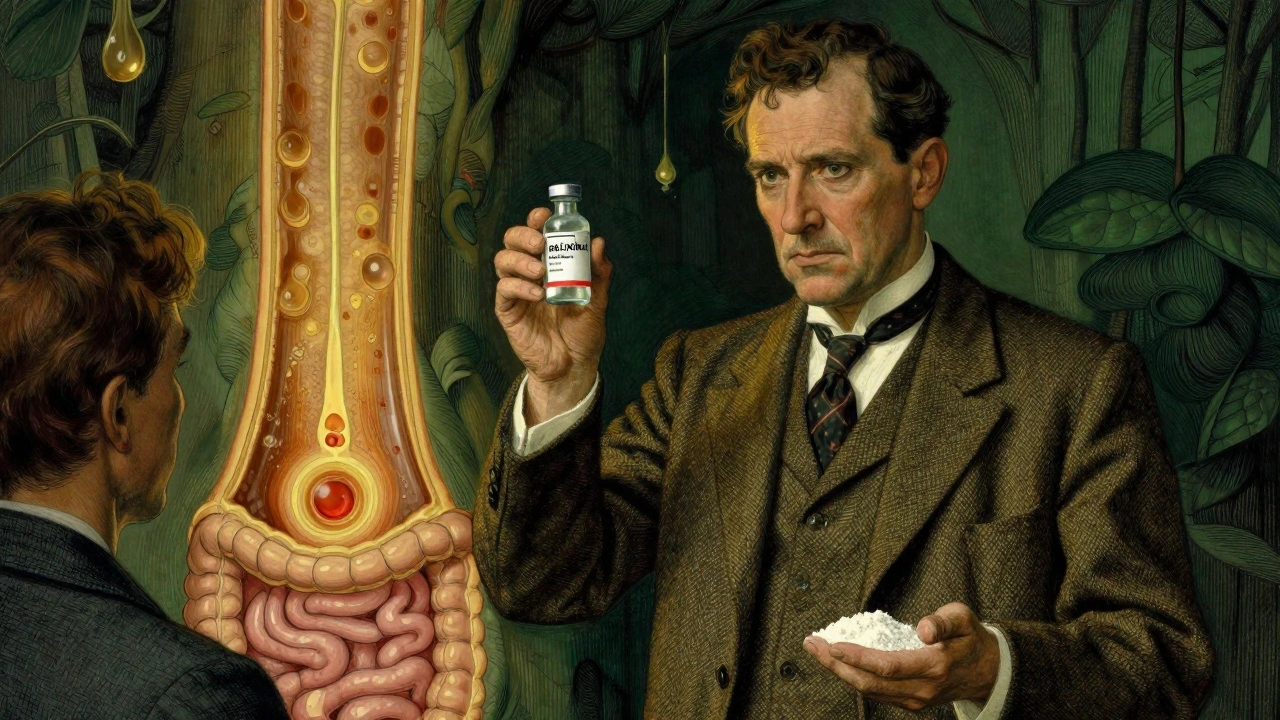
Third-Line: Naltrexone and Sertraline
If rifampin doesn’t help or isn’t safe, two other options come into play: naltrexone and sertraline. Naltrexone, usually used for opioid addiction, blocks the brain’s opioid receptors. Surprisingly, those same receptors are involved in cholestatic itch. Dosed at 12.5-50 mg daily, it helps about 50-65% of patients. But the first few days can be rough. About 30% of people feel nausea, anxiety, or even withdrawal-like symptoms - even if they’ve never used opioids. Starting low (6.25 mg) and increasing slowly helps avoid this. Sertraline (Zoloft), an SSRI antidepressant, is used off-label. It’s not clear how it works, but it seems to modulate nerve signals involved in itch. In PBC patients, it reduces itching in 40-50% of cases. It’s especially useful if someone also has depression or anxiety. But it doesn’t help much in PSC or other forms of cholestasis. Dosing starts at 50 mg and goes up to 100 mg over two weeks.The New Hope: Maralixibat and Beyond
The biggest shift in treatment came with maralixibat (brand name Mytesi), approved by the FDA in 2021 for Alagille syndrome. It’s not a resin - it’s an IBAT inhibitor. That means it blocks bile acids from being reabsorbed in the gut, just like cholestyramine, but as a pill, not a powder. No grit. No bad taste. Just one daily dose. In clinical trials, it reduced itching by 47% on a standard scale - nearly matching cholestyramine’s effectiveness. But here’s the game-changer: 82% of patients kept taking it after six months. Only 12% quit because of side effects, compared to 35% for cholestyramine. Other new drugs are coming fast. Volixibat, another IBAT inhibitor, showed 52% itch reduction in a 2023 trial. And then there’s the exciting frontier: drugs that block autotaxin, the enzyme that makes LPA. IONIS-AT332-LRx, an antisense drug, cut autotaxin levels by 65% and reduced itch by 58% in early trials. This isn’t just symptom control - it’s targeting the root cause.
When All Else Fails: Transplant and Other Options
For the 10-20% of patients who don’t respond to any medication, liver transplant remains the only cure. After transplant, 95% of patients report their itching disappears completely. But it’s major surgery with lifelong risks. For those with extrahepatic blockages - like a stone or tumor blocking the bile duct - stent placement can offer instant relief. One expert noted that 85% of patients with mechanical obstruction see dramatic improvement right after stenting. Yet, this option is often overlooked. Some patients find relief with simple lifestyle tweaks: cool showers, fragrance-free moisturizers, loose cotton clothes, and avoiding hot baths. These won’t fix the cause, but they can make the itch more bearable.Cost, Access, and the Real-World Gap
Here’s the harsh reality: cholestyramine costs about $65 a month. Maralixibat costs $12,500. That’s a 190-fold difference. Insurance often blocks access to newer drugs unless you’ve tried everything else - even if those older options failed or were unbearable. In academic centers, 78% of doctors follow the stepwise AASLD protocol. In community clinics? Only 45%. Many primary care providers still don’t know the guidelines. Patients are left cycling through ineffective antihistamines for months before being referred to a hepatologist. The global market for these treatments is growing fast - projected to hit $300 million by 2028. But that growth isn’t evenly distributed. Patients without good insurance, or those in rural areas, still struggle to get even the basics.What Works, What Doesn’t, and What’s Next
If you have cholestasis and you’re itchy, here’s what you need to know:- Don’t waste time on antihistamines. They don’t work. The itch isn’t histamine-driven.
- Start with cholestyramine. But if you can’t tolerate it, don’t give up - switch to rifampin.
- Rifampin is powerful. Watch for urine color change - it’s normal. Check for drug interactions.
- Naltrexone and sertraline help some. Naltrexone needs slow titration. Sertraline is best if depression is also present.
- Maralixibat is the new standard for those who can access it. Better taste, better adherence, same or better results.
- Stents can be life-changing if your blockage is physical, not just liver-based.
- Transplant is the last resort - but when it happens, the itch vanishes.
Are antihistamines effective for cholestatic pruritus?
No, antihistamines are not effective for cholestatic pruritus. The itching is caused by bile acids and lysophosphatidic acid (LPA) activating nerve pathways in the skin, not by histamine. Despite this, up to 68% of primary care doctors still prescribe them first. Studies from AASLD and EASL show no significant benefit, and guidelines strongly recommend against their use as first-line treatment.
How does cholestyramine work to reduce itching?
Cholestyramine is a bile acid resin that binds to bile acids in the intestines, preventing them from being reabsorbed into the bloodstream. By trapping these itch-triggering substances and pushing them out in stool, it lowers their concentration in the blood. This reduces the signal sent to skin nerves, easing itching. It’s most effective when taken 1 hour before or 4-6 hours after other medications to avoid interference.
Why is rifampin used for liver-related itching?
Rifampin works by inducing liver enzymes that increase the metabolism and elimination of bile acids and other pruritogens. It’s especially effective in primary biliary cholangitis (PBC), helping 70-75% of patients reduce itching within four weeks. While it can cause orange urine and mild flu-like symptoms, it has a lower discontinuation rate than cholestyramine. Its major limitation is that it speeds up the breakdown of many other drugs, so drug interactions must be carefully managed.
What is maralixibat, and how is it different from cholestyramine?
Maralixibat is an ileal bile acid transporter (IBAT) inhibitor taken as a daily pill. Like cholestyramine, it blocks bile acid reabsorption in the gut - but without the gritty texture or taste. Clinical trials show it reduces itching by 47%, similar to cholestyramine’s 42%, but with far better tolerability. Only 12% of patients stop taking it due to side effects, compared to 35% for cholestyramine. It’s FDA-approved for Alagille syndrome and is becoming a preferred option for patients who can’t tolerate or afford long-term resin therapy.
When is liver transplant considered for cholestatic pruritus?
Liver transplant is considered when itching is severe, unresponsive to all medical therapies, and significantly impacts quality of life. It’s typically reserved for advanced liver disease, such as end-stage PBC or PSC. After transplant, 95% of patients report complete resolution of itching. While it’s a major procedure with lifelong risks, for those with refractory pruritus, it remains the only definitive cure.
Can stent placement help with liver itching?
Yes, stent placement can provide immediate relief if the itching is caused by a physical blockage in the bile duct - such as from a stone, tumor, or strictures. In cases of extrahepatic obstruction, stenting restores bile flow and resolves itching in about 85% of patients. This option is often overlooked, especially in patients without obvious signs of obstruction. Imaging (like MRCP or ERCP) should be done before assuming the itch is purely from liver disease.
What are the side effects of naltrexone for pruritus?
Naltrexone can cause nausea, anxiety, insomnia, and withdrawal-like symptoms during the first few days - even in people who’ve never used opioids. These side effects occur in about 30% of patients. Starting at a low dose (6.25 mg) and increasing slowly by 6.25 mg weekly helps reduce these reactions. Once the body adjusts, most tolerate it well. It’s not addictive and doesn’t cause opioid dependence, but the initial phase requires careful monitoring.
How long does it take for treatments to start working?
Cholestyramine usually starts working within 3-7 days, with full effect by two weeks. Rifampin often shows improvement in 1-2 weeks, with maximum benefit by 4 weeks. Naltrexone and sertraline may take 2-4 weeks to show results. Maralixibat typically reduces itching within 1-2 weeks. If no improvement is seen after 4 weeks, it’s time to reassess the treatment plan with your hepatologist.
Pavan Kankala
December 4, 2025 AT 01:18Of course the pharma giants love maralixibat - $12,500 a month and they get to call it 'innovation.' Meanwhile, cholestyramine's been sitting in a warehouse for 50 years, cheap as dirt. Someone's got a spreadsheet somewhere saying 'profit per patient' and it ain't pretty. They don't want you cured - they want you subscribed.
Yasmine Hajar
December 4, 2025 AT 13:12I had cholestasis during my third pregnancy and was prescribed Zyrtec for MONTHS. My doctor just shrugged when I said it wasn't helping. I finally found a hepatologist on Reddit (yes, really) who put me on cholestyramine - and within 10 days, I could sleep again. I cried. I still keep a jar of it in my pantry like it's gold. If you're reading this and itching like hell - don't take no for an answer. Ask for bile acid resins. Fight for it.
Ashley Elliott
December 6, 2025 AT 09:10Just want to say - thank you for writing this. So many people suffer in silence because their doctors don't know the difference between allergic itch and cholestatic itch. I'm a nurse, and I've seen so many patients get passed from dermatologist to allergist to neurologist before someone finally says, 'Have you checked your liver?' It's heartbreaking. The fact that rifampin works so well - and is so cheap - is a miracle. And maralixibat? Finally, something that doesn't taste like regret.
Chad Handy
December 7, 2025 AT 19:49Let’s be real - the whole medical system is rigged. Antihistamines are prescribed because they’re easy, quick, and profitable. Doctors don’t have time to dig into bile acid pathways. They don’t want to check for drug interactions with rifampin. They don’t want to explain why maralixibat costs more than a used car. So they give you a pill that does nothing and tell you to ‘try not to scratch so much.’ Meanwhile, the liver is slowly dying and nobody’s talking about it. The FDA approves new drugs that target autotaxin, but insurance won’t cover them unless you’ve already tried three ineffective treatments that cost you your dignity. This isn’t medicine - it’s a bureaucratic obstacle course with a side of suffering.
Augusta Barlow
December 7, 2025 AT 21:32Maralixibat? IBAT inhibitors? Sounds like a sci-fi drug. I’ve been reading about how the CDC and WHO have been quietly pushing for bile acid modulation since 2017 - but you never hear about it in the news. Why? Because if people knew you could stop itching with a pill that blocks gut reabsorption, they’d stop buying moisturizers, antihistamines, and those $80 ‘itch relief’ creams. The whole skincare industry is built on this. They profit from your discomfort. They want you to believe it’s dry skin. It’s not. It’s a systemic betrayal. And they’re hiding the science. You think that’s a coincidence? Think again.
Jenny Rogers
December 9, 2025 AT 00:55It is imperative to underscore that the persistent prescription of antihistamines in the context of cholestatic pruritus constitutes a profound deviation from evidence-based clinical practice guidelines promulgated by the American Association for the Study of Liver Diseases. Such practices not only represent a failure of continuing medical education but also constitute a systemic dereliction of duty toward patient welfare. One must question the epistemological foundations of primary care protocols when they remain anchored in antiquated paradigms, despite decades of peer-reviewed literature demonstrating the futility of histaminergic interventions in this context. The continued prevalence of this error is not merely negligent - it is ethically indefensible.
Rebecca Braatz
December 10, 2025 AT 02:42If you're reading this and you're itchy - you're not alone. I was too. I thought I was going crazy. I scratched until I bled. But guess what? There's a path out. Cholestyramine? Gross, but it works. Rifampin? Orange pee, but you'll sleep again. Maralixibat? Worth the cost if you can get it. Don't let your doctor brush you off. Print this out. Bring it in. You deserve to feel better. You're not 'just itchy.' You're fighting a silent battle - and you're stronger than you think. Keep going. I believe in you.
zac grant
December 11, 2025 AT 23:18For those considering naltrexone - the key is titration. Start at 6.25 mg QD, hold for 7 days, then increase by 6.25 mg weekly. This minimizes the opioid receptor-mediated dysphoria and GI side effects. The mechanism is fascinating - mu-opioid receptor antagonism in the CNS dampens the central sensitization of pruritic pathways, particularly in PBC. It's not sedating like gabapentin, and it doesn't interfere with CYP450 like rifampin. For refractory cases with comorbid anxiety, pairing it with low-dose sertraline (50 mg) can yield synergistic effects via serotonergic modulation of spinal itch gates. Just monitor for early adverse events - most resolve by week 2.