

After a kidney transplant, the biggest threat isn’t rejection-it’s infection. You’ve survived surgery, found a match, and started a new life. But now, your immune system is turned down on purpose. That’s the price of keeping your new kidney alive. And that’s exactly why germs you’d normally shrug off can turn dangerous-fast.
Why Infections Are So Dangerous After a Transplant
Your body doesn’t know your new kidney isn’t a threat. So doctors give you powerful drugs-immunosuppressants-to stop your immune system from attacking it. That’s lifesaving. But it also leaves you wide open. Bacteria, viruses, fungi, and even parasites that your body used to handle easily can now take hold. And once they do, they’re harder to treat because your immune system can’t fight back.According to the CDC, infection is one of the top causes of death in the first year after transplant. The risk isn’t the same for everyone. It depends on your age, your donor’s health, your own medical history, and even where you live. Someone in Ohio faces different risks than someone in Melbourne. Fungi in soil, local water quality, even pet exposure-all matter.
Vaccines: The Right Ones, at the Right Time
Vaccines are your first line of defense-but timing is everything. You can’t get live vaccines after transplant. That means no MMR, no chickenpox, no nasal flu spray. These contain weakened viruses that could make you sick if your immune system is suppressed.The good news? Inactivated vaccines are safe and effective when given at the right time. Most guidelines say to wait at least six months after transplant before getting them. That includes:
- Influenza (flu shot, not nasal spray)
- Pneumococcal (to prevent pneumonia)
- Hepatitis B
- Tetanus, diphtheria, pertussis (Tdap)
- COVID-19 boosters
And here’s something most people miss: your family should be vaccinated too. If your kids get the flu, you’re at risk. That’s called "cocooning"-surrounding the transplant recipient with people who aren’t spreading germs. Make sure everyone in your household has their flu shot, whooping cough booster, and is up to date on COVID vaccines.
Pre-transplant vaccination is ideal. If you’re on the waiting list, ask your team about catching up on missed shots before surgery. Once you’re on immunosuppressants, your body won’t respond as well. The earlier, the better.
Preventive Medicines: The Daily Shields
You won’t just take your anti-rejection pills. You’ll also take daily or weekly medications just to keep infections away. These aren’t optional-they’re part of your new normal.For example, almost everyone gets antiviral drugs for the first 3 to 6 months after transplant to prevent cytomegalovirus (CMV). This virus is everywhere-most adults have been exposed. But in transplant patients, it can cause fever, fatigue, and even damage your new kidney. Valganciclovir is the go-to drug because it’s absorbed better than older options. For high-risk patients-like those who got a kidney from a donor who had CMV but they didn’t-this prophylaxis is non-negotiable.
Antibiotics are common too. You’ll likely take trimethoprim-sulfamethoxazole to prevent Pneumocystis pneumonia (PCP), a serious lung infection. This is usually given for the first 6 to 12 months. Some patients also get antifungals, especially if they had a long hospital stay or needed a central line.
And don’t forget herpes viruses. If you’ve ever had cold sores or shingles, you’re at risk for reactivation. Acyclovir or valacyclovir is often prescribed for the first few months to keep those viruses quiet.

Monitoring: Catching Problems Before They Spread
You can’t wait until you feel sick. By then, it might be too late. Regular blood tests and screenings are your early warning system.For CMV, doctors use PCR tests to measure viral DNA in your blood. If they see the virus starting to multiply-even before you have symptoms-they start antiviral treatment. That’s called preemptive therapy. It’s more targeted than giving drugs to everyone, and it cuts down on side effects.
Fungal infections like aspergillosis are tracked with blood tests for galactomannan and beta-D-glucan. These markers show up before you even feel unwell. If you’re in the ICU or had a stem cell transplant, you might get weekly screenings.
And if you’ve had a central line (a tube in your chest or neck for meds or fluids), you’ll be watched closely for bloodstream infections. Chlorhexidine wipes for daily bathing and special dressings on the line site reduce infection risk by up to 22%. Nurses check these every few days. Don’t let them skip it.
Lifestyle Changes: What You Can Do Every Day
Medicines and tests help-but your daily choices matter just as much.Food safety is critical. No raw fish, no runny eggs, no unpasteurized cheese. Listeria from deli meats or soft cheeses can cause deadly infections in transplant patients. Cook everything thoroughly. Wash fruits and veggies even if they’re labeled "pre-washed." Use separate cutting boards for meat and veggies.
Hand hygiene is your best tool. Wash with soap and water for 20 seconds-long enough to sing "Happy Birthday" twice. Use alcohol-based hand sanitizer when you’re out. Avoid touching your face.
Stay away from crowds during flu season. If you must go to a busy mall or hospital, wear a mask. Respiratory viruses like RSV and influenza spread fast and can land you back in the hospital.
Pets are tricky. They offer comfort, but they carry germs. Avoid cleaning litter boxes or bird cages. Wash your hands after petting animals. Don’t let dogs or cats lick your face. Reptiles? Avoid them entirely-they carry salmonella.
Water matters. Avoid hot tubs and swimming in lakes or rivers. Tap water is fine, but if you’re on immunosuppressants, don’t drink from public fountains or unfiltered sources. Use bottled water if you’re traveling to areas with questionable water quality.
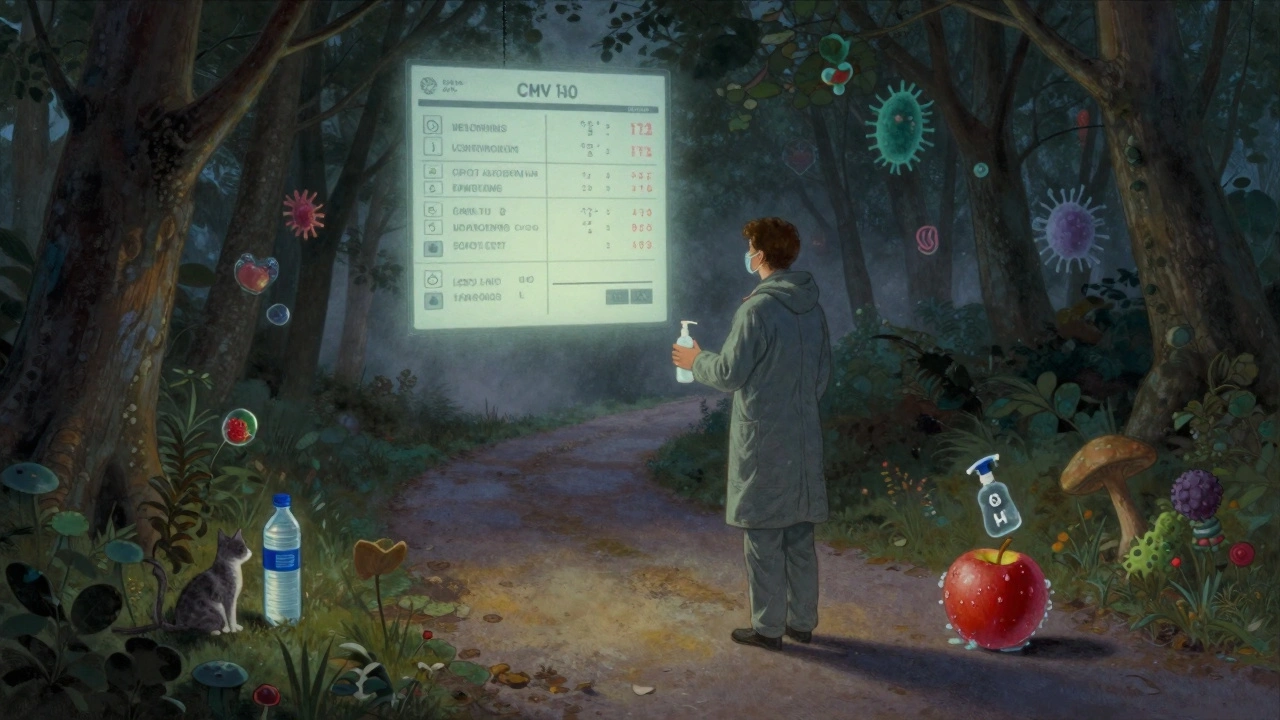
Emerging Threats and New Tools
Antibiotic resistance is rising. One in three bacterial infections in transplant patients now involves multidrug-resistant organisms like ESBL-producing bacteria. These bugs don’t respond to common antibiotics. That’s why doctors are testing new strategies.Fecal microbiota transplantation (FMT)-sometimes called a "poop transplant"-is being studied to restore healthy gut bacteria and crowd out dangerous ones. Early results show promise for preventing recurrent C. difficile and reducing colonization by resistant bacteria.
Anti-adhesion therapies are also in development. These drugs stop bacteria from sticking to your bladder or gut lining, so they can’t take hold. And new CMV vaccines are in clinical trials. None are approved yet, but they could change the game in the next few years.
The Long Game: Beyond the First Year
The highest risk is in the first 3 to 6 months. But infection risk doesn’t disappear. After a year, your immunosuppression often gets lighter. But you’re still not back to normal.CMV can come back. Fungal infections can appear after you stop antifungals. Community viruses like influenza or COVID-19 still hit harder. That’s why ongoing monitoring and vigilance are lifelong.
Keep your transplant team updated. Tell them about any fever, cough, diarrhea, or unusual fatigue-even if it seems minor. Don’t wait. Early action saves kidneys and lives.
Can I get the flu shot after a kidney transplant?
Yes, but only the inactivated flu shot-not the nasal spray. Wait at least six months after your transplant before getting it. Make sure everyone in your household is vaccinated too to reduce your exposure.
Are live vaccines ever safe after a transplant?
Generally, no. Live vaccines like MMR, varicella, and the nasal flu spray contain weakened viruses that can cause illness in immunosuppressed patients. If you need one, it must be given before transplant, not after.
How long do I need to take antiviral medicine after transplant?
For CMV, most patients take antivirals like valganciclovir for 3 to 6 months. High-risk patients (donor positive, recipient negative) may need it longer. Your team will monitor your blood levels and adjust based on your risk.
What foods should I avoid after a kidney transplant?
Avoid raw or undercooked meat, fish, and eggs. Don’t eat unpasteurized dairy products like brie, camembert, or blue cheese. Skip deli meats unless reheated until steaming. Wash all produce thoroughly. Avoid raw sprouts and store-bought salads unless you’re sure they’re fresh and properly handled.
Can I have pets after a kidney transplant?
Yes, but with caution. Avoid cleaning litter boxes, bird cages, or reptile tanks. Wash your hands after touching pets. Don’t let them lick your face or open wounds. Dogs and cats are generally safe if they’re healthy and up to date on vaccines. Avoid exotic pets like turtles or ferrets.
What should I do if I get a fever after transplant?
Call your transplant team immediately. A fever of 38°C (100.4°F) or higher could signal an infection. Don’t wait to see if it goes away. Even if you feel fine otherwise, early treatment makes a big difference in outcomes.
Final Thought: It’s a Balance, Not a Battle
Living with a transplanted kidney means walking a tightrope. Too much immunosuppression? You get infections. Too little? Your body attacks the kidney. The goal isn’t to live in a bubble-it’s to live smart. Take your meds. Get your shots. Wash your hands. Know the warning signs. Stay connected to your team.You didn’t just get a new kidney. You got a second chance. Protect it-not just with pills, but with every choice you make every day.
bobby chandra
December 2, 2025 AT 05:33Man, this post is a godsend. I’m two years post-transplant and still freak out every time I sneeze. But knowing exactly what to avoid-like that raw fish thing? Game changer. I used to love sushi. Now I eat grilled salmon like it’s a sacred ritual. And don’t even get me started on hand sanitizer. I carry three bottles. One in my car, one in my bag, one in my damn coat pocket. I’m basically a walking pharmacy.
Archie singh
December 3, 2025 AT 00:06Stop romanticizing this. It’s not about living smart-it’s about living in fear. You’re told to avoid pets, crowds, raw eggs, hot tubs, and now even tap water in some places. What’s left? A sterile box. And you call that a second chance? It’s a prison with a kidney.
Makenzie Keely
December 4, 2025 AT 12:30Thank you for this! I’m a nurse who works in transplant, and I can’t tell you how many patients skip their antivirals because they ‘feel fine.’ But CMV doesn’t care how you feel-it just waits. And when it strikes? It’s brutal. Also-PLEASE tell your family to get their flu shots. Last month, a 58-year-old got influenza from her 8-year-old who had a runny nose and no fever. She was back in the ICU in 48 hours. Cocooning isn’t optional-it’s survival.
And yes, the FMT stuff is real. We’re doing pilot studies here. One patient had three C. diff flare-ups. After one FMT? Zero recurrence. It’s wild. And yes, it’s poop. But it’s magic poop.
Francine Phillips
December 5, 2025 AT 17:01Yeah. I got the transplant. I take the meds. I wash my hands. I avoid the deli meat. I guess that’s it.
Katherine Gianelli
December 7, 2025 AT 06:12Hey, if you’re new to this-breathe. You’re not alone. I was terrified after my transplant too. But the little things? They add up. I started using a dishwasher for everything-plates, utensils, even my toothbrush holder. I buy pre-washed greens because I can’t stand the guilt of wondering if I missed a speck of dirt. And I started wearing a mask to the grocery store during flu season. People stare. I don’t care. My kidney’s worth it. You’re doing better than you think.
Also-get a buddy. Someone who’ll remind you to take your meds, call your team when you’re too tired to, and bring you soup when you’re sick. I have mine. She’s my lifeline.
Joykrishna Banerjee
December 8, 2025 AT 14:14Typical Western medical dogma. In India, we don’t fear germs-we respect them. Your body adapts. Why suppress immunity? Why not strengthen it with Ayurveda? Turmeric. Ashwagandha. Garlic. These are nature’s antivirals. And you’re paying thousands for synthetic drugs? Pathetic. Also, why are you so scared of cats? In my village, children are raised with goats. No one dies. You’re weak.
Myson Jones
December 9, 2025 AT 02:45I appreciate the thoroughness here. It’s clear a lot of thought went into this. I think the emphasis on daily habits-like handwashing and food prep-is critical. Many patients focus only on meds and overlook the mundane stuff that actually keeps them safe. Also, the mention of chlorhexidine wipes? That’s not widely known. Good call.
parth pandya
December 9, 2025 AT 22:48great post! i had a transplant last year and the cmv thing was scary. i didnt know about the pcr blood test until my doc told me. also i forgot to tell my kids to get their flu shot and i got sick. dumb move. now they are all vaccinated. also dont eat raw sprouts. i learned that the hard way. wash everything. even if its organic. its not worth it.
Charles Moore
December 11, 2025 AT 13:54There’s something deeply human in how this post frames the balance-not as a battle, but as a walk. I lost my brother to transplant complications five years ago. He was brilliant, but he hated the restrictions. He’d sneak a bite of blue cheese. One bite. One infection. One goodbye. This isn’t about fear. It’s about love. Loving your new kidney enough to protect it, even when it feels like you’re giving up everything else.
And yes-your family’s vaccines matter. My sister got her flu shot because of him. Now she says she does it every year, even when she’s healthy. He changed her life too.
Gavin Boyne
December 12, 2025 AT 15:40So let me get this straight: we’re now recommending poop transplants to prevent infections? And you’re not even joking? Next they’ll be prescribing laughter yoga to fight sepsis. I mean… it’s science, I guess. But I’m just waiting for the day someone tries to cure transplant rejection with a crystal and a TikTok dance.
Still… the CMV vaccine trials? That’s the real hope. Maybe one day we won’t need to live like we’re in a biohazard suit.
vinoth kumar
December 13, 2025 AT 10:53Bro this is gold. I’m from India and just got my transplant last month. Everyone here thinks transplant is just surgery and done. No one talks about the daily stuff. I told my mom to stop giving me raw papaya and unboiled milk. She cried. But now she’s reading this post too. We’re all learning. Thank you for making it real.
James Kerr
December 15, 2025 AT 06:38My kid just got a kidney. This post saved my sanity. Thanks.