
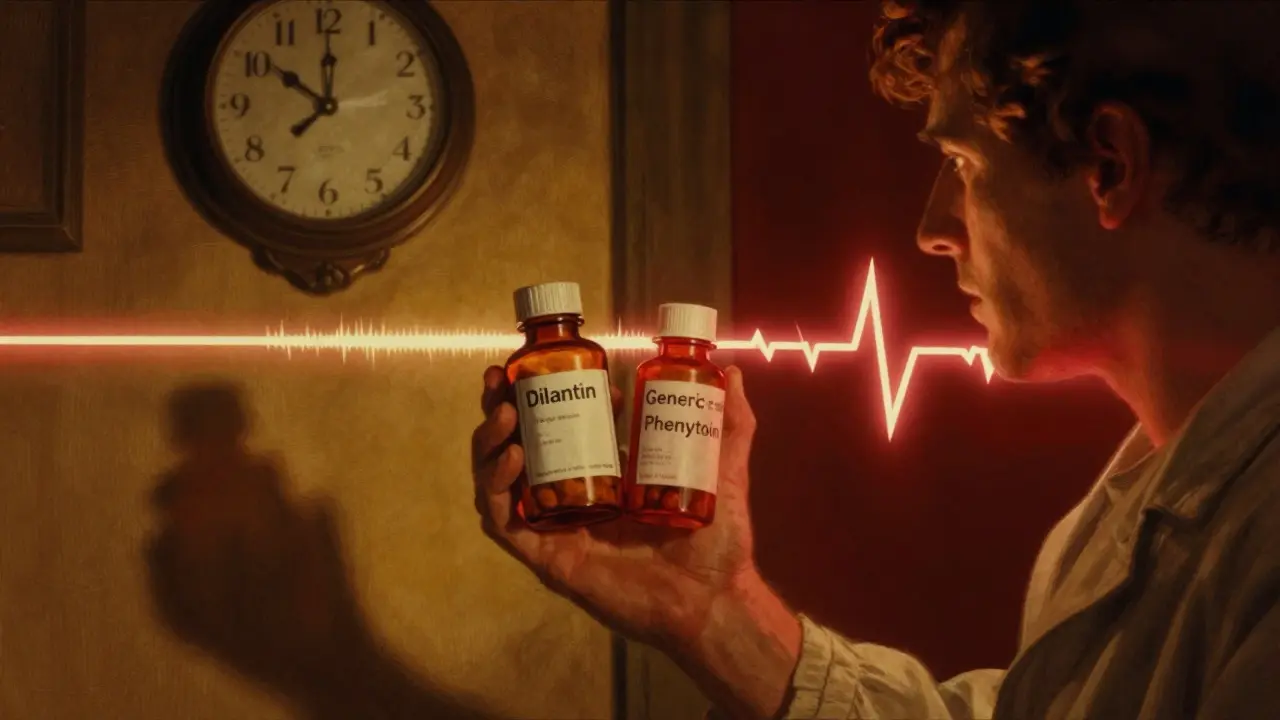
Switching from brand-name phenytoin to a generic version might seem like a simple cost-saving move. But for patients taking this drug, it’s not just about price-it’s about safety. Phenytoin, used for decades to control seizures, has a narrow therapeutic index. That means the difference between a dose that works and one that causes serious harm is tiny. And when you switch between generics-or between brand and generic-the body doesn’t always respond the same way. This isn’t theoretical. People have had seizures because their phenytoin levels dropped. Others have ended up in the hospital from toxicity after a switch that seemed harmless on paper.
Why Phenytoin Is Different
Phenytoin doesn’t behave like most drugs. Most medications follow predictable patterns: double the dose, double the blood level. Not phenytoin. Its metabolism hits a wall. Once blood levels reach around 10-20 mcg/mL, the liver enzymes that break it down get overwhelmed. That’s called zero-order kinetics. At that point, a small increase in dose-say, 25 mg-can cause a huge spike in blood concentration. One extra pill could push someone from safe to toxic.On top of that, phenytoin is 90-95% bound to proteins in the blood. Only the small unbound fraction is active. So if a patient has low albumin-common in older adults, malnourished people, or those with liver disease-the total phenytoin level might look normal, but the active part is dangerously high. That’s why a "normal" level doesn’t always mean safe.
Generic Substitutions: The Hidden Risk
The FDA says generics are bioequivalent if their absorption falls within 80-125% of the brand. Sounds fine, right? For most drugs, yes. But for phenytoin, that 45% swing can mean the difference between control and crisis.Imagine a patient stabilized on brand-name Dilantin at 300 mg daily, with a steady blood level of 15 mcg/mL. They switch to a generic. The new version absorbs 20% slower. Their level drops to 12 mcg/mL. Seizures return. They’re told to increase the dose by 50 mg. Now their level jumps to 28 mcg/mL-past the toxic threshold. Nystagmus, dizziness, confusion. They’re admitted. All because of a switch that met regulatory standards but not clinical reality.
This isn’t rare. Studies and case reports from the U.S., U.K., and Australia show consistent patterns: switching phenytoin brands-even between two generics-can trigger changes in seizure control or side effects. The NHS Tayside guideline from 2022 says it plainly: "Therapeutic monitoring may be required when switching formulations."
When to Check Blood Levels
Don’t wait for symptoms. If you switch phenytoin formulations, test the blood level before and after.- Take a trough level (just before the next dose) right before the switch.
- Wait 5-10 days after the switch, then take another trough level. Phenytoin takes time to reach steady state.
- If the patient got an IV loading dose, check levels 12-24 hours after the oral dose starts.
- For patients with kidney or liver problems, check even sooner-within 3-5 days.
Don’t trust a level taken too early. Levels drawn within the first 5 days are misleading. The body hasn’t adjusted yet. You need the full cycle.

Correcting for Low Albumin
If a patient has low albumin, don’t rely on the total phenytoin level. It’s misleading. Use this formula to estimate the corrected level:Corrected phenytoin = Measured level / ((0.9 × Albumin in g/L ÷ 42) + 0.1)
But here’s the catch: this is just an estimate. It’s based on population averages. Real-world patients vary. The best practice? If albumin is below 30 g/L, order a free phenytoin level instead. That measures only the active, unbound drug. It’s more accurate, especially in critically ill or elderly patients.
Drug Interactions That Change Everything
Phenytoin doesn’t live in isolation. It’s affected by dozens of other medications.Drugs like fluconazole, metronidazole, and sodium valproate slow down phenytoin breakdown. That causes levels to rise. On the flip side, carbamazepine, rifampin, and even alcohol speed it up, making levels drop.
Here’s where it gets tricky: different generic versions use different inactive ingredients. Some might slow absorption slightly. Others might interact with gut enzymes in ways the brand doesn’t. That’s why a switch-even to another generic-can change how other drugs affect phenytoin. Always review the patient’s full med list after any formulation change.
Long-Term Monitoring Beyond Blood Levels
Phenytoin doesn’t just affect your brain. It wears down your bones, gums, and liver over time.- Check vitamin D and calcium levels every 1-2 years. Phenytoin accelerates vitamin D breakdown, leading to osteoporosis.
- Monitor liver enzymes. Chronic use can cause mild elevations.
- Look for gingival hyperplasia-swollen gums. It’s common and often ignored.
- Check blood counts. Rarely, phenytoin causes low white cells or platelets.
- In patients of Han Chinese or Thai descent, test for the HLA-B*1502 gene before starting. This mutation increases the risk of a deadly skin reaction called SJS/TEN.
These aren’t optional. They’re part of routine care. And they don’t change with the brand. Whether it’s Dilantin or a $2 generic, the long-term risks stay the same.
What Clinicians Should Do
If you’re prescribing or managing phenytoin, here’s your action plan:- Document the exact brand or generic used-name, manufacturer, and lot number if possible.
- Never switch formulations without telling the patient and explaining why.
- Check a trough level before switching.
- Recheck levels 5-10 days after the switch.
- Use free phenytoin levels if albumin is low.
- Watch for signs of toxicity: nystagmus, ataxia, slurred speech, drowsiness.
- Don’t assume "normal" total levels are safe in frail or elderly patients.
There’s no evidence that routine monitoring helps stable patients on the same formulation. But when the product changes? That’s when monitoring becomes critical. It’s not about checking boxes-it’s about preventing harm.
Bottom Line
Phenytoin isn’t like other drugs. Its narrow window, nonlinear metabolism, and high protein binding make it uniquely sensitive to small changes. Generic substitutions aren’t always interchangeable here. The FDA’s bioequivalence rules don’t account for clinical reality. Patients can go from seizure-free to toxic with a simple pharmacy switch.The solution isn’t to avoid generics. It’s to monitor smarter. Test before and after the switch. Check albumin. Look at free levels when needed. Watch for side effects. Educate the patient. This isn’t outdated practice-it’s essential. For phenytoin, therapeutic drug monitoring isn’t optional. It’s the only thing standing between a patient and disaster.
Sarah -Jane Vincent
January 13, 2026 AT 16:45Let me tell you something the FDA doesn't want you to know-pharmaceutical companies bribe pharmacists to swap generics without telling patients. I know because my cousin went from Dilantin to some no-name generic and had a seizure in the shower. The pharmacy didn't even document it. This isn't science, it's corporate greed wrapped in a regulatory bow. They're playing Russian roulette with people's brains and calling it "bioequivalent."
And don't get me started on how the FDA approves these generics with zero clinical outcome data. It's all about shelf life and cost, not whether someone dies or not.
TooAfraid ToSay
January 15, 2026 AT 13:21Bro, this whole thing is a scam. I work in a Nigerian pharmacy and we get these generics shipped from India-same pill, same name, but the fillers? Different. Some have talc that messes with absorption. The FDA doesn’t test for that. They test for "active ingredient" but not the junk they put in there to make it cheaper. So yeah, people seize. That’s not a medical issue, that’s a colonial supply chain issue.
Dylan Livingston
January 17, 2026 AT 11:48Oh sweet mercy, another sanctimonious post from the medical-industrial complex pretending they care about patients. Let’s be real-this isn’t about safety, it’s about control. Doctors love having power over their patients’ lives, and nothing says "I’m the expert" like forcing someone to pay $200 for a pill that’s chemically identical to a $3 version. You don’t need to "monitor" anything if you just let people choose. But no, let’s keep the peasants dependent on our prescriptions and blood tests. Classic.
Also, free phenytoin levels? Please. That’s a $400 test. Who can afford that? This isn’t medicine, it’s a luxury service for the insured elite.
Andrew Freeman
January 18, 2026 AT 18:50u/6847 is right but u/6857 is even more right. i had a friend switch and got dizzy for 3 weeks. doc said "your levels are normal" but he was barely walking straight. turns out the generic had a different dye that slowed absorption. no one checks that. the system is broken. just sayin.
also phenytoin makes your gums swell like you’re a vampire. gross.
Alvin Bregman
January 20, 2026 AT 10:46I’ve been on phenytoin for 12 years. Started on Dilantin, switched to a generic because insurance flipped the script. No issues. But I also got my levels checked every 3 months like clockwork, and my doc always asked what brand I was on. I think it’s about communication, not the pill itself. If you track it, monitor it, talk to your patient-switches can be safe. It’s not the drug, it’s the process.
Also, vitamin D is crucial. I take 5000 IU daily. My bones are fine. Just sayin’.
Henry Sy
January 20, 2026 AT 15:11Y’all are missing the real villain: the pharmacists who swap pills without telling anyone. I used to work in a chain pharmacy. We got paid bonuses for switching people to generics-even if the doc wrote "dispense as written." We’d just scribble "generic equivalent" on the label and call it a day. Patients had no clue. One guy had a seizure at his daughter’s wedding because we swapped his brand for some no-name crap from China. He still doesn’t know why. That’s not negligence, that’s criminal.
And don’t even get me started on how insurance companies force these switches every 6 months just to save $2. It’s like playing musical chairs with your brain chemistry. Someone needs to sue these bastards.
Anna Hunger
January 21, 2026 AT 13:45Thank you for this meticulously detailed and clinically sound exposition. The inclusion of the corrected phenytoin formula, the emphasis on free drug levels in hypoalbuminemic patients, and the explicit recommendation for pre- and post-switch therapeutic drug monitoring aligns precisely with current neuropharmacological best practices as outlined in the 2023 ILAE guidelines. This is precisely the kind of evidence-based, patient-centered communication that must be disseminated to frontline providers. The systemic failure to implement these protocols constitutes a profound lapse in standard of care, and your clarification of the zero-order kinetics mechanism is both accurate and essential for non-specialists. I would encourage distribution of this content to all neurology and primary care departments.
Robert Way
January 23, 2026 AT 01:35wait so if you switch generics you might get seizures but if you take the brand you’re fine? so why do we even have generics then? is this like how some people say generic ibuprofen doesn’t work? i thought all pills were the same. my aunt took generic and she’s fine. maybe she just lucky?
also why do we need to check albumin? is that like a liver thing? i thought phenytoin was just for seizures.
Sarah Triphahn
January 24, 2026 AT 16:39Let’s cut the crap. This isn’t about safety. It’s about control. You want to keep patients dependent on doctors, labs, and expensive monitoring? Fine. But don’t pretend you’re protecting them. You’re protecting your revenue stream. If phenytoin was a $10 generic, you wouldn’t be writing 10 paragraphs about "free levels" and "troughs." You’d be like everyone else: "Take the pill, come back in 3 months."
Also, HLA-B*1502 testing? That’s just another way to gatekeep care. Poor people don’t get genetic testing. They get seizures. That’s the real bottom line.