
Every pill, every injection, every vial that reaches a patient should be safe. But in 2024, law enforcement agencies around the world uncovered 6,424 incidents of counterfeit, stolen, or illegally diverted medicines - affecting over 2,400 different drugs across every therapeutic area. From fake cancer treatments to counterfeit insulin, these aren’t just poor-quality products. They’re deadly. And pharmacists are the last line of defense.
Why Pharmacists Can’t Ignore Counterfeit Drugs Anymore
You might think counterfeit drugs only show up in shady online marketplaces or in developing countries. That’s not true anymore. Criminal networks are smarter. They’re copying packaging down to the font size. They’re using real-looking barcodes and tamper-evident seals. Some even replicate the smell and texture of authentic medication. If you’re relying on visual checks or calling a manufacturer’s hotline, you’re already behind. The U.S. Drug Supply Chain Security Act (DSCSA), passed in 2013, started building a digital tracking system for prescription drugs. By 2023, most wholesalers and pharmacies were required to verify product identifiers. But that system only works if pharmacists know what to look for - and what to do when something doesn’t add up. The World Health Organization and the International Pharmaceutical Federation (FIP) released a competency-based training curriculum in 2021 after testing it with 355 pharmacy students in Cameroon, Senegal, and Tanzania. Results? Students improved their ability to identify falsified medicines by over 70%. That’s not just theory - it’s proof that targeted education saves lives.What You Need to Know: The Core Skills
There’s no single checklist, but here’s what every pharmacist needs to master:- Price anomalies: If a drug is priced 40% or more below the wholesale acquisition cost (WAC), it’s a red flag. Especially for high-value drugs like biologics or oncology treatments. Criminals target these because the profit margin is huge.
- Unusual distribution channels: Specialty drugs like Humira or Enbrel are only distributed through authorized channels. If a supplier claims to have them “direct from the manufacturer” but isn’t on the company’s official list of distributors, walk away.
- Packaging inconsistencies: Look for mismatched batch numbers, blurry printing, typos, or labels that don’t match the manufacturer’s website. Even small things - like a slightly different shade of blue on the bottle - matter.
- Online sales: More than 13,000 illegal online pharmacies were shut down in 2025 alone during Interpol’s Operation Pangea XVI. If a patient shows up with medication bought from a website they found on Google, verify it. Don’t assume it’s legit.
Technology Is Changing the Game
Gone are the days when verifying a drug meant calling a rep or checking paper certificates. Today, handheld devices powered by AI and spectral analysis can tell you in seconds whether a pill is real or fake. RxAll’s technology, for example, uses light spectroscopy to detect molecular differences invisible to the human eye. A counterfeit version of a common blood thinner might look identical - but its chemical composition is off. The device reads that difference in under 10 seconds. Pharmacists using these tools report a 90% reduction in verification time and a dramatic increase in confidence. It’s not just about speed. It’s about accuracy. A 2024 survey of community pharmacists showed that 78% felt more empowered to refuse suspicious medications after using these tools. And when they did, they were more likely to report it to authorities - which helps shut down criminal networks.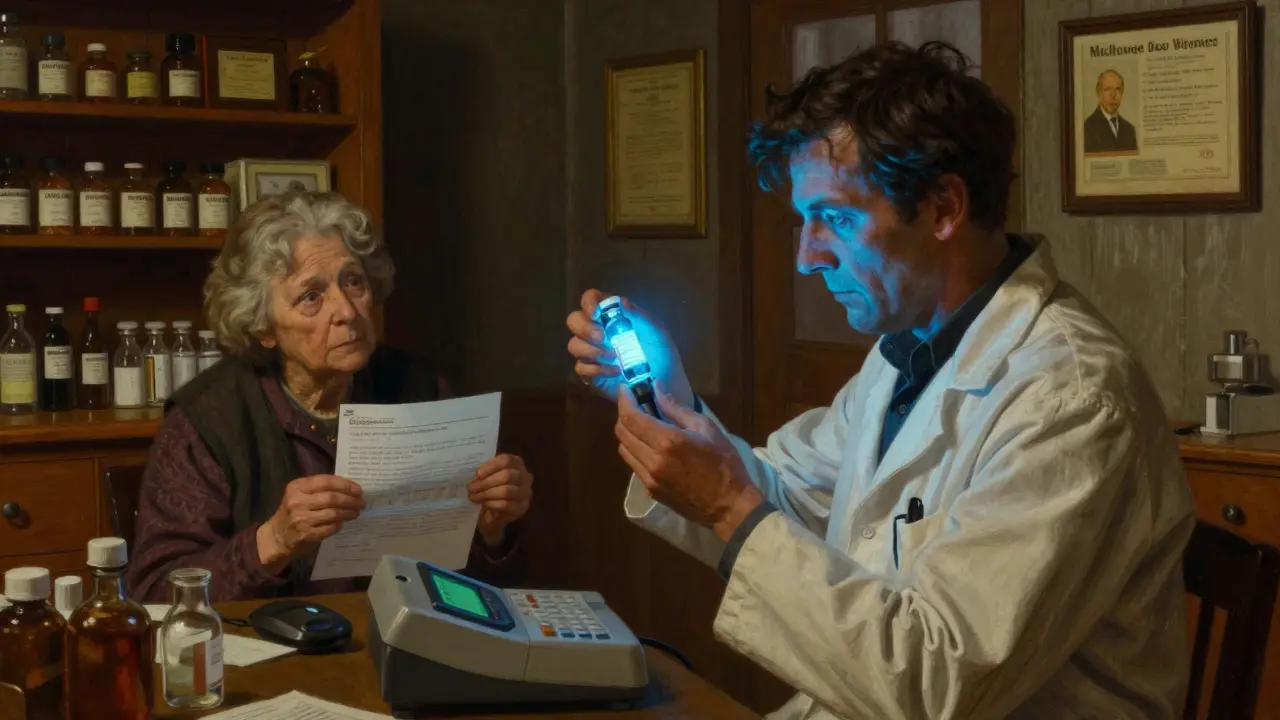
Training Programs That Actually Work
Not all training is created equal. Here’s what’s out there - and what actually sticks:- FIP/WHO Curriculum: Designed for pharmacy schools, this is the gold standard for foundational knowledge. It covers global trends, legal frameworks, and detection techniques. Used in over 20 countries now, it’s the only curriculum endorsed by WHO for formal education.
- TrainingNow.com’s Medicare FWA Course: While originally built for Medicare compliance, it includes real-world scenarios on identifying fraudulent prescriptions and diverted drugs. Pharmacists appreciate the mobile format - you can finish it during a lunch break.
- PowerPak’s ‘Fakes in the Pharmacy’: A concise CE course that explains how common counterfeiting is in the U.S. and globally. It’s short, practical, and often used by chain pharmacies for staff onboarding.
- RxAll’s Platform: Combines training with the actual verification tool. Pharmacists learn by doing. There’s even an online forum where users share suspicious cases they’ve encountered - a real-time knowledge base built by practitioners.
The Global Picture: Where It’s Working and Where It’s Not
The U.S. has the most advanced drug tracking system in the world. But most countries don’t. In parts of Africa, Asia, and Latin America, supply chains are still paper-based. Counterfeit drugs enter through informal markets, border crossings, and unregulated distributors. That’s why WHO’s new toolkit - set for release in late 2024 - is so important. It’s designed to help low-resource settings implement detection protocols without needing expensive tech. Simple visual guides, QR code checks using smartphones, and community reporting networks are part of the plan. Meanwhile, Interpol’s 2025 operation showed that global collaboration works. Ninety countries worked together. Over 50 million counterfeit doses were seized. More than 700 arrests were made. But none of that would matter if pharmacists on the ground didn’t recognize the drugs they were holding.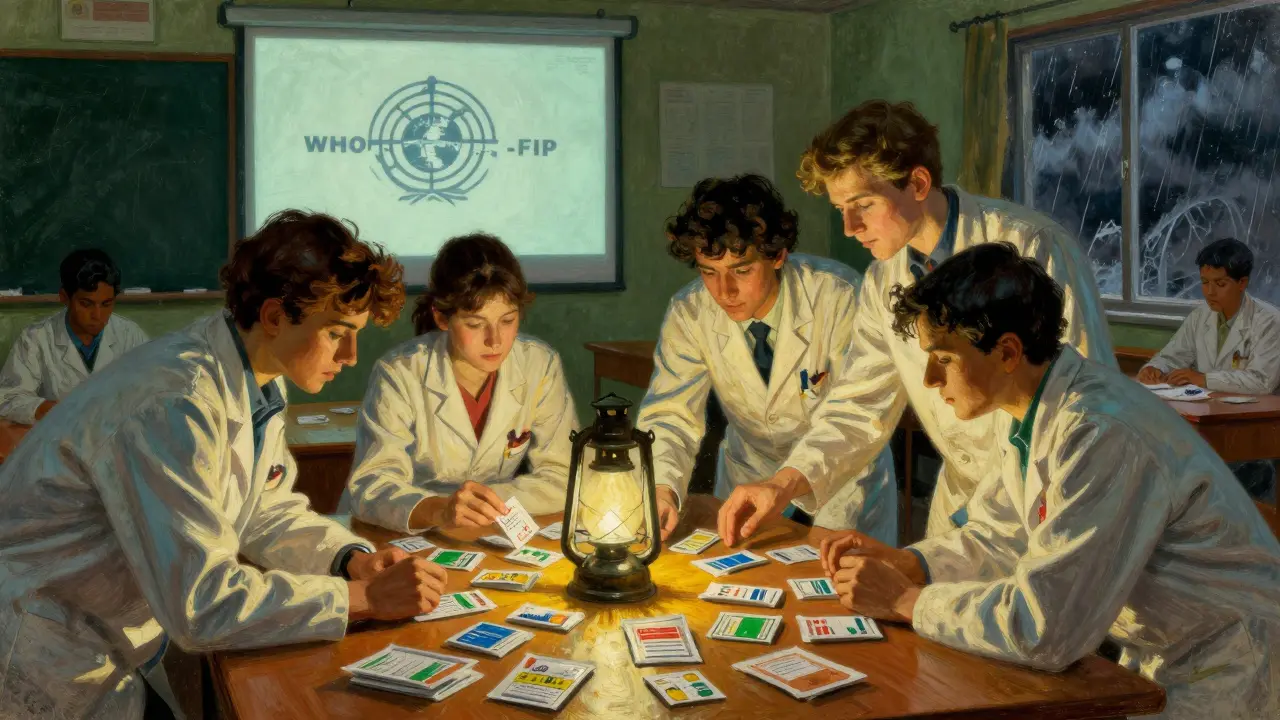
What You Can Do Today
You don’t need to wait for your employer to offer training. Start now:- Visit the manufacturer’s website for any drug you’re unsure about. Check their list of authorized distributors.
- Download the WHO FIP training materials - they’re free and available in English and French.
- Ask your pharmacy manager if you can access RxAll’s platform or similar verification tools.
- Join the conversation. If you’ve seen something suspicious, report it. Your pharmacy can file a report with the FDA’s MedWatch program or your country’s equivalent.
- Teach your staff. Even a 15-minute huddle once a month on a recent counterfeit case builds awareness.
It’s Not Just About the Drugs - It’s About the People
Behind every counterfeit pill is a patient who took it. Maybe it was an elderly person trying to save money. Maybe it was a parent giving their child a fever reducer they bought online. These people don’t know they’re being poisoned. Pfizer’s Anti-Counterfeiting Program has prevented over 302 million counterfeit doses from reaching patients since 2004. That’s not just a number. That’s 302 million families who didn’t lose someone because a pharmacist said, “This doesn’t look right.” You’re not just filling prescriptions. You’re protecting lives. And that’s why training on counterfeit detection isn’t optional anymore. It’s part of what it means to be a pharmacist in 2026.How common are counterfeit drugs in the U.S.?
While the U.S. has the most secure drug supply chain globally thanks to the DSCSA, counterfeit drugs still enter through online pharmacies, diverted products, and compromised wholesale channels. The Pharmaceutical Security Institute reported over 1,200 counterfeit incidents in the U.S. alone in 2024. Most are detected before reaching patients - but only because pharmacists are trained to spot them.
Can I trust medications from big pharmacy chains?
Major chains like CVS, Walgreens, and Walmart have strict supplier vetting and use the DSCSA tracking system. But even they’ve been targeted. In 2023, a shipment of fake insulin was intercepted at a regional distribution center. The key is always verifying - don’t assume. If the packaging looks off or the price is suspicious, check it.
What should I do if I suspect a drug is counterfeit?
Don’t dispense it. Isolate the product, document the details (batch number, supplier, packaging photos), and report it. In the U.S., file a report with the FDA’s MedWatch program. In other countries, contact your national health authority or regulatory body. You can also report to the Pharmaceutical Security Institute. Your report helps track criminal patterns and prevent others from being harmed.
Are there free training resources available?
Yes. The FIP and WHO offer a free, downloadable competency-based curriculum in English and French. PowerPak and TrainingNow.com offer free or low-cost CE courses. RxAll also provides limited free access to their training modules for students and community pharmacists. Start with these before investing in paid programs.
Do I need special equipment to detect counterfeits?
Not always. Many counterfeits can be caught with visual inspection and supplier verification. But for high-risk drugs - like oncology treatments, biologics, or insulin - handheld verification devices like those from RxAll are becoming standard in hospitals and large pharmacies. They’re not mandatory everywhere yet, but they’re the future. If your pharmacy doesn’t have one, advocate for it.
Haley Graves
January 16, 2026 AT 04:39Just finished training on the FIP/WHO curriculum last week. It’s not just about spotting fake packaging anymore-it’s about knowing when to escalate. I had a patient come in with insulin bought off Instagram. Looked perfect. The device flagged it in 8 seconds. I called the FDA. They traced it back to a lab in Mumbai. This isn’t theoretical. It’s daily.
Diane Hendriks
January 18, 2026 AT 04:14The DSCSA is a bureaucratic farce. It creates the illusion of security while letting foreign manufacturers slip through the cracks. The real problem? The FDA’s approval process is compromised by corporate lobbying. If you want to know where counterfeit drugs originate, stop looking at the pharmacy counter and start looking at Congress.
Sohan Jindal
January 19, 2026 AT 01:26They’re putting chips in the pills. That’s what the new devices are really for. Not to detect fakes-to track you. The government and Big Pharma are using this ‘counterfeit’ scare to control what we take. You think they care about your life? They care about your data. That barcode? It’s a spy chip. Don’t be fooled.
Frank Geurts
January 20, 2026 AT 15:49It is with profound respect for the integrity of the pharmaceutical profession that I acknowledge the extraordinary diligence required of pharmacists in this era of unprecedented supply-chain complexity. The global coordination demonstrated by Interpol’s Operation Pangea XVI, coupled with the rigorous implementation of the DSCSA, represents a paradigm shift in patient safety-one that demands not only technical proficiency but moral courage.
Annie Choi
January 21, 2026 AT 21:04Real talk: if your pharmacy doesn’t have a handheld verifier, you’re playing Russian roulette with people’s lives. I work in a rural clinic in Alberta. We got a grant for an RxAll unit last year. Changed everything. No more second-guessing. No more guilt. Just facts. If you’re not using tech like this, you’re not doing your job.
Mike Berrange
January 23, 2026 AT 12:47Why are we even talking about this? Most of these ‘counterfeit’ cases are just expired meds being resold. The real issue is people can’t afford their prescriptions. If the system didn’t price drugs like they’re luxury watches, no one would buy from sketchy websites. Blame the system, not the pharmacist.
Dan Mack
January 25, 2026 AT 02:49They’re lying about the numbers. 6,424 incidents? That’s nothing. The real number is 10 times higher. The FDA hides it because they don’t want panic. I know a guy who works at a wholesaler-he says they get three fake shipments a week and just send them to small clinics. That’s how it works. You’re all being played.
Amy Vickberg
January 26, 2026 AT 16:52I’ve seen this firsthand. A woman brought in a bottle of metformin that looked wrong. I checked the batch, called the rep, found it wasn’t authorized. She cried. Said she’d been skipping doses because she couldn’t afford it. We got her the right med for free through a patient assistance program. This isn’t just about detection-it’s about compassion.
Nishant Garg
January 27, 2026 AT 00:28In India, we’ve been dealing with this for decades. Fake insulin in rural markets, fake antibiotics sold by street vendors. But here’s the thing-people trust the local pharmacist more than the government. That’s why community-based training works. A simple visual guide, printed in Hindi or Tamil, passed hand to hand-it’s not fancy, but it saves lives. Tech helps, but trust is the real tool.
Nicholas Urmaza
January 27, 2026 AT 05:51TrainingNow.com’s course is garbage. It’s 20 minutes long and tells you to ‘be alert.’ That’s not training. That’s a PSA. If your employer is making you take that instead of the FIP curriculum, they’re cutting corners. You’re not just a pill pusher. You’re a gatekeeper. Act like it.
Sarah Mailloux
January 28, 2026 AT 02:48My boss won’t buy the RxAll device because it’s ‘too expensive.’ So I started doing visual checks during my breaks. I take photos of weird packaging and post them in our staff group chat. Now everyone knows what to look for. No fancy tech needed. Just eyes, curiosity, and a little courage.
Nilesh Khedekar
January 29, 2026 AT 17:34Oh wow, another ‘educate the pharmacist’ lecture. Brilliant. While you’re teaching them to spot fake pills, the same corporations are lobbying to weaken the DSCSA. The real villain isn’t the counterfeiters-it’s the boardroom that lets this happen. And you? You’re just the guy who gets blamed when it goes wrong.
Crystel Ann
January 30, 2026 AT 00:20I used to think this was a big deal until I saw a fake blood pressure med in a Walmart parking lot. The bottle looked exactly like the real one. I didn’t say anything. I should have. I feel awful. Just… don’t wait to act. If something feels off, it probably is.
Nat Young
January 31, 2026 AT 13:0178% of pharmacists feel more empowered after using the device? That’s a survey, not evidence. Where’s the data on actual patient outcomes? Did anyone die because a fake drug slipped through? Or is this just fear-mongering to sell more gadgets? Don’t confuse confidence with competence.
Niki Van den Bossche
January 31, 2026 AT 18:45The entire paradigm of pharmaceutical integrity is a neoliberal fiction. The DSCSA is not a safeguard-it’s a performative artifact designed to absolve the state of its responsibility to regulate capital. The real counterfeit is the belief that market mechanisms can ensure human safety. We are not consumers. We are bodies. And the system treats us like inventory.