
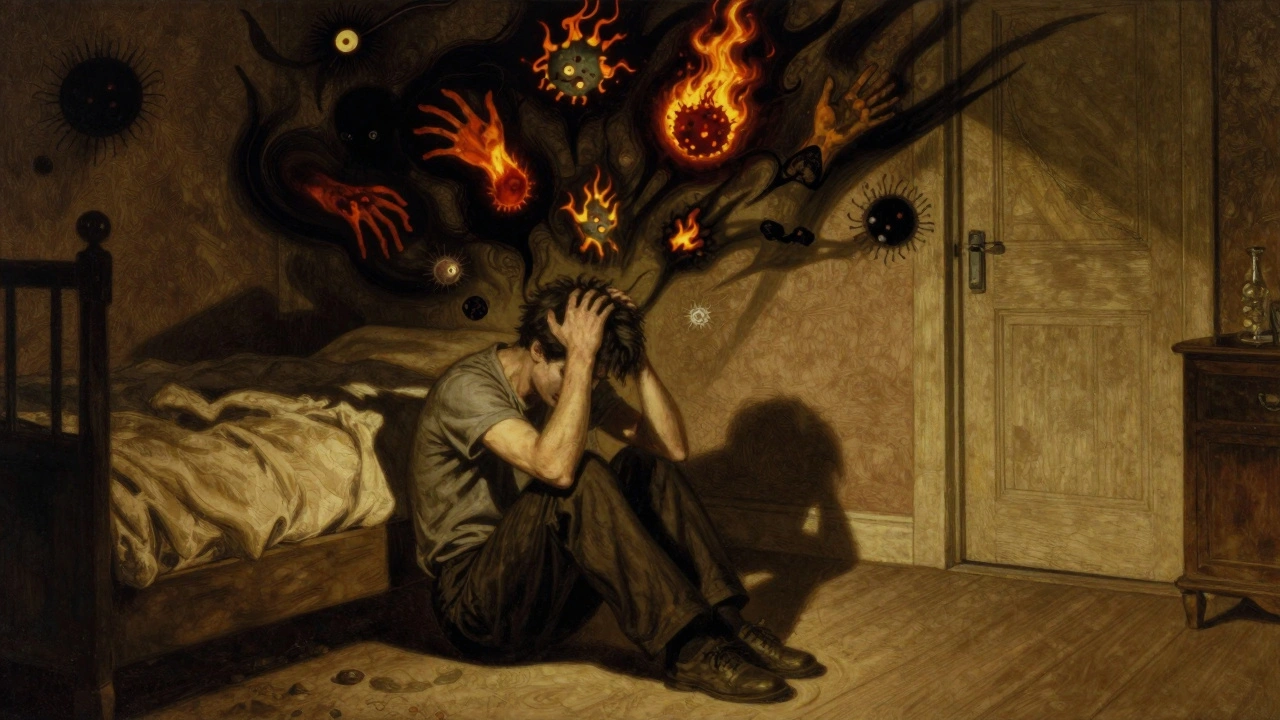
Imagine waking up and immediately fearing you’ve accidentally harmed someone while driving - even though you know you didn’t. Or spending hours washing your hands because the thought of germs feels unbearable, even though you’ve washed them 20 times already. These aren’t just bad thoughts. For people with obsessive-compulsive disorder (OCD), they’re relentless, terrifying, and feel completely out of control.
What Are Intrusive Thoughts in OCD?
Intrusive thoughts are sudden, unwanted ideas or images that pop into your mind. Everyone gets them sometimes. You might think, What if I pushed that person in front of the train? or What if I forgot to lock the door? Most people brush them off. But for someone with OCD, these thoughts stick. They don’t just fade. They grow. And they come back - again and again.The key difference isn’t the thought itself. It’s what happens after. People with OCD interpret these thoughts as dangerous, immoral, or meaningful. If you value being a good parent, a thought like What if I hurt my child? feels like a warning sign - not a random glitch in your brain. That’s why it terrifies you. You don’t want to act on it. You’re horrified by it. But your brain treats it like a real threat.
These thoughts fall into common themes:
- Contamination: Fear of germs, dirt, or chemicals. This affects about 25% of people with OCD.
- Harm: Fear of hurting yourself or others - intentionally or by accident. Around 20-25% experience this.
- Symmetry and order: Needing things arranged just right. About 15-20% struggle with this.
- Taboo thoughts: Sexual, religious, or identity-related images that feel wrong or blasphemous. These affect 10-15%.
One Reddit user shared: “I have violent thoughts over ten times a day. I’ve never been violent in my life. But I’m terrified I’ll lose control.” That’s the heart of OCD. It’s not about what you do. It’s about how your brain reacts to what it thinks.
How OCD Traps You in a Cycle
OCD doesn’t just live in your thoughts. It lives in your actions. Here’s how it works:- You get an intrusive thought - like “What if I left the stove on and the house burns down?”
- You feel intense anxiety - your heart races, your stomach tightens.
- You do something to make it stop - you check the stove five times, then ten, then twenty.
- The anxiety fades… for a moment.
- The thought comes back. And the cycle starts again.
This is called the obsession-compulsion cycle. And here’s the cruel part: the more you do the compulsion, the stronger the obsession becomes. Your brain learns: “Only by checking can I stay safe.” So it keeps sending the thought. And you keep checking.
People with OCD often spend hours a day doing this. One person told NAMI they spent 3-4 hours daily checking locks and appliances - and lost their job because of it. The NHS says OCD becomes a disorder when it takes up more than an hour a day and interferes with work, relationships, or daily life.
Why ERP Therapy Is the Most Effective Treatment
For decades, people were told to talk through their fears. To reason with them. To think positively. But that doesn’t work for OCD. Trying to logic your way out of an intrusive thought is like trying to stop a tsunami with a bucket.The only treatment proven to break this cycle is Exposure and Response Prevention - or ERP therapy. It’s not a new idea. It was developed in the 1960s by Dr. Victor Meyer and refined by Dr. Edna Foa in the 1980s. Today, it’s the gold standard - recommended by the American Psychological Association and backed by decades of research.
ERP has two parts:
- Exposure: You face the thing that scares you - without doing the compulsion.
- Response Prevention: You resist the urge to perform the ritual that calms you down.
For example, if you’re afraid of germs, you might touch a doorknob and then sit with the anxiety - without washing your hands. At first, your anxiety spikes. It feels unbearable. But if you stay with it - for 20, 30, 60 minutes - your brain learns something new: “Nothing bad happened. I didn’t die. I didn’t get sick. The anxiety went away on its own.”
This is called habituation. Your brain stops treating the thought like a threat. Over time, the thoughts lose their power.
Studies show 60-80% of people who complete ERP see a major drop in symptoms. And 65% of them stay improved five years later. That’s far better than medication alone, which helps 40-60% of people - and often comes with side effects like weight gain, nausea, or sexual dysfunction.

What ERP Doesn’t Look Like
ERP isn’t about being brave. It’s not about “just facing your fears.” It’s not a one-time event. And it’s not something you can do alone.Many people try to do ERP on their own - and fail. Why? Because it’s hard. Really hard. In the first two to three weeks, 70% of patients say their anxiety gets worse before it gets better. That’s normal. But without a trained therapist guiding you, it’s easy to quit.
Here’s what ERP is not:
- Not talk therapy: Talking about your fears over and over just makes them stronger. Rumination feeds OCD.
- Not mindfulness alone: Mindfulness can help, but it doesn’t break the cycle. It’s a tool - not the cure.
- Not medication: SSRIs like fluoxetine can help reduce anxiety, but they don’t teach your brain to stop fearing thoughts. They’re often used alongside ERP - not instead of it.
The best results come from working with a therapist who specializes in OCD. General CBT therapists often don’t know how to do ERP correctly. And if you’re doing it wrong - like avoiding the hardest fears or doing partial compulsions - it won’t work.
What ERP Looks Like in Real Life
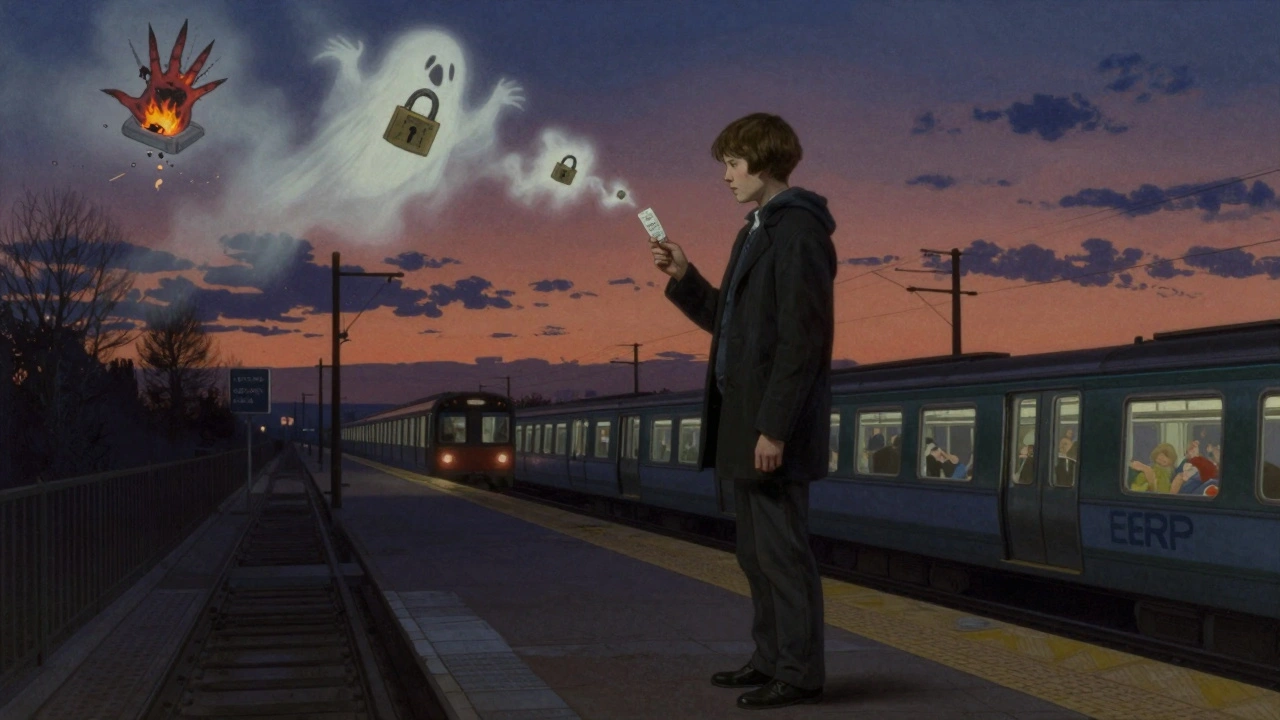
Let’s say you have harm OCD. You’re terrified you’ll accidentally push someone onto the subway tracks. You avoid crowded places. You check your hands for sweat. You replay every interaction in your head.Your therapist helps you build a fear ladder:
- Look at a picture of a crowded train (anxiety level: 30/100)
- Stand near the edge of a platform (anxiety level: 50/100)
- Hold a subway ticket in your hand without checking your hands (anxiety level: 70/100)
- Stand on the platform while a train arrives - no checking, no mental rituals (anxiety level: 90/100)
You start with #1. You do it. You sit with the anxiety. You don’t look away. You don’t say a prayer. You don’t mentally reassure yourself. You just sit. And you wait. The anxiety rises. Peaks. Then slowly drops. You do it again. And again. Until it doesn’t feel so scary.
Then you move to #2. And so on.
One 14-year-old in a CDC case study went from spending 4-5 hours a day doing rituals to less than 30 minutes after six months of ERP. That’s not magic. That’s neuroscience.
Why So Few People Get Help
Here’s the sad part: most people with OCD don’t get treated. Why?- They don’t know what’s happening. They think they’re “going crazy” or “a bad person.”
- They’re ashamed. Taboo thoughts about sex, religion, or violence feel like proof they’re broken. One person waited seven years to tell anyone about their doubts over their gender identity.
- They’re misdiagnosed. The International OCD Foundation says 35% of people wait over 10 years for the right diagnosis. Many are told they have anxiety, depression, or even psychosis.
- There aren’t enough trained therapists. Only 10% of U.S. therapists have proper ERP training. In rural areas, 75% of counties have zero OCD specialists.
Telehealth has helped. Now 45% of people get treatment online - up from just 5% before the pandemic. But insurance often doesn’t cover it equally. Only 60% of major insurers treat telehealth ERP the same as in-person sessions.
New Tools and Hope on the Horizon
There’s progress. In 2023, the FDA approved the first digital therapeutic for OCD - the nOCD app. It guides users through ERP exercises. A 2022 study found it helped 55% of people with mild OCD.Researchers are also using brain scans to predict who will respond best to ERP. Stanford’s 2023 study used machine learning to predict success with 78% accuracy - based on how certain brain areas light up during fear tasks.
For people who don’t respond to ERP or meds, new options are emerging. Transcranial magnetic stimulation (TMS) showed a 45% response rate in treatment-resistant cases in a 2023 New England Journal of Medicine study.
And the understanding of “Pure O” - OCD with mostly mental compulsions, no visible rituals - is growing. The DSM-5-TR now recognizes it as a distinct form, affecting about 20% of people with OCD. That’s huge. For years, these people were told they didn’t “have real OCD” because they didn’t wash their hands or check locks.
You’re Not Broken. You’re Not Alone.
If you’re reading this and you’ve been hiding your thoughts - if you’ve been terrified to say them out loud - know this: you are not alone. And you are not dangerous. Your thoughts do not define you. They’re just noise in your brain.ERP doesn’t promise you’ll never have another intrusive thought. It promises you’ll learn to live with them - without letting them control your life.
The first step isn’t being brave. It’s being honest. With yourself. With a therapist. With someone who gets it. Support groups like those run by the International OCD Foundation have 85% satisfaction rates. People say: “For the first time, I didn’t feel like a monster.”
Recovery isn’t about eliminating thoughts. It’s about reclaiming your life. And it’s possible.
Are intrusive thoughts normal?
Yes, intrusive thoughts are normal. Almost everyone experiences them occasionally - like imagining dropping your baby or yelling at your boss. The difference with OCD is that these thoughts feel uncontrollable, are interpreted as dangerous or immoral, and trigger intense anxiety. People with OCD don’t act on them - they’re horrified by them. That’s why they’re called ego-dystonic: they clash with who you believe you are.
Can ERP therapy make OCD worse at first?
Yes, it’s common for anxiety to spike in the first few weeks of ERP. That’s because you’re breaking the habit of using compulsions to escape discomfort. Your brain resists. But this spike doesn’t mean you’re getting worse - it means you’re learning. Most people see improvement after 4-6 weeks. Sticking with it is what leads to lasting change.
Is medication necessary for OCD treatment?
No, medication isn’t required, but it can help. SSRIs like fluoxetine or sertraline are often used alongside ERP, especially for moderate to severe cases. Studies show that combining ERP with medication leads to the highest success rates - up to 85%. But many people choose ERP alone because it teaches long-term skills, while meds only manage symptoms. Side effects like nausea, fatigue, or sexual issues can make some people stop taking them.
How long does ERP therapy take?
Most ERP programs last 12 to 20 weeks, with weekly sessions and daily homework. Patients typically spend 1-2 hours a day doing exposures outside of therapy. Some see major improvement in 8-10 weeks. Others need longer, especially if symptoms are severe or if they’ve had OCD for many years. The key isn’t speed - it’s consistency.
Can I do ERP on my own without a therapist?
It’s possible, but not recommended. ERP is complex, and doing it wrong can reinforce OCD. Many people try to do it alone - avoiding the hardest fears, doing partial compulsions, or giving up too soon. A trained OCD therapist helps you build the right fear ladder, prevents safety behaviors, and keeps you on track. Apps like nOCD can help as a supplement, but they’re not a replacement for expert guidance.
What if I don’t have access to an OCD specialist?
Telehealth has made access much easier. Many therapists now offer remote ERP sessions. Organizations like the International OCD Foundation have directories to help you find specialists. If you’re in a rural area, consider starting with an app like nOCD or a book like The OCD Workbook by Bruce Hyman. Reach out to support groups - people who’ve been through it can point you to resources. You don’t need to wait for the perfect therapist to start helping yourself.
Deborah Andrich
December 14, 2025 AT 11:18Scott Butler
December 14, 2025 AT 15:20Ronan Lansbury
December 15, 2025 AT 03:47John Fred
December 16, 2025 AT 01:57Hamza Laassili
December 16, 2025 AT 08:44Cole Newman
December 18, 2025 AT 08:33Casey Mellish
December 20, 2025 AT 01:01Tyrone Marshall
December 20, 2025 AT 10:39Emily Haworth
December 21, 2025 AT 20:43Lara Tobin
December 21, 2025 AT 23:10Jamie Clark
December 23, 2025 AT 02:45Rawlson King
December 24, 2025 AT 05:08