
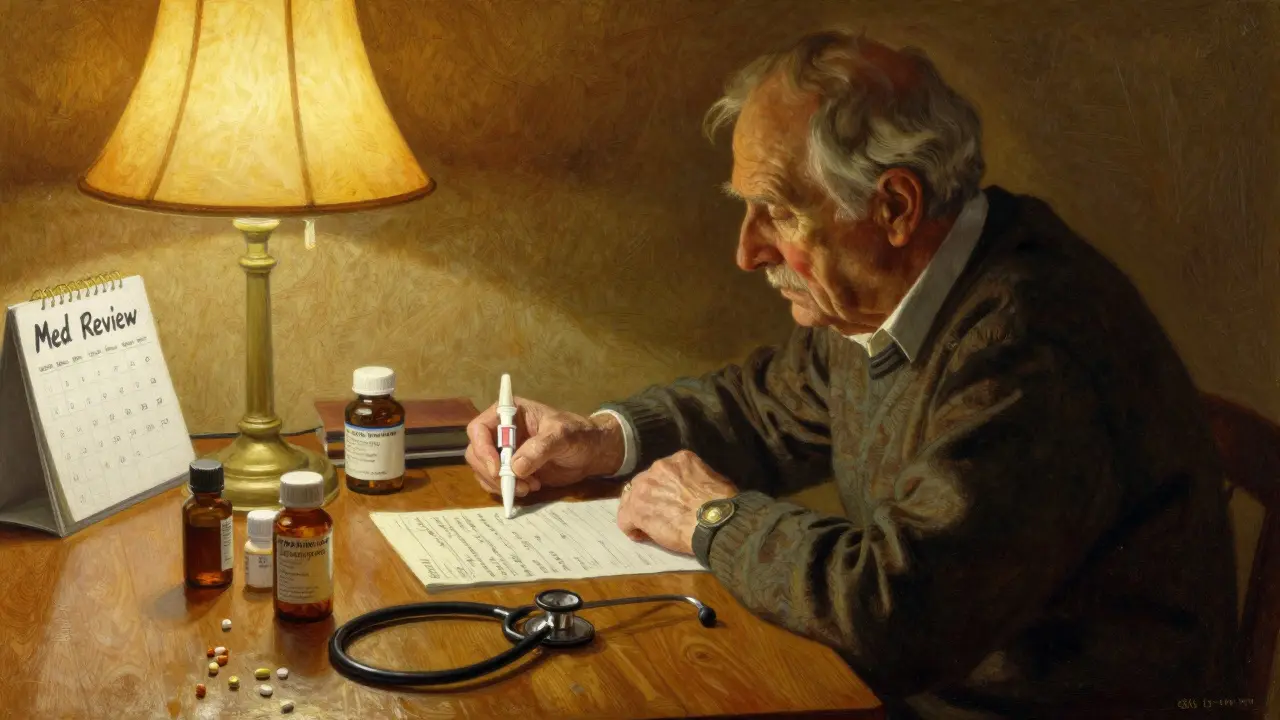
Imagine this: you’re rushed into the emergency room after a fall. You can’t remember all the pills you take. The doctor asks, "What are you on?" You say, "I think it’s something for blood pressure... and a vitamin." That’s not enough. In fact, it’s dangerous. Every year, medication errors send hundreds of thousands of people to the hospital - and many of them happen because no one has a clear, complete list of what the patient is actually taking.
Keeping a complete medication list isn’t just a good idea. It’s a safety habit that saves lives. And it’s not just for older adults or people with complex health issues. If you take any pill, supplement, cream, or inhaler - even occasionally - you need one. This list becomes the bridge between your doctor, pharmacist, and emergency responders. When it’s accurate, it stops mistakes before they happen.
What Belongs on a Complete Medication List
A simple note like "blood pressure med" won’t cut it. A real, usable medication list includes specific details for every item you take. Missing even one piece can lead to dangerous interactions or missed diagnoses.
- Medication name: Both generic and brand names. Example: lisinopril (brand: Zestril)
- Dosage: Exact amount. Not "one pill." Write: 10 mg
- How and when to take it: "Take once daily with breakfast" - not just "once a day."
- Why you take it: "For high blood pressure" or "for occasional heartburn." This helps doctors spot duplicates or unnecessary drugs.
- When you started: "Started January 2024" - helps track changes.
- Who prescribed it: Name and clinic. If you got it from a walk-in clinic or online provider, write it down.
- Refill status: "Last refill: Feb 5, 2026. Next due: March 5."
Don’t forget non-pill items. Topical creams, eye drops, inhalers, patches, and even IVs you got at a clinic all belong here. Herbal supplements like turmeric, ginkgo, or St. John’s wort? Yes. Vitamins? Absolutely. Over-the-counter painkillers like ibuprofen or antacids? Yes. These are often left out - and that’s where things go wrong.
Also list allergies - but be specific. Don’t just write "allergic to penicillin." Write: "Amoxicillin - severe rash and swelling." That level of detail prevents doctors from prescribing something similar.
Why This Matters More Than You Think
Medication errors are one of the top causes of preventable harm in healthcare. According to the Agency for Healthcare Research and Quality (AHRQ), about 1.5 million people in the U.S. are harmed by medication mistakes each year. Half of those happen when patients move between care settings - like from home to hospital, or hospital to rehab.
Why? Because nobody has the full picture. A 2022 study found that 40-60% of patient-reported medication lists had at least one error - missing drugs, wrong doses, or outdated info. Even more startling: a study of 500 hospital admissions found that 73% of patients’ lists had significant omissions.
But here’s the good news: when patients keep an accurate, updated list, they cut their risk of adverse drug events by 43%. That’s not a guess. It’s from a JAMA Internal Medicine study tracking over 8,400 patients over several years.
Doctors and pharmacists rely on this list. Nurses use it when they’re short-staffed. Emergency responders use it when you’re unconscious. A complete list can mean the difference between a quick recovery and a life-threatening mistake.
How to Build and Maintain Your List
You don’t need fancy tech. But you do need structure. Follow this simple three-step process:
- Create the list - Sit down with all your medications. Take them out of their containers. Write down everything. Include bottles, boxes, and even the ones you only take when you feel a headache. This takes 20-30 minutes. Do it once. Then update it as you go.
- Review it with your doctor - Don’t just mention it during a quick check-up. Schedule a 15-minute "medication review" appointment. A 2023 study in the Annals of Family Medicine found that 68% of medication discussions get cut short when tacked onto other visits. Make this its own appointment. Bring your list. Ask: "Is everything here still necessary?"
- Update it immediately - If your doctor changes a dose, stops a drug, or adds a new one - update your list that day. Don’t wait. Use a pen, not pencil. If you use an app, make sure it syncs to the cloud.
For people on five or more medications, color-coding helps. Use green for daily meds, red for PRN (as-needed) drugs, blue for supplements. A 2023 study at Advanced Psychiatry Associates found this boosted adherence by 27%.
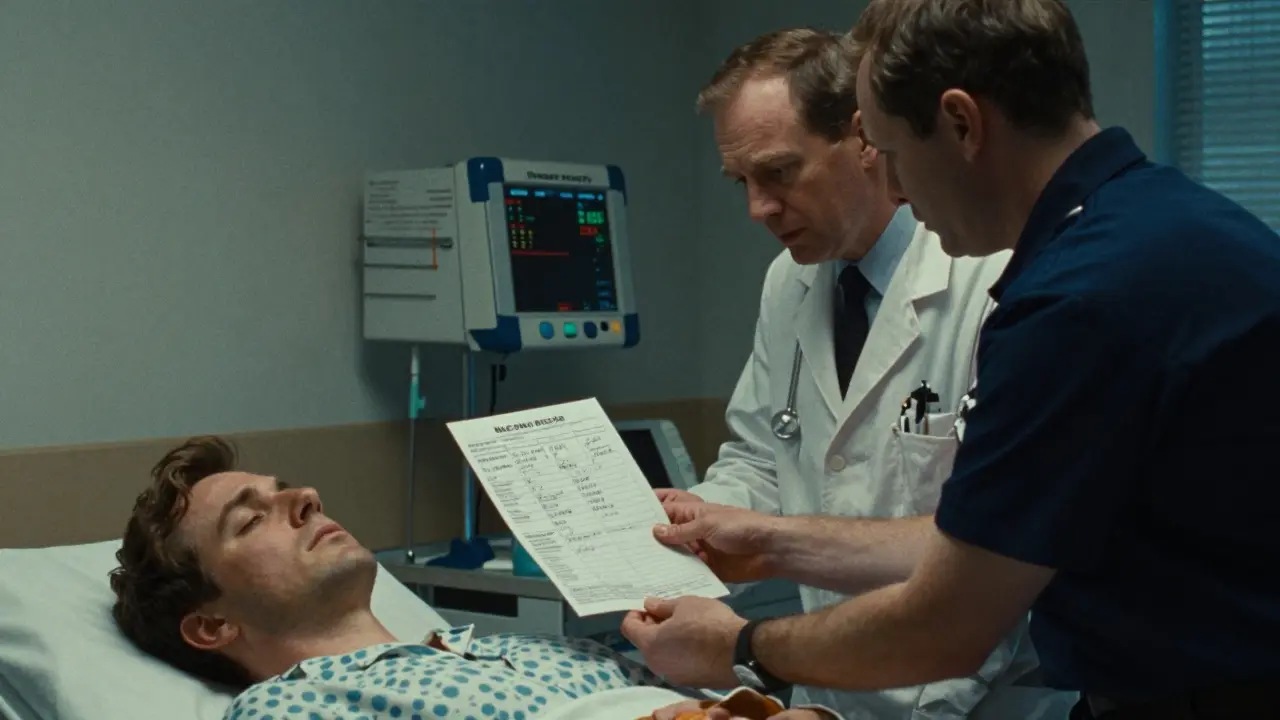
Paper vs. Digital: Which Works Best?
There’s no one-size-fits-all. The best format is the one you’ll actually use and update.
Paper lists are still used by 68% of patients, according to the National Council on Aging. They’re simple, don’t need batteries, and you can carry them in your wallet. But they can get lost or outdated. If you use paper:
- Use 12-point font or larger for readability
- Make two copies - keep one at home, carry one with you
- Update it right after every doctor visit
Digital apps are growing fast. GoodRx, Medisafe, and MyTherapy are used by over 150 million people combined. Of those, 42% use the medication list feature. Apps can:
- Send reminders to take pills
- Sync with your pharmacy
- Share your list with family or providers
- Backup to the cloud so you never lose it
But if you’re over 75, only 28% of people can use digital tools without help. That’s why paper is still vital. The smart move? Use both. Keep a paper copy you can hand to an ER nurse. Use an app to manage refills and reminders.
What Your Doctor and Pharmacist Need to Know
Your list isn’t just for you. It’s a communication tool. When you give it to your doctor, they can spot:
- Duplicate prescriptions (e.g., two different drugs for the same condition)
- Drug interactions (e.g., blood thinners + herbal supplements)
- Unnecessary meds (e.g., an old antibiotic you stopped taking but forgot to tell them)
Pharmacists can check for refill overlaps or expired medications. If you’re seeing multiple specialists, your list ensures they’re all on the same page. One patient in Melbourne had two cardiologists prescribing different blood pressure drugs - until she showed them her list. They coordinated and cut one.
And if you’re hospitalized? The hospital’s electronic system will compare your list to their records. If there’s a mismatch, they pause treatment until it’s cleared. That’s called medication reconciliation - and it’s now required by law in most hospitals.
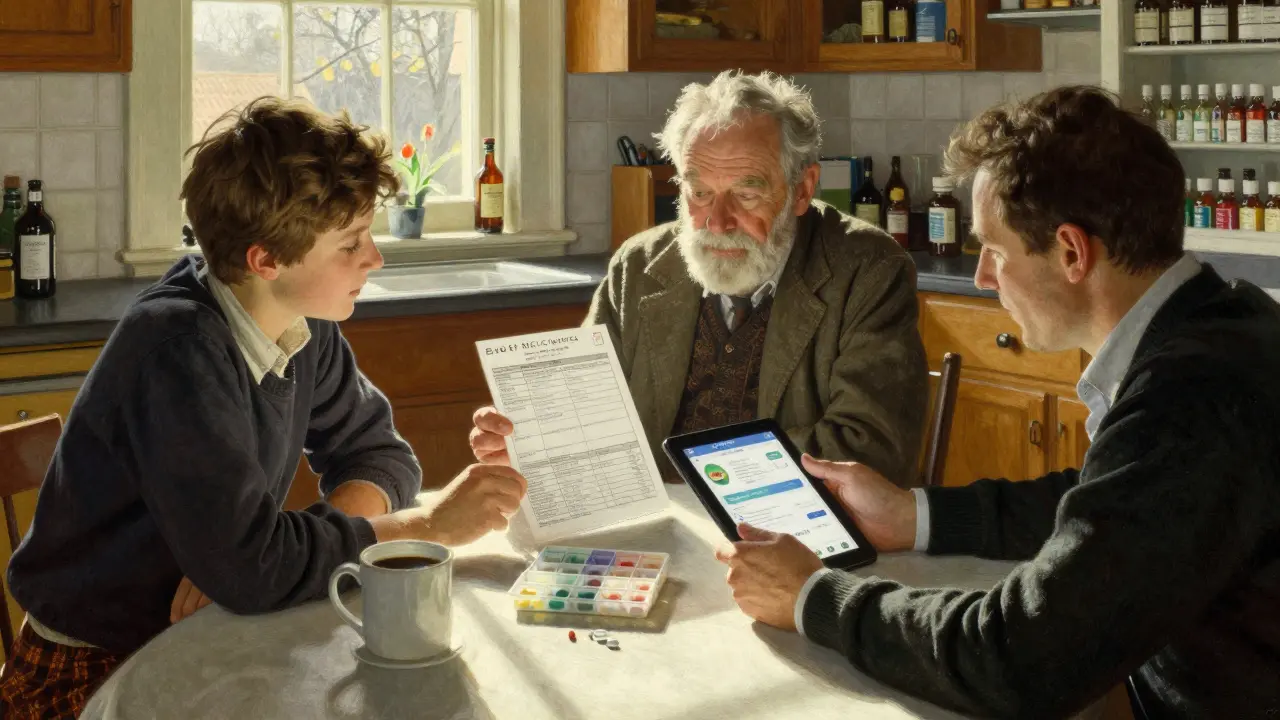
Common Mistakes and How to Avoid Them
Even people who try to keep lists make the same errors:
- Forgetting OTC meds - 58% of patients leave these out. If you take ibuprofen weekly, write it down.
- Not tracking "as-needed" drugs - Use the ECRI Institute’s "PRN Tracker" template: note when you took it and why. Example: "Ibuprofen 400 mg - took on Feb 10 for back pain."
- Only updating after big changes - Update after every change, even if it’s small. A 5 mg increase matters.
- Not sharing it - Keep a copy in your purse, wallet, and phone. Give one to a family member or caregiver.
Also, don’t rely on memory. A 2024 study found that patients who "remembered" their meds without a list were wrong 73% of the time.
What’s Changing Now (2026)
The rules are shifting. Thanks to the 21st Century Cures Act, your electronic health record must now give you direct access to your medication list. All major health systems in Australia and the U.S. comply. You can log in and see what your doctor has on file - and update it yourself.
Medicare and Medicaid now penalize hospitals that don’t reconcile medication lists properly. If they score below 85% accuracy, they lose up to 1.25% of their payments. That means hospitals are now pushing patients harder to bring their lists.
And while apps are growing, experts warn: tech alone won’t fix this. The ECRI Institute says the most effective solution is still the patient-held, updated, hand-carried list. Combine that with digital backups, and you’ve got the gold standard.
Start Today
You don’t need to wait for your next appointment. Grab a notebook. Pull out your pill bottles. Write down everything. Include the vitamins, the eye drops, the patches. Don’t leave anything out. Update it now. Then, schedule a 15-minute chat with your GP - not as an afterthought, but as a priority.
Medication safety isn’t just about doctors. It’s about you. Your list is your voice when you can’t speak. Your shield when things go wrong. And your tool to make sure no one misses what you’re really taking.
One list. One habit. Could save your life.
What if I forget to update my medication list?
Forgetting updates is common, but it’s risky. Even small changes - like a new OTC painkiller or stopping a vitamin - can cause dangerous interactions. Set a monthly reminder on your phone: "Review meds." Keep your list in your wallet or phone case so you see it often. If you miss a change, update it as soon as you remember. Don’t wait for your next doctor visit.
Do I need to include supplements and herbal remedies?
Yes. Supplements like fish oil, ginkgo, or turmeric can interact with blood thinners, blood pressure meds, and even anesthesia. A 2024 study found that 61% of hospital admissions involving herbal supplements had dangerous interactions that were missed because the patient didn’t mention them. Always list them - even if you think they’re "natural" and "safe."
Can I use an app instead of paper?
Apps like GoodRx, Medisafe, or MyTherapy are excellent for reminders, refill tracking, and syncing with pharmacies. But don’t rely on them alone. Always carry a printed copy. Emergency responders can’t access your phone if you’re unconscious. Use the app for daily management, and paper for emergencies.
How often should I review my list with my doctor?
At least once a year - but ideally every time you see a new provider or after a hospital stay. If you’re on five or more medications, do it every 6 months. Many clinics now offer "medication review" appointments. Ask for one. It’s a separate service, not just a side note during a check-up.
What if my doctor says I don’t need some of my meds?
That’s a good sign. Many people take medications they no longer need - like old antibiotics, outdated painkillers, or supplements that don’t help. Your doctor may suggest stopping one to reduce side effects or interactions. If they do, update your list immediately. Cross out the drug, write "discontinued" and the date. Keep the list so you don’t accidentally restart it later.
Can I share my medication list with family?
Yes - and you should. Give a copy to a trusted family member or caregiver. In an emergency, they can give it to paramedics or ER staff if you can’t. If you use an app, invite them as a trusted contact. This is especially important for older adults or those with memory issues.
Carrie Schluckbier
February 18, 2026 AT 13:30Let me guess-this whole 'medication list' thing is just a gateway drug for Big Pharma to track your every pill like a cattle tag. I’ve seen the patterns: every time someone updates their list, the insurance company raises their premiums the next day. Coincidence? Nah. It’s all connected. They want to know what you’re taking so they can deny coverage before you even get sick. And don’t even get me started on how the FDA and the AMA collude with pharmacy benefit managers to bury the real drug interactions. I’ve got screenshots. I’ve got spreadsheets. This isn’t safety. It’s surveillance with a stethoscope.
Liam Earney
February 19, 2026 AT 10:36It’s truly astonishing, isn’t it?-the sheer, unmitigated negligence that permeates modern healthcare, where a patient’s life is reduced to a checklist on a piece of paper, as if the human body were a vending machine that dispenses side effects based on barcodes. I mean, really, how many times have we seen the phrase 'medication reconciliation' tossed around like a party favor at a corporate retreat? And yet, the system still fails-over and over-because it’s not about safety, it’s about liability, and paperwork, and avoiding lawsuits, and the fact that no one in a white coat actually wants to admit they don’t know what’s in your body-because then they’d have to admit they’re not gods, just overworked mortals with a 15-minute window between patients. And yet, we still expect them to remember everything? Even when we forget ourselves? Even when we’re tired? Even when we’re in pain? It’s a miracle anyone survives at all.
guy greenfeld
February 20, 2026 AT 15:56There’s a deeper metaphysical layer here, you know? The medication list isn’t just a tool-it’s a mirror. It reflects our relationship with control, with mortality, with the illusion of autonomy in a system that treats us like data points. We write down pills because we’re terrified of forgetting our own existence. We fear becoming a blank space in a hospital chart. We fear being ‘the one with no history.’ And yet, we live in a culture that commodifies health, that reduces consciousness to a pharmacological equation. So we cling to this list-not because it saves lives, but because it tells us we still have agency. Even if it’s just a piece of paper. Even if it’s outdated. Even if the doctor never reads it. We write it anyway. Because not writing it feels like surrender. And surrender, in this world, is death.
Adam Short
February 20, 2026 AT 23:58Look, I’m all for lists-but this is why Britain’s NHS works better than your chaotic American mess. We’ve had standardized medication records since the 1970s. No apps. No confusion. Just a single, government-mandated booklet, updated by the pharmacist, verified by the GP. No one’s running around with five different apps and three printed copies. You know what we call that? Sanity. You Americans turn every medical issue into a DIY survivalist project. ‘Oh, I’ll just Google it and update my Excel sheet!’ No. Just trust the system. We don’t need your ‘color-coded’ nonsense. We have bureaucracy-and it works.
Sam Pearlman
February 22, 2026 AT 00:16Wait, so you’re telling me I need to write down that I take Nyquil on weekends? And that I’ve been taking melatonin since 2021? And that I occasionally snack on aspirin like M&Ms? Yeah, I’m gonna need a spreadsheet for that. Also, who’s gonna check this? My dog? My Alexa? I don’t even know if my doctor remembers my name. I just show up, say ‘hi,’ and hand over a napkin with ‘ibuprofen, maybe’ scribbled on it. I think the real solution is just… don’t get sick. Or at least, get sick at home. With snacks. And Netflix.
Steph Carr
February 23, 2026 AT 02:40Let’s be real-this entire system is a performance art piece titled ‘How to Make People Feel Like They’re in Control While Actually Being Controlled.’ I love that it’s framed as empowerment, but let’s be honest: if you don’t have a printer, a pen, a memory, a caregiver, and a PhD in pharmacology, you’re screwed. Meanwhile, the real villains? The pharmaceutical reps who hand out free samples with zero documentation. The ERs that don’t scan your pills. The doctors who say ‘take it as needed’ and then forget what ‘as needed’ means. We’re not failing because we’re lazy-we’re failing because the system is designed to fail us. So yeah, write your list. But don’t expect it to save you. Just expect it to make you feel slightly less like a ghost in the machine.
Brenda K. Wolfgram Moore
February 23, 2026 AT 17:16I started keeping my list after my mom had a bad reaction to a new blood thinner because she forgot to tell her new doctor about the turmeric she’d been taking daily. It took three days in ICU to untangle. Since then, I’ve updated mine every Sunday night. I keep a copy in my purse, on my phone, and I’ve emailed it to my sister. I also print it out and tape it to my fridge next to the grocery list. It’s not glamorous, but it’s simple. And it works. If you’re reading this and you’re not doing this yet-do it today. Not tomorrow. Today. You won’t regret it.
Linda Franchock
February 23, 2026 AT 20:30Oh honey, I’ve been doing this since 2018. I’ve got my meds in a little binder with color-coded tabs. I even wrote down the exact time I take my 8 a.m. pill-because I’m a control freak and also because I once took two lisinopril by accident and spent 12 hours in the ER trying to convince them I didn’t ‘want’ to die. The real win? My pharmacist now calls me when my refill’s due. She knows my name. She knows my dog’s name. She knows I hate grapefruit. That’s the magic. Not the list. The human connection behind it. So if you’re gonna do this? Do it with love. Not just with a pen.
Haley DeWitt
February 24, 2026 AT 17:45YES!! I just updated mine yesterday!! I forgot I was taking that ginkgo supplement until I saw it in my cabinet 😭 I added it and also wrote ‘caution: may cause brain fog’ next to it lol. I use MyTherapy app + paper copy. I even sent it to my daughter so she can help if I pass out on the floor. I’m so proud of myself 🥹
John Haberstroh
February 24, 2026 AT 18:52I’ve got 14 medications. 7 supplements. 3 inhalers. 2 patches. And one weird herbal tincture I got from a guy in Oregon who said it ‘cleanses the aura.’ I keep it all in a shoebox labeled ‘DO NOT THROW OUT.’ I’ve got a spreadsheet with color-coded rows, a QR code that links to a Google Doc, and a laminated card in my wallet. I also have a backup on my smart fridge. I don’t trust anyone. Not even the FDA. But I trust my shoebox. It’s been through three moves, two divorces, and a dog that chewed my phone. It’s still here. That’s the real safety net.
Logan Hawker
February 24, 2026 AT 21:46While I appreciate the well-meaning sentiment, the entire premise is predicated on a fundamental misalignment between patient agency and systemic inefficiency. The notion that a static, manually maintained list-often riddled with typographical errors and temporal obsolescence-can meaningfully contribute to pharmacovigilance is not merely quaint; it is statistically untenable. We must transition to real-time, blockchain-verified, API-integrated pharmacological ontologies-preferably with federated identity protocols and zero-knowledge proof verification. Until then, this is just analog nostalgia dressed up as public health policy.
James Lloyd
February 25, 2026 AT 09:14Excellent guide. One addition: always include the lot number and expiration date of each medication. This is critical for recalls. I work in pharmacy and have seen patients come in with expired anticoagulants, or worse-meds from a recalled batch that were never properly disposed of. Also, write the pharmacy name and number next to each drug. If you’re hospitalized, they can call for verification immediately. Don’t assume they’ll have your record. They won’t. Always bring your physical list. And if you’re on anticoagulants? Take a photo of your INR results and attach it to your list. That’s the extra mile.
Digital Raju Yadav
February 27, 2026 AT 09:00India has had a national medication registry since 2020. Every prescription is linked to Aadhaar. Every pharmacy logs refills. Every hospital syncs with the central database. You think this is hard? We’ve been doing this for years. Your ‘paper list’ is a relic. Your ‘app’ is a toy. We have AI predicting interactions before the doctor even prescribes. You Americans are still using fax machines for prescriptions. Wake up.
Prateek Nalwaya
February 28, 2026 AT 03:51My mom passed away last year because her doctor didn’t know she was taking ashwagandha with her blood thinner. I didn’t know either. She thought it was ‘just a natural stress reliever.’ That’s the tragedy here-not the lack of information, but the silence around it. We don’t talk about supplements like they’re medicine. We whisper about them. We hide them. We think they’re harmless. They’re not. This list isn’t about bureaucracy. It’s about honesty. With yourself. With your family. With your doctors. Start today. Tell someone what you’re really taking. Even if it’s weird. Even if it’s embarrassing. It matters.