
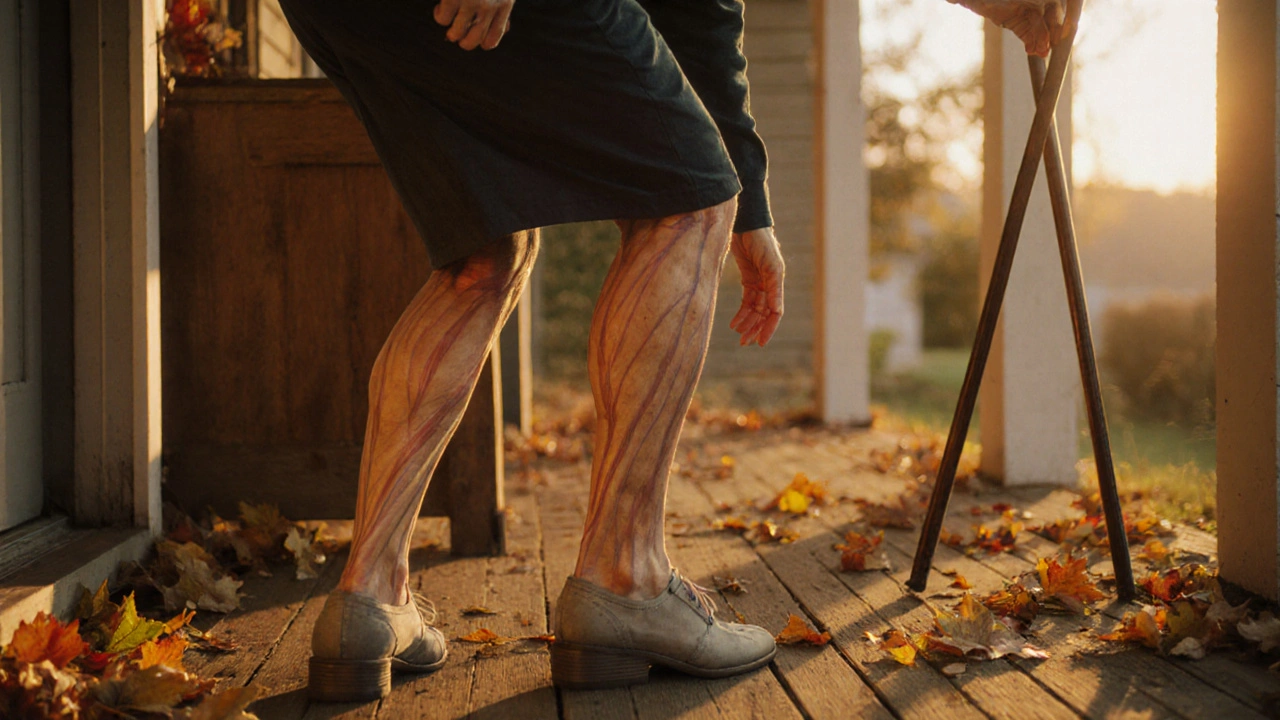
When you hit menopause, your body doesn’t just stop having periods-it starts rewiring how your muscles and tendons behave. You might notice your legs feel heavier after a walk, your shoulders ache more after lifting groceries, or that your hamstring tightens up even with light stretching. These aren’t just signs of getting older. They’re direct results of falling estrogen levels. And if you’re ignoring them, you could be setting yourself up for injury, reduced mobility, and long-term weakness.
Estrogen Isn’t Just About Reproduction
Most people think estrogen is only involved in periods, fertility, and hot flashes. But it’s also a key player in muscle repair, tendon strength, and joint lubrication. Estrogen helps regulate collagen production-the protein that gives tendons their elasticity and muscles their ability to recover after stress. When estrogen drops during perimenopause and menopause, collagen synthesis slows down. Studies show that postmenopausal women can lose up to 10% of their muscle mass in the first five years after their last period. That’s not normal aging. That’s hormonal.
Tendons, which connect muscle to bone, become stiffer and less able to absorb shock. This is why many women report sudden Achilles tendon pain, rotator cuff issues, or plantar fasciitis showing up out of nowhere after 50. It’s not because you overdid it at the gym. It’s because your tendons are no longer getting the same hormonal support they once did.
Why Strength Training Isn’t Optional Anymore
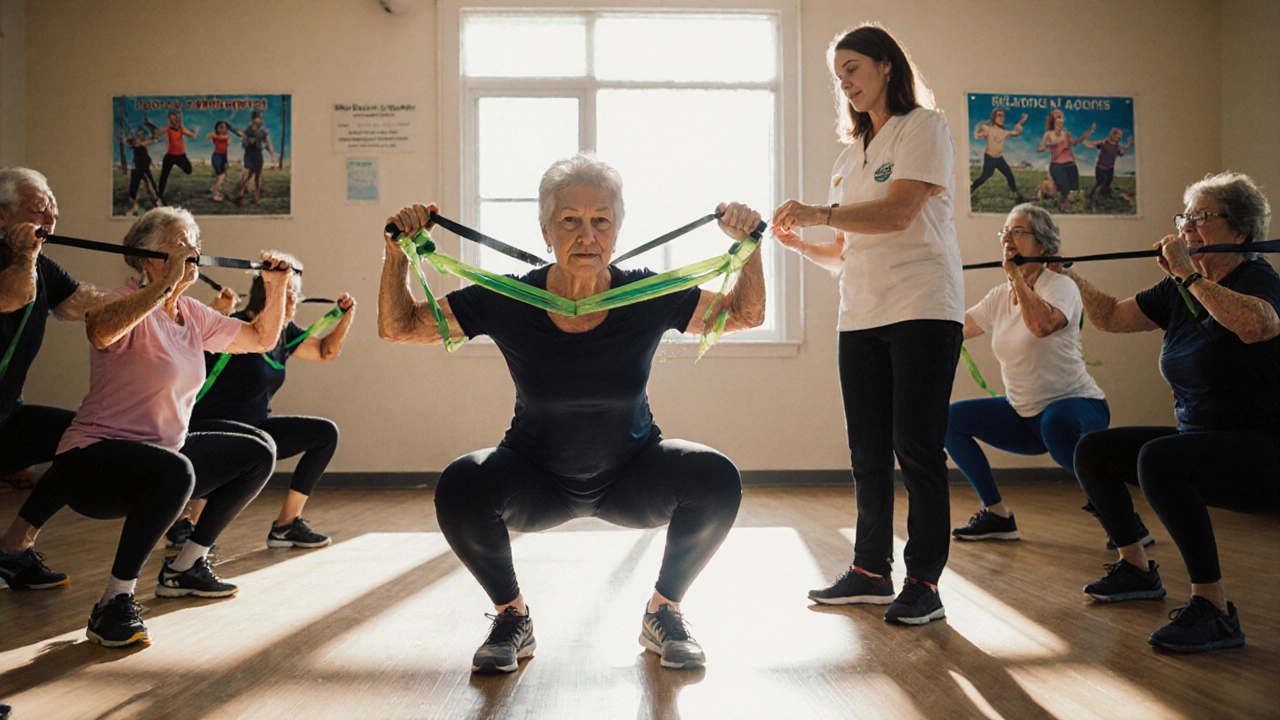
If you’ve ever thought, “I’m too old for weights,” or “I don’t want to get bulky,” it’s time to rethink that. Strength training is the single most effective way to fight muscle loss after menopause. But it’s not just about lifting heavier. It’s about consistency. Research from the University of Sydney found that women who did two to three resistance sessions per week maintained muscle mass and even gained strength over two years, while those who didn’t lost an average of 1.5% of muscle per year.
Start simple: bodyweight squats, wall push-ups, seated rows with resistance bands, and step-ups on a low platform. Do three sets of 10-12 reps, two or three times a week. You don’t need a gym membership. You don’t need fancy equipment. Just consistent movement that challenges your muscles. The goal isn’t to look like a bodybuilder-it’s to stay strong enough to carry your groceries, get up from a chair without help, or walk up stairs without stopping.
Stretching Alone Won’t Save Your Tendons
Many women turn to yoga or daily stretching to ease stiffness. That’s great-but it’s not enough. Stretching improves flexibility, but it doesn’t rebuild collagen or strengthen the tendon’s structure. If your tendons are already degenerating, stretching without strength work can actually make things worse by pulling on weak tissue.
Instead, try eccentric training. That’s when you slowly lower a weight or your body against gravity-like lowering yourself slowly during a heel drop for Achilles support, or taking five seconds to come down in a squat. Eccentric movements stimulate collagen production more than regular lifting. A 2023 study in the Journal of Orthopaedic & Sports Physical Therapy showed that postmenopausal women who did eccentric calf raises three times a week improved tendon thickness and reduced pain by 40% in just 12 weeks.

Hydration and Protein Are Your Secret Weapons
Your muscles are 75% water. Your tendons are 60-80% collagen and water. When you’re dehydrated, both become less resilient. Many women over 50 don’t drink enough water because they don’t feel thirsty as often. That’s a problem. Aim for at least 2 liters a day-not just coffee or tea. Water helps deliver nutrients to muscle tissue and keeps joints lubricated.
Protein intake matters too. The standard recommendation of 0.8 grams of protein per kilogram of body weight is too low for postmenopausal women. Experts now suggest 1.2 to 1.6 grams per kilogram. So if you weigh 70 kg, aim for 84-112 grams of protein daily. That’s about three palm-sized portions of chicken, fish, tofu, or legumes per day. Spread it out across meals-your muscles can only use about 30 grams of protein at a time to repair themselves.
What to Avoid: Overdoing Cardio and Skipping Recovery
Running, cycling, and long walks are great for heart health. But if you’re doing them every day and skipping rest, you’re putting extra strain on already vulnerable tendons. High-impact activities without recovery time can lead to tendinopathy-chronic tendon pain that’s hard to reverse.
Swap one run a week for swimming or cycling. Take at least one full rest day. Use foam rolling to ease tightness, but don’t roll directly over painful tendons-focus on the surrounding muscles instead. And if you feel sharp pain, not just soreness, stop. That’s your body telling you something’s wrong.
Supplements? Maybe. But Not as a Fix
You’ll see ads for collagen peptides, vitamin D, magnesium, and omega-3s as “menopause muscle fixes.” Some have merit-but they’re not magic pills. Collagen supplements, for example, may help if you’re not getting enough protein from food. A 2022 trial in Nutrients showed that women who took 15 grams of collagen daily along with resistance training improved tendon stiffness and reduced joint pain compared to those who only trained.
Vitamin D is important too. Low levels are linked to muscle weakness. Most women over 50 in Australia are deficient, especially in winter. Get your levels checked. If you’re low, 1,000-2,000 IU daily can help. Magnesium supports muscle relaxation and sleep-both critical for recovery. Omega-3s reduce inflammation, which can ease tendon soreness.
But none of these work without movement. Supplements support. Movement rebuilds.
When to See a Specialist
Not every ache needs a doctor. But if you’re experiencing:
- Pain that wakes you up at night
- Swelling or warmth around a joint
- Loss of strength that doesn’t improve after 4-6 weeks of training
- Difficulty walking or standing without pain
It’s time to see a physiotherapist who understands menopause. They can assess your tendon health, design a safe strength program, and rule out conditions like tendon tears or arthritis. Don’t wait until you can’t lift your arm or climb stairs. Early intervention makes a huge difference.
Your Body Is Still Capable-It Just Needs a New Plan
Menopause doesn’t mean your muscles are done. It means your old routines might not work anymore. Your body isn’t broken. It’s adapting. And with the right approach-strength training, enough protein, smart hydration, and listening to your body-you can not only maintain your strength but build more than you had in your 40s.
The goal isn’t to look young. It’s to feel powerful. To move without fear. To carry your grandkids, garden, travel, and live fully. That’s still possible. You just need to train your body for this new chapter-not the one you’re used to.
Does menopause cause muscle loss?
Yes. Falling estrogen levels reduce the body’s ability to build and repair muscle tissue. On average, women lose 1-2% of muscle mass per year after menopause, with the fastest decline happening in the first five years. This isn’t just aging-it’s hormonal.
Why do my tendons hurt more after menopause?
Estrogen helps maintain collagen in tendons. When levels drop, tendons become stiffer, less elastic, and more prone to micro-tears. This leads to pain in areas like the Achilles, shoulders, and knees-even without major injury. It’s not overuse-it’s under-support.
Is walking enough to maintain muscle strength after menopause?
Walking is good for your heart and joints, but it doesn’t challenge your muscles enough to stop muscle loss. You need resistance-lifting weights, using bands, or doing bodyweight exercises like squats and push-ups-to signal your body to preserve and rebuild muscle tissue.
How much protein do I need daily after menopause?
Aim for 1.2 to 1.6 grams of protein per kilogram of body weight. For a 65 kg woman, that’s 78-104 grams per day. Spread it across meals-30 grams at breakfast, 30 at lunch, and 30 at dinner-with a small amount before bed to support overnight repair.
Can collagen supplements help with tendon pain?
Yes, but only when paired with strength training. Taking 15 grams of collagen 30-60 minutes before a workout has been shown to improve tendon repair and reduce pain in postmenopausal women. It’s not a standalone fix-it works best as part of an active recovery plan.
Kenneth Meyer
November 20, 2025 AT 08:29It’s wild how we’ve been sold this narrative that aging equals decline, when really it’s just a shift in how our biology operates. Estrogen isn’t some optional hormone-it’s a full-time manager of connective tissue, and when it leaves the building, the whole system starts to rewire. We’re not broken. We’re just operating on a new OS. The real tragedy isn’t the muscle loss-it’s that medicine still treats menopause like a defect to be fixed, not a natural transition to be understood.
Greg Knight
November 20, 2025 AT 19:57Look, I’ve been coaching women over 50 for over a decade and let me tell you-this is the single most overlooked issue in fitness. People think if they keep doing the same workouts they did in their 30s, they’ll be fine. Nope. Your tendons aren’t the same. Your muscles aren’t the same. Your recovery isn’t the same. I had a client-62, retired teacher-come to me with chronic Achilles pain. She was doing yoga daily, walking 8K steps, drinking green tea. All ‘healthy’ stuff. But zero strength work. We started with seated calf raises, then progressed to eccentric heel drops, added 1.4g protein per kg, and within 10 weeks she was hiking again without pain. It’s not magic. It’s biomechanics. You don’t need to lift heavy. You just need to lift consistently. And stop pretending stretching is enough. Stretching is like putting tape on a leaking pipe-it doesn’t fix the crack. Strength does.
prasad gali
November 22, 2025 AT 06:13Collagen peptides? Please. You’re wasting money if you’re not hitting 1.6g/kg protein and doing eccentric loading. The literature is unequivocal: supplemental collagen without mechanical stimulus yields negligible tendon adaptation. The 2023 JOSPT study? Fine, but it had a control group doing resistance training. The collagen was a co-intervention. You’re not getting ‘tendon repair’ from a powder-you’re getting amino acid precursors. And if you’re not training, those amino acids become energy substrates or get excreted. Also, hydration? 2L is arbitrary. Your renal function matters. Check urine color. And stop blaming estrogen. The real issue is sedentary lifestyle compounded by poor nutrition. Stop looking for supplements. Start lifting.
Paige Basford
November 23, 2025 AT 22:53Okay but I tried the protein thing and I just felt bloated and weird. Like, I ate chicken at every meal and my stomach felt like a balloon. Also, I don’t want to ‘lift weights’-I just want to not hurt when I bend over. Is there a gentler way? I swear, every article about menopause sounds like a bootcamp ad. Can’t we just… be soft about this?
Ankita Sinha
November 25, 2025 AT 06:30YES YES YES. I’m 54 and started eccentric heel drops after reading this-3x a week, slow as molasses. My plantar fasciitis? Gone in 8 weeks. No meds. No shots. Just gravity and patience. And protein? I started adding Greek yogurt + almonds at breakfast and a lentil bowl at dinner-no more 3pm crashes. Also, hydration: I keep a big bottle by my bed now. I sip before I sleep. It’s weirdly calming. You don’t need to be a gym rat. Just be consistent. And please, stop telling women they’re ‘lazy’ because they’re sore. This isn’t about willpower. It’s about biology. We’re finally listening to our bodies-and it’s working.
Abdula'aziz Muhammad Nasir
November 25, 2025 AT 21:28Thank you for this thoughtful and clinically grounded piece. In Nigeria, where access to specialized care is limited, many women suffer silently, attributing joint pain to ‘old age’ or ‘spiritual causes.’ This information is vital. The emphasis on eccentric training and protein timing is particularly valuable. I recommend sharing this with community health workers. Also, hydration is rarely discussed in African women’s health circles-yet we often consume diuretics like strong tea and coffee. This article is a gift to the global community.
Tara Stelluti
November 25, 2025 AT 23:49So now estrogen is the villain? Funny how they never mention the fact that the FDA approved hormone therapy in the 70s and then quietly buried the data when Big Pharma realized they couldn’t patent it. This whole ‘menopause is a disease’ narrative? It’s corporate. They want you buying collagen, protein powders, and gym memberships. Meanwhile, your doctor’s still telling you to ‘take a pill’ for hot flashes. Wake up. Your body isn’t broken. The system is.
Danielle Mazur
November 27, 2025 AT 17:16Who funded this study? Big Pharma? The supplement industry? The gym chains? I’ve read the original papers-most of the ‘collagen’ trials are industry-sponsored. And why is there no mention of glyphosate? Glyphosate disrupts collagen synthesis. It’s in our water, our bread, our chicken. The real reason tendons are failing isn’t estrogen-it’s toxins. And they don’t want you to know that. They want you to buy more supplements. Think deeper.
Brad Samuels
November 28, 2025 AT 08:25I’ve been reading all these comments and I just want to say-thank you. To the woman who said she felt bloated from protein-I feel you. I tried shaking protein powder and it made me nauseous. Then I switched to eggs, cottage cheese, and a can of tuna at lunch. No powder. No weirdness. Just real food. And honestly? I started feeling stronger not because I lifted heavy, but because I stopped beating myself up for not being ‘fit enough.’ This isn’t about perfection. It’s about showing up. Even if it’s just two squats. Even if you cry because your knees hurt. That’s still victory.
Will Phillips
November 30, 2025 AT 05:06STOP BUYING SUPPLEMENTS. STOP LISTENING TO GYMS. ESTROGEN ISN’T THE PROBLEM-IT’S THE MEDICAL INDUSTRY THAT MADE YOU THINK YOU ARE. THEY’RE PROFITING OFF YOUR FEAR. YOU DON’T NEED PROTEIN POWDER. YOU NEED TO EAT MEAT. YOU DON’T NEED ECCENTRIC TRAINING. YOU NEED TO WALK MORE. AND YOU DEFINITELY DON’T NEED A PHYSIOTHERAPIST WHO ‘UNDERSTANDS MENOPAUSE’-YOU NEED A DOCTOR WHO UNDERSTANDS BASIC ANATOMY. THIS ARTICLE IS JUST ANOTHER MARKETING PIECE FOR THE WELLNESS INDUSTRY. WAKE UP.
Kenneth Meyer
December 2, 2025 AT 01:03Wow. So we’ve got the supplement skeptic, the toxin theorist, the ‘just eat meat’ guy, and the guy who thinks stretching is a conspiracy. Meanwhile, the woman who actually tried the eccentric training and felt better? Silent. The person who changed her diet and regained mobility? Invisible. The ones who just want to carry their grandkids without pain? Erased. We’re not debating science here. We’re debating fear. Fear of aging. Fear of loss. Fear of being told you’re ‘not enough.’ The truth isn’t in the supplement bottle or the gym membership. It’s in the quiet, daily act of choosing to move-even when it’s hard. Even when the world tells you to sit down. You don’t need a revolution. You need a squat. One at a time.