
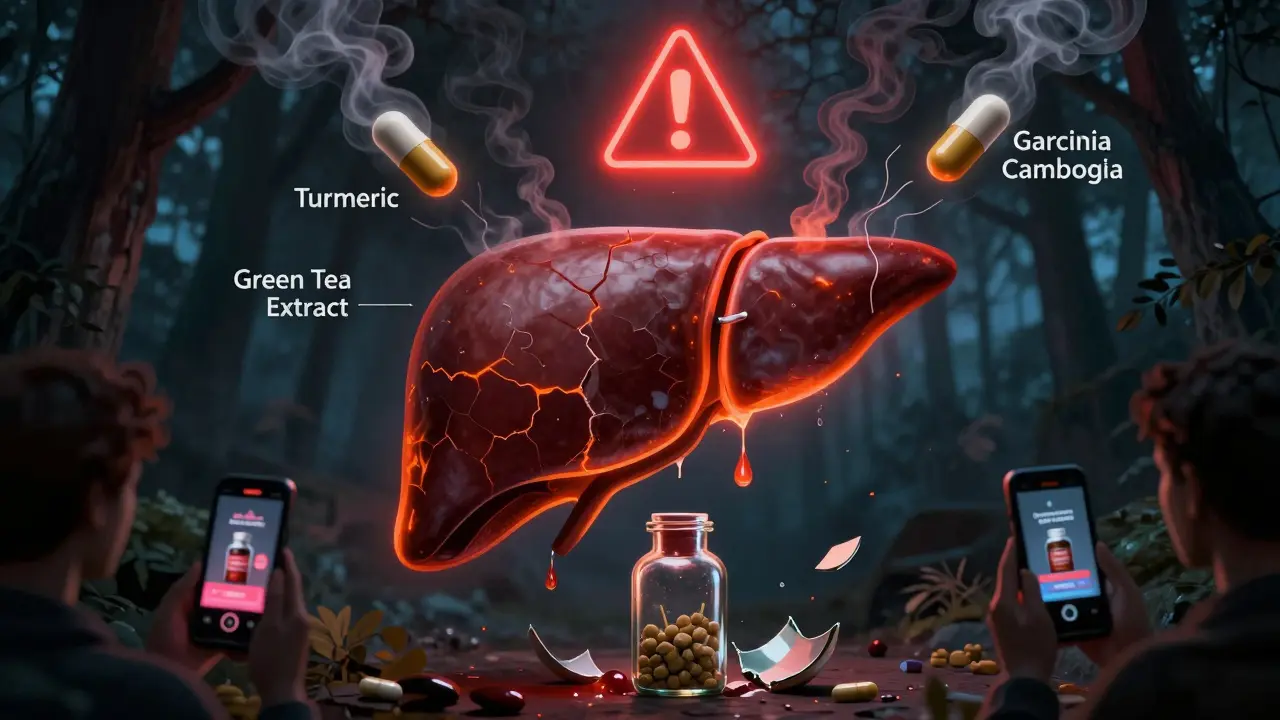
Herbal and supplement liver toxicity is real - and it’s getting worse
You might think that because something is labeled "natural," it’s safe. But that’s not true - especially when it comes to your liver. Every year, more people end up in the hospital with severe liver damage from herbal supplements they thought were harmless. In fact, supplements now cause 20% of all drug-induced liver injuries in the U.S., up from just 7% two decades ago. That’s not a small spike. That’s a public health warning.
The liver doesn’t care if a substance comes from a plant or a pharmacy. It processes everything the same way. And when too many toxins pile up - especially from unregulated supplements - your liver can’t keep up. The result? Inflammation, cell death, and in worst-case scenarios, liver failure.
The six supplements most linked to liver damage
Not all supplements are created equal. Some are far riskier than others. Based on national data from the NIH’s LiverTox database and a 2024 JAMA Network Open study, six botanicals stand out as the most dangerous:
- Turmeric or curcumin - Often sold as a "superfood" for inflammation, high-dose turmeric supplements have triggered multiple cases of acute hepatitis. One study found people taking more than 1,000 mg daily were at highest risk. Consumer Reports also found 30% of turmeric supplements contained lead above safe limits.
- Green tea extract - Drinking green tea is fine. But concentrated extracts? Dangerous. The active compound, EGCG, can overwhelm liver enzymes. In 2023, 25% of green tea extract products exceeded safe daily limits for EGCG. Cases of liver injury from these pills are well-documented.
- Garcinia cambogia - Marketed for weight loss, this tropical fruit extract has been linked to severe liver damage in multiple U.S. cases. The FDA issued warnings after dozens of hospitalizations.
- Black cohosh - Used for menopause symptoms, this herb has caused hepatitis in otherwise healthy women. It’s one of the most common culprits in supplement-related liver failure cases.
- Red yeast rice - Sold as a "natural statin," this supplement actually contains monacolin K, the same compound as the prescription drug lovastatin. Without medical supervision, it can cause muscle breakdown and liver stress.
- Ashwagandha - Popular for stress and sleep, ashwagandha supplements have been tied to rising liver enzyme levels. While not as common as turmeric or green tea extract, the pattern is clear enough for doctors to flag it.
These aren’t rare outliers. These are the top six - and they’re all easy to find on Amazon, Walmart, or TikTok ads.
What’s really in your supplement bottle?
Here’s the scary part: what’s on the label might not be what’s inside. A 2017 study found that up to 60% of herbal supplements are mislabeled or adulterated. That means you might think you’re taking pure ashwagandha - but you’re actually getting something else entirely.
Common contaminants include:
- Heavy metals - Lead (found in 18% of products), mercury (12%), arsenic (9%). These build up in the liver and can’t be flushed out easily.
- Hidden pharmaceuticals - Sexual enhancement supplements often contain sildenafil (the active ingredient in Viagra). Pain relievers may have hidden NSAIDs like ibuprofen. Anti-inflammatory products sometimes contain corticosteroids. These aren’t listed. They’re added to make the product "work faster."
- Pesticides and microbes - 23% of herbal products contain pesticide residues. 7% are contaminated with bacteria or mold.
There’s no standard testing. No mandatory safety checks. The FDA doesn’t require supplements to prove they’re safe before they hit shelves. You’re the guinea pig.
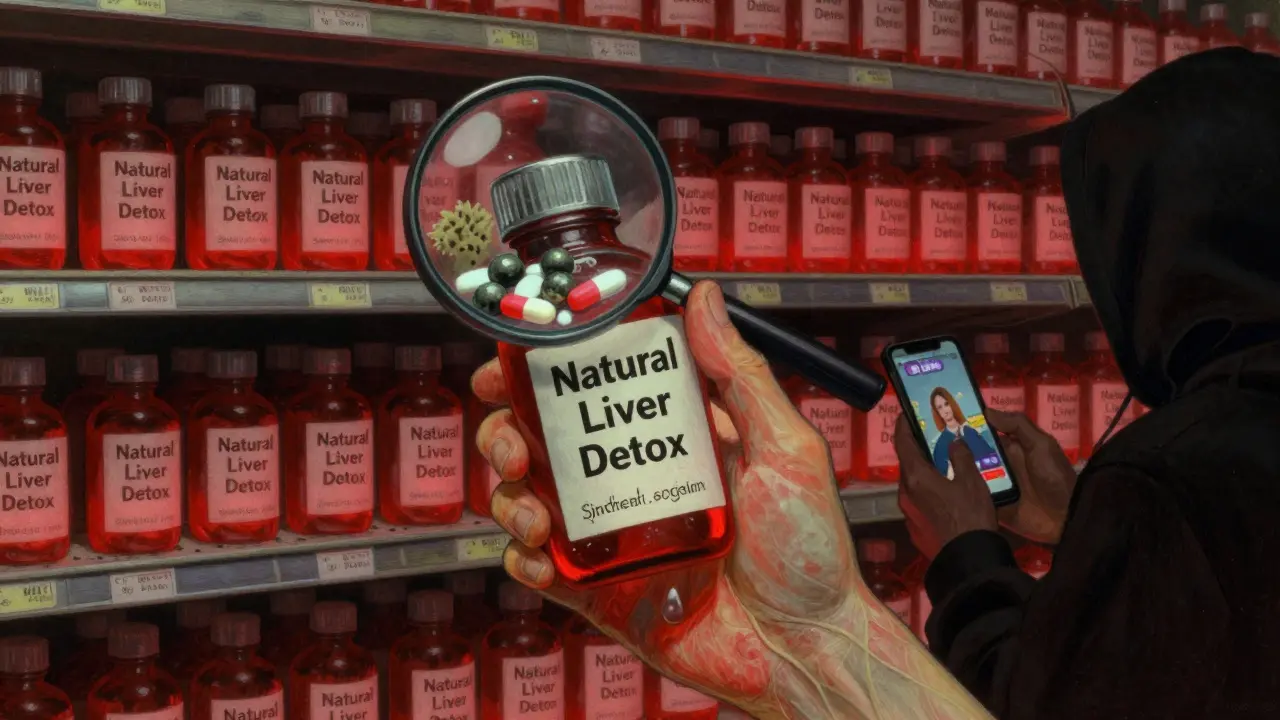
How your liver gets hurt - and why you might be at risk
Your liver is a filter. It breaks down everything you swallow - food, medicine, supplements. But it has limits. Some people can take a daily turmeric pill for years with no issue. Others develop liver damage after just a few months.
Why? Because susceptibility varies. It’s like a genetic allergy. Researchers are now studying specific gene variants - like HLA-B*35:01 - that may make certain people more vulnerable to herbal toxins. But you won’t know if you have it until your liver starts failing.
Dr. Robert S. Brown from Weill Cornell Medicine puts it simply: "It’s like an allergy. In a small group of people, even a tiny amount of a substance can trigger a massive reaction."
And here’s what makes it worse: most people don’t realize they’re taking something harmful. They don’t tell their doctor. They think, "It’s just a supplement." But doctors are seeing the same liver enzyme spikes - ALT and AST levels rising - in patients who swear they only take "natural" products.
What symptoms should you watch for?
Herbal liver damage doesn’t always come with a siren. It creeps up. The most common signs, based on data from the NIH LiverTox database, include:
- Fatigue (87% of cases)
- Abdominal pain (76%)
- Nausea (68%)
- Dark urine (52%)
- Yellowing of skin or eyes (jaundice)
- Unexplained itching
If you’ve been taking any of the six high-risk supplements and you notice even one of these symptoms, stop immediately and get your liver checked. A simple blood test can catch damage early - before it becomes irreversible.
Why social media is making this worse
TikTok is full of influencers pushing "liver detox" blends, weight-loss capsules, and "anti-aging" herbal powders. These aren’t just ads - they’re lifestyle trends. Young adults, especially millennials and Gen Z, are buying these products because they’re trendy, not because they’re informed.
One viral product, OxyELITE Pro®, caused over 50 cases of liver failure in 2013. The culprit? Aegeline, an alkaloid added to boost fat-burning. It wasn’t on the label. It wasn’t tested. And it destroyed people’s livers.
Today, similar products are back - with new names, new packaging, and the same dangerous ingredients. The cycle keeps repeating.
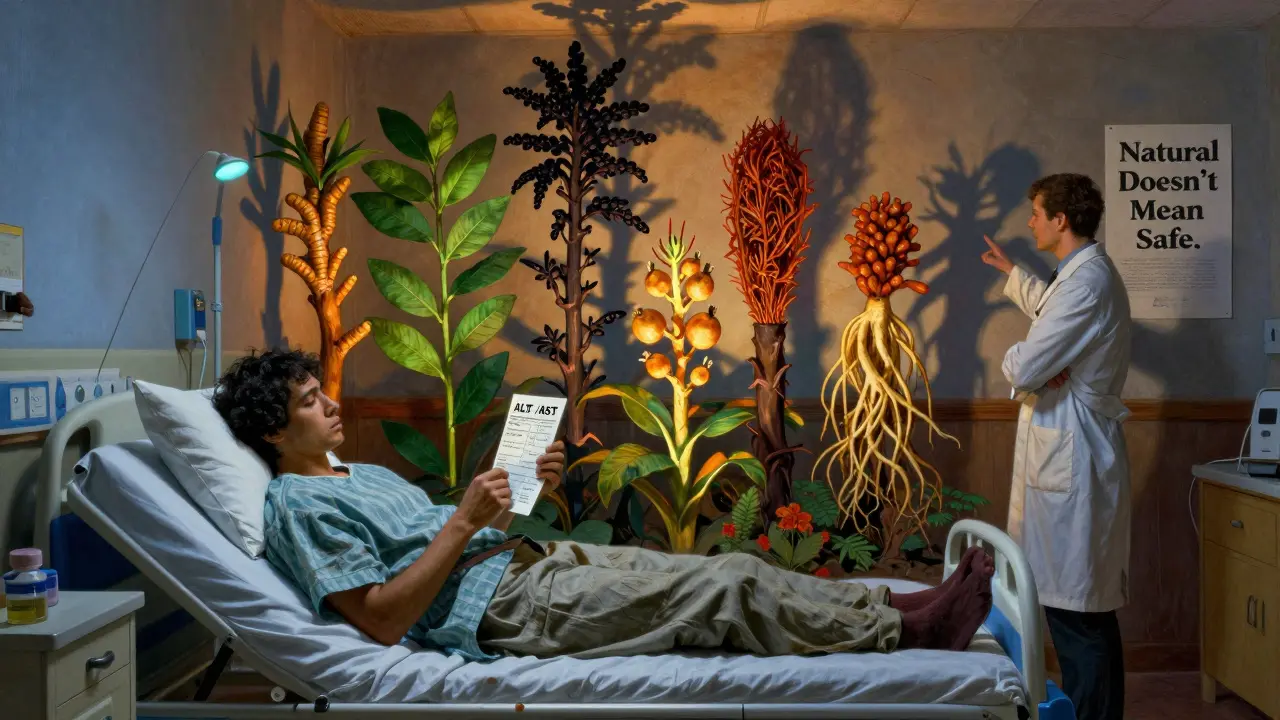
What you can do to protect your liver
You don’t have to give up supplements entirely. But you need to be smarter.
- Stop taking the big six - Turmeric, green tea extract, Garcinia cambogia, black cohosh, red yeast rice, and ashwagandha. Avoid them unless your doctor specifically recommends them - and even then, monitor liver enzymes closely.
- Check your supplements with Consumer Reports or the NIH LiverTox database - Both list tested products and known risks. Don’t rely on Amazon reviews.
- Talk to your doctor - Especially if you have unexplained fatigue, pain, or abnormal liver tests. Tell them everything you’re taking - including teas, powders, and capsules.
- Choose third-party tested brands - Look for seals from USP, NSF, or ConsumerLab. These organizations test for purity and label accuracy.
- Don’t stack supplements - Taking five different herbal pills at once multiplies your risk. Less is more.
- Be skeptical of "detox" claims - Your liver detoxes itself. No supplement can do it better.
What about vitamins and minerals?
Not all supplements are dangerous. Fat-soluble vitamins like A, D, E, and K can build up and cause harm if taken in excess - but they’re regulated with daily upper limits. The problem is with herbal extracts, which have no such limits.
For most people, a basic multivitamin with no added herbs is low-risk. But if it says "with green tea extract" or "with turmeric," skip it.
Bottom line: Natural doesn’t mean safe
The idea that herbal supplements are harmless because they’re "natural" is a myth - and it’s costing people their health. The liver doesn’t distinguish between a pill from a pharmacy and a pill from a health store. Both can be toxic.
If you’re taking any herbal supplement, especially for weight loss, joint pain, or stress, ask yourself: Do I know what’s in this? Do I know if it’s been tested? Do I know the risks?
Until regulations change, the burden is on you. Don’t trust marketing. Don’t trust influencers. Trust your liver. And when in doubt - leave it out.
Can herbal supplements really cause liver failure?
Yes. Between 2007 and 2015, herbal and dietary supplements caused 21.1% of all drug-induced acute liver failure cases in the U.S., according to the Acute Liver Failure Study Group. Cases have been documented with turmeric, green tea extract, black cohosh, and other herbs - some leading to transplants or death.
Is turmeric safe for the liver?
Turmeric in food is generally safe. But high-dose turmeric supplements - especially those with concentrated curcumin - have been linked to hepatitis and liver injury. One study found 30% of turmeric supplements contained lead above safety limits. Avoid supplements unless your doctor approves them and monitors your liver function.
What supplements should I avoid if I have liver disease?
If you have liver disease, avoid all herbal supplements unless specifically cleared by your hepatologist. The six high-risk herbs - turmeric, green tea extract, Garcinia cambogia, black cohosh, red yeast rice, and ashwagandha - should be avoided entirely. Even "safe" supplements can worsen liver damage in compromised individuals.
Are there any safe herbal supplements for liver health?
There’s no strong evidence that any herbal supplement improves liver health. Milk thistle is often promoted, but studies show mixed results and no proven benefit in humans. The best way to support your liver is through diet, avoiding alcohol, managing weight, and avoiding unregulated supplements.
Why aren’t herbal supplements regulated like drugs?
Under the Dietary Supplement Health and Education Act (DSHEA) of 1994, supplement manufacturers don’t need FDA approval before selling products. They don’t have to prove safety or efficacy. The FDA can only act after harm is proven - which often takes years. That’s why dangerous products stay on shelves until enough people get sick.
How do I know if a supplement is contaminated?
You can’t tell by looking. The only way to know is through independent testing. Look for products certified by USP, NSF, or ConsumerLab - these organizations test for heavy metals, pesticides, and undisclosed ingredients. Avoid brands that don’t list third-party testing on their website.
June Richards
January 31, 2026 AT 21:06Naresh L
February 2, 2026 AT 00:02Lu Gao
February 3, 2026 AT 09:04Jamie Allan Brown
February 4, 2026 AT 16:30Lisa Rodriguez
February 5, 2026 AT 04:57Lilliana Lowe
February 6, 2026 AT 16:07vivian papadatu
February 7, 2026 AT 12:24Melissa Melville
February 9, 2026 AT 03:47Deep Rank
February 10, 2026 AT 17:31