

Many people start taking fiber supplements like Metamucil, Citrucel, or psyllium husk to help with digestion, lower cholesterol, or manage blood sugar. But if you’re also on daily medications, you might be putting your treatment at risk-without even knowing it. Fiber doesn’t just help things move through your gut. It can also trap your pills, sweep them out too fast, or bind to them so your body never absorbs them properly. This isn’t a myth. It’s backed by real studies and clinical guidelines from Harvard, Mayo Clinic, and WebMD.
Why Fiber Interferes With Your Medications
Fiber supplements are designed to absorb water and swell up in your intestines. That’s how they add bulk to stool and ease constipation. But that same swelling and binding action doesn’t care if it’s trapping fiber or your prescription pill. When you take fiber and a medication together, the fiber can physically wrap around the drug molecules, especially if the medication is designed to dissolve slowly or be absorbed in a specific part of the gut. The result? Less of the drug enters your bloodstream, and your treatment becomes less effective. This isn’t true for every drug. Some medications slide right through without issue. But for others, even a small drop in absorption can make a big difference. Think of it like this: if you’re taking a thyroid pill like levothyroxine, your body needs a very precise amount every day. A 10% drop in absorption might not sound like much, but over time, it can push your thyroid levels out of range. That means fatigue, weight gain, or worse-your doctor might increase your dose unnecessarily, thinking the medication isn’t working, when it’s just being blocked by your fiber. Studies show that fiber supplements like ispaghula husk (the main ingredient in Metamucil) can reduce levothyroxine absorption by up to 30% in some patients. In one study, patients taking both saw their LDL cholesterol rise by 12% to 58% when they took pectin fiber with lovastatin. That’s because the fiber bound to the cholesterol-lowering drug and kept it from doing its job.Which Medications Are Most at Risk?
Not all drugs are affected the same way. Some are highly sensitive to fiber interference. Here are the big ones:- Levothyroxine (Synthroid, Levoxyl): Used for hypothyroidism. Even small drops in absorption can throw your hormone levels off.
- Metformin: A common diabetes drug. Fiber can delay or reduce its absorption, which might lead to higher blood sugar.
- Lithium: Used for bipolar disorder. Fiber can lower blood levels, increasing the risk of mood episodes.
- Olanzapine (Zyprexa): An antipsychotic. Fiber can reduce how much of it your body takes in.
- Carbamazepine: Used for seizures and nerve pain. Fiber can interfere with steady blood levels.
- Warfarin: A blood thinner. While not directly bound by fiber, fiber can change gut bacteria and vitamin K levels, which affects how warfarin works.
How Far Apart Should You Take Them?
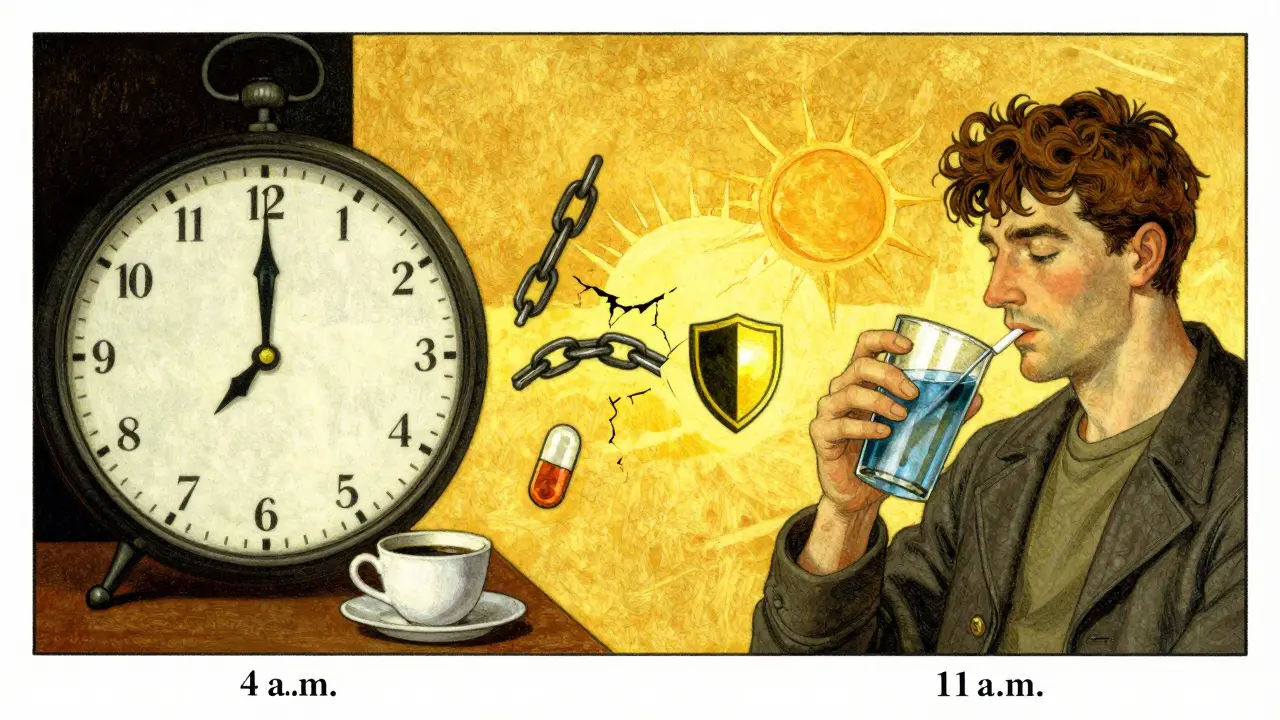
The answer isn’t guesswork. Experts agree on clear timing rules:- Take your medication at least 2 hours before your fiber supplement. This gives your body time to absorb the drug before the fiber starts moving through your system.
- Or, take your fiber supplement at least 2 to 4 hours after your medication. Some experts, especially for lithium or olanzapine, recommend waiting 4 hours to be extra safe.
What About Dietary Fiber? Is It Safe?
Good news: eating fiber from food is much less likely to cause problems. A slice of whole grain bread, an apple, or a cup of beans won’t interfere with your meds the way a spoonful of powdered psyllium will. Why? Because the fiber in food is spread out. It’s not concentrated. Your body processes it slowly, and there’s no sudden surge of fiber to sweep your pills away. That said, if you’re eating a huge high-fiber meal right before or after taking your medication, it’s still smart to wait an hour or two. For example, if you take levothyroxine at 7 a.m. and then have a bran muffin, oatmeal, and berries for breakfast, you’re still at risk. Stick to low-fiber foods like eggs, toast, or yogurt for your first meal after your pill.Practical Tips to Get It Right
Managing this isn’t hard-it just takes a little planning.- Write it down. Make a simple chart: medication times on one side, fiber times on the other. Stick it on your fridge.
- Use alarms. Set two phone alarms: one for your med, one for your fiber. Even if you’re consistent, life gets busy. Alarms help.
- Take fiber with water. Always drink at least 8 ounces of water with your fiber supplement. Without enough liquid, it can swell in your throat and cause choking.
- Avoid taking fiber at bedtime. It can cause bloating, gas, and cramps that disrupt sleep. Plus, if you take meds in the morning, nighttime fiber might not give you enough separation.
- Check with your pharmacist. They know your full med list. Ask: “Does my fiber supplement interfere with any of these?” They’ll tell you which ones need space.

Don’t Stop Taking Fiber
This isn’t a reason to quit fiber. Far from it. Fiber from whole foods lowers your risk of heart disease, stroke, type 2 diabetes, and colon cancer. The average American eats only 15 grams of fiber a day. Experts recommend 21 grams for women over 50 and 30 grams for men. Most people are falling way short. Fiber supplements can help fill the gap-but only if you use them right. The goal isn’t to avoid fiber. It’s to use it safely so your meds work and your gut stays healthy.What If You Accidentally Take Them Together?
If you forgot and took your fiber and pill at the same time, don’t panic. One mistake won’t ruin your treatment. But don’t make it a habit. If you take levothyroxine or lithium and this happens often, talk to your doctor. They might want to check your blood levels to make sure you’re still getting the right dose. For most other drugs, occasional overlap isn’t a crisis-but it’s still a risk you can easily avoid.Final Thought: It’s About Timing, Not Choice
You don’t have to choose between good gut health and effective medication. You just need to space them out. Two to four hours. That’s all it takes. It’s not complicated. It’s not expensive. It’s just a small change that protects your health in two big ways. Start tomorrow. Take your pill. Wait. Then take your fiber. Your body will thank you.Can I take fiber supplements with my morning coffee?
Yes, but only if you take your medication first and wait at least 2 hours before your fiber. Coffee itself doesn’t interfere with fiber or most medications. But if you take your pill with coffee and then add fiber right after, you’re still at risk. Wait until your medication has had time to absorb.
Does the type of fiber matter?
Yes. Soluble fibers like psyllium (Metamucil), pectin, and oat bran are more likely to bind to medications because they form a gel. Insoluble fibers like cellulose or wheat bran are less likely to interfere, but they still speed up digestion, which can reduce absorption time. For safety, assume all fiber supplements need separation-no matter the type.
Can I switch to a fiber-rich diet instead of supplements?
Absolutely. Getting fiber from fruits, vegetables, legumes, and whole grains is safer and more beneficial than supplements. You get vitamins, antioxidants, and different fiber types all at once. If you’re on meds, this is the best long-term solution. Just avoid eating massive high-fiber meals right after taking your pills.
What if I take multiple medications? Do I need to space them all from fiber?
Not all of them. Only the ones known to interact-like levothyroxine, metformin, lithium, and olanzapine. If you’re unsure, ask your pharmacist to review your full list. For meds that don’t interact, you can take them with fiber. But if you’re taking any high-risk drugs, it’s safest to separate all fiber from all meds by 2-4 hours to avoid confusion.
How long should I wait after eating a high-fiber meal before taking my medication?
Wait at least 1 hour after a high-fiber meal before taking your medication. For critical drugs like levothyroxine, wait 2 hours. A meal with bran cereal, beans, and fruit has enough fiber to interfere, even if it’s not a supplement. Don’t assume food is always safe-timing still matters.
Teresa Marzo Lostalé
December 28, 2025 AT 20:20Wow. I just realized I’ve been taking my psyllium with my thyroid med like it’s a smoothie. 😅
Guess I’m resetting my whole morning routine tomorrow. Thanks for the wake-up call.
ANA MARIE VALENZUELA
December 30, 2025 AT 06:36So let me get this straight - you’re telling me people are dying because they’re too lazy to wait two hours? This isn’t rocket science. If you can’t follow basic medical advice, don’t blame the supplement. Blame your brain.
Bradly Draper
December 30, 2025 AT 13:38I’ve been on levothyroxine for 12 years and just found out about this. I thought fiber was just for pooping. This changed everything. I’m gonna start setting alarms. Thank you for sharing this.
Ellen-Cathryn Nash
December 31, 2025 AT 05:31Somebody out there is taking fiber with lithium and doesn’t even know they’re risking a hospital trip. I’m not mad, I’m just… deeply concerned. Like, we’re talking ‘someone’s grandma is gonna collapse’ levels of concern.
Nicole Beasley
December 31, 2025 AT 14:18So… fiber = pill trap? 🤯 I always thought it was just for ‘gut health’ like a magical unicorn poop. Now I feel like I’ve been dating a liar. 💔
James Hilton
January 1, 2026 AT 14:36Wait. You mean I don’t need to take a whole bag of Metamucil to feel alive? 🤡
Just wait two hours. That’s it. I’m not impressed. I expected a cult.
Vu L
January 3, 2026 AT 03:08This whole post is fear-mongering. I’ve taken fiber with my meds for 5 years. My bloodwork is perfect. You’re just selling a better alarm app.
Julius Hader
January 4, 2026 AT 11:37Hey, I get it - you’re trying to help. But some folks don’t have the luxury of setting alarms or reading 5000-word guides. Maybe we should be talking about how to make this easier, not just scolding people for forgetting.
oluwarotimi w alaka
January 5, 2026 AT 15:30They say fiber interferes with meds… but who says the meds aren’t interfering with the fiber? Maybe the pharmaceutical companies made the fiber to block their own drugs so you keep buying more. Nigeria knows this trick. We’ve been fighting this since the 1980s. They want you dependent. Don’t be fooled.
Gran Badshah
January 5, 2026 AT 19:33i take metformin and psyllium together every day. my sugar is fine. you people overthink everything. why not just stop taking pills? natural is better. god made fiber not big pharma.
Debra Cagwin
January 6, 2026 AT 14:02Thank you for writing this with such clarity and care. This is the kind of information that can literally save lives - especially for people who feel overwhelmed by their meds and just want to feel better. If you’re reading this and feeling lost, you’re not alone. Small steps - like setting one alarm - can change everything. You’ve got this.
sonam gupta
January 6, 2026 AT 15:05Samantha Hobbs
January 6, 2026 AT 20:28Wait so I can’t take my fiber with my coffee? But my coffee is my spiritual anchor. 😭
Do I have to choose between enlightenment and not dying? I’m crying in the cereal aisle.