
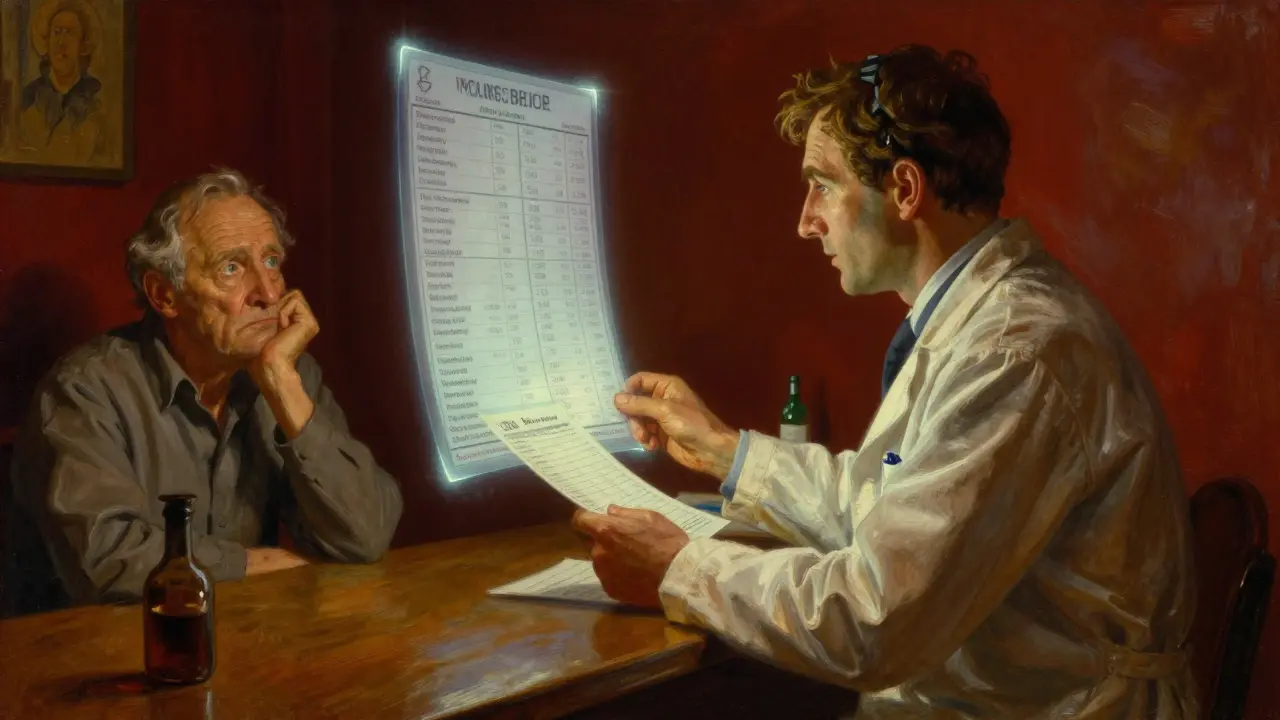
Imagine this: Your doctor writes a prescription for blood pressure medicine. You take it to your local pharmacy. The pharmacist notices you’re already on three other meds that could interact dangerously with the new one. But they can’t see your full history - no lab results, no allergies, no recent hospital visits. So they call your doctor. The call takes 12 minutes. You wait. The prescription gets changed. You leave with the right meds - but only because someone caught it by chance.
This isn’t rare. It happens every day. And it’s not because pharmacists aren’t paying attention. It’s because the systems they use don’t talk to the ones doctors use. That’s where EHR integration comes in. It’s not just tech jargon. It’s the missing link between your doctor’s notes and your pharmacist’s screen - and it’s saving lives.
What EHR Integration Actually Does for Prescriptions
EHR integration means your doctor’s electronic health record (EHR) system and your pharmacy’s system can share data automatically. Not manually. Not by phone. Not by fax. Automatically.
When your doctor sends a prescription, it doesn’t just go to the pharmacy’s inbox. It goes into the pharmacy’s system alongside your full medical history: your allergies, your kidney function, your other prescriptions, your recent blood tests, even your care plan from a specialist. The pharmacist sees it all - in real time.
And it works both ways. If the pharmacist spots a problem - like a duplicate drug or a dangerous interaction - they can send a note back to the doctor’s EHR. The doctor sees it right in their workflow. No calls. No delays. Just a clear alert: "Patient on warfarin. Avoid NSAIDs. Suggested alternative: acetaminophen."
This isn’t science fiction. It’s happening right now - in clinics and pharmacies that have made the leap. The result? A 48% drop in medication errors, according to UpToDate’s 2023 case studies. A 31% reduction in hospital readmissions tied to bad drug reactions, as shown in a 2021 University of Tennessee study. And for patients with multiple chronic conditions, adverse drug events dropped by 34% in Australia’s My Health Record system.
How It Works: The Tech Behind the Scenes
There’s no single magic button. EHR-pharmacy integration is built on three main standards that work together:
- NCPDP SCRIPT 2017071 - This is the language pharmacies and prescribers use to send and receive prescriptions. Think of it as the postal code for your medication order.
- HL7 FHIR Release 4 - This is the real game-changer. It lets systems share richer data: lab results, diagnoses, care plans, even patient-reported symptoms. FHIR lets a pharmacist see your last HbA1c result before adjusting your diabetes meds.
- Pharmacist eCare Plan (PeCP) - This is a FHIR-based format specifically designed for pharmacists to document their clinical interventions. It’s how a pharmacist says: "I counseled the patient on insulin timing. They misunderstood. I clarified. Now they’re on track."
Behind these standards are APIs - secure digital doorways - that let systems talk. They use OAuth 2.0 for login, TLS 1.2+ for encrypted data travel, and AES-256 to protect data at rest. Every access is logged. That’s not just good practice. It’s required by the 21st Century Cures Act.
Most big players use Surescripts, which handles over 22 billion transactions a year. Their Medication History service gives pharmacists access to 97% of U.S. pharmacies’ prescribing records. But that’s just the start. True integration goes beyond just seeing prescriptions. It’s about seeing the whole patient.
Why This Matters More Than You Think
Let’s say you’re 72, have diabetes, heart failure, and high cholesterol. You’re on eight medications. One of them causes dizziness. You stop taking it. You don’t tell your doctor. You don’t tell your pharmacist. A month later, you fall. You end up in the ER.
With EHR integration, your pharmacist sees you haven’t picked up your dizziness-causing med in 30 days. They check your blood pressure logs. They see your systolic is creeping up. They send a note to your doctor: "Patient missed 4 doses of metoprolol. BP elevated. Consider alternative or follow-up."
Your doctor gets it. They call you. You explain. They switch your med. You avoid the fall. You avoid the hospital. And you save $1,250 a year in avoidable costs, according to the American Pharmacists Association.
It’s not just about avoiding disasters. It’s about better care. Pharmacists with EHR access identify 4.2 medication-related problems per patient visit. Without access? Just 1.7. That’s more than double the chance to catch something before it becomes a crisis.
And speed? Huge. Prescription processing drops from 15.2 minutes to 5.6 minutes per script. That’s not just efficiency. It means pharmacists have time to talk to you - not just fill bottles.
The Big Problem: Most Pharmacies Still Can’t Do It
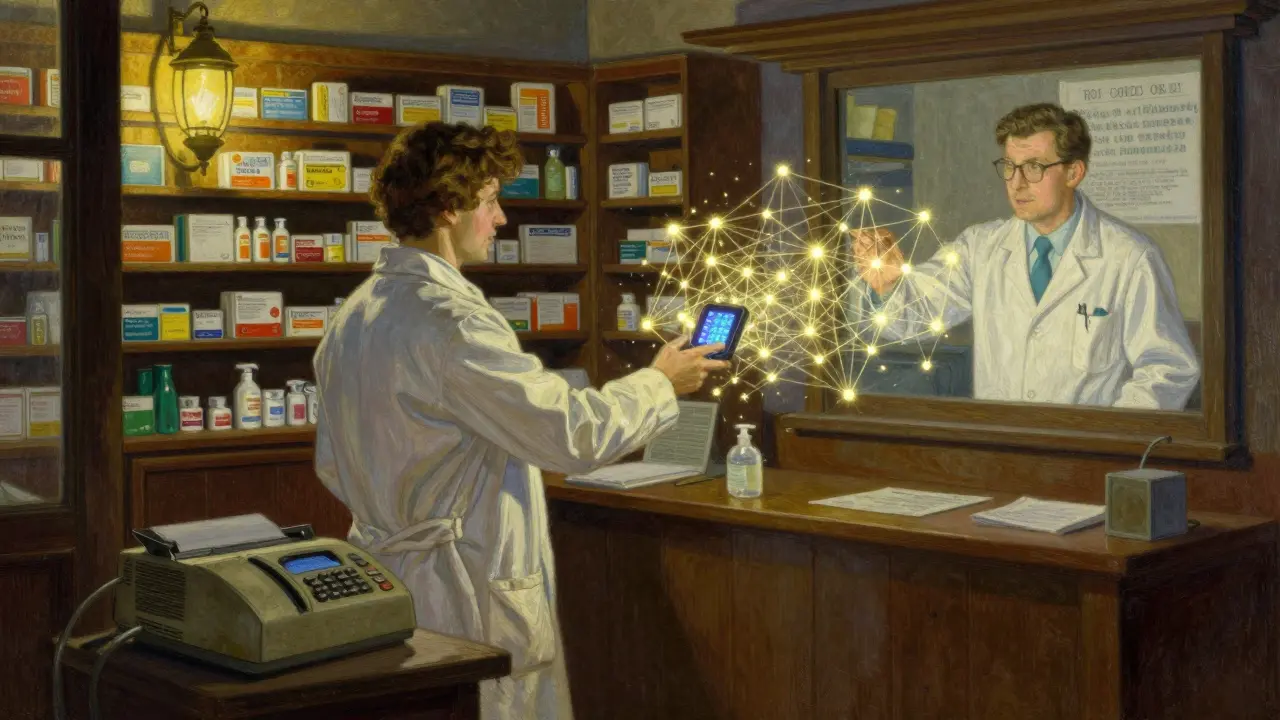
Here’s the harsh truth: Only 15-20% of U.S. pharmacies have full bidirectional EHR integration. That’s according to University of Wisconsin research. The rest? Still relying on phone calls, faxes, or one-way e-prescribing.
Why? Three big reasons:
- Cost - Independent pharmacies face $15,000 to $50,000 just to get started. Then $5,000 to $15,000 a year to keep it running. For a small shop, that’s more than their annual profit.
- Time - Pharmacists spend an average of 2.1 minutes per patient interaction. That’s not enough to dig through EHR data - even if they could see it. And 68% say they don’t have time to review it properly.
- Reimbursement - Only 19 states pay pharmacists for the time they spend using EHRs to manage medications. The rest? They do it for free. No money. No incentive.
And then there’s the tech mess. There are over 120 different EHR systems and 50 pharmacy software platforms. They don’t all speak the same language. Data mapping errors are common. One pharmacy reported 40 hours of custom coding just to get lab results to show up right.
The result? Only 3 out of 127 community pharmacies in Wisconsin had formal EHR access agreements with local health systems. That’s less than 0.01% of pharmacists in the state.
Who’s Getting It Right - And How
Some places are breaking through. The EnlivenHealth® and University of Tennessee pilot in 2021 connected 12 independent pharmacies with 3 clinics using Epic and PioneerRx. They did 1,847 clinical interventions. Providers accepted 92% of them. That’s not luck. That’s design.
They didn’t just plug in a system. They changed workflows. Pharmacists started reviewing EHR data during quiet hours. Doctors got alerts in their EHR - not emails. They trained staff. They tracked outcomes. They proved it worked.
Health systems with their own pharmacies? 89% have integration. Why? They control the tech. They pay for it. They see the ROI.
Big players like Surescripts, SmartClinix, and DocStation offer solutions. SmartClinix starts at $199/month per provider. DocStation at $249/month. But even those prices are out of reach for many small shops.

What’s Changing - And What’s Coming
Pressure is building. The 21st Century Cures Act bans "information blocking" - meaning providers can’t refuse to share data. CMS now requires Medicare Part D plans to integrate medication therapy management by 2025. California’s SB 1115 requires EHR integration for MTM by 2026.
And new tech is emerging. The CARIN Blue Button 2.0 lets patients share their own data from insurers directly to pharmacies. The NCPDP is rolling out PeCP Version 2.0 in late 2024 with smarter clinical alerts. CVS and Walgreens are testing AI that scans integrated data to flag high-risk patients before problems happen - cutting intervention time by 37% in trials.
The Office of the National Coordinator for Health IT set a goal: 50% of community pharmacies with bidirectional EHR integration by 2027. It’s ambitious. But without payment reform, it’s just a dream.
What Needs to Happen Next
Technology isn’t the barrier anymore. We know how to do this. The problem is money and policy.
Pharmacists are trained to manage medications. They’re the most accessible health professionals. Yet they’re locked out of the systems that could make them more effective.
What’s needed:
- Payment models - Medicare and insurers must pay for pharmacist time spent using EHRs for care coordination. Not just for dispensing.
- Standardization - All EHRs and pharmacy systems must support FHIR and PeCP. No exceptions.
- Subsidies - Small pharmacies need grants or tax credits to cover setup costs. No one expects a corner store to pay $30,000 for tech.
- Workflow redesign - Pharmacists need protected time to review data. Not just during the 2-minute rush between refills.
Until then, we’re leaving patients at risk. And we’re wasting the most underused resource in healthcare: the pharmacist.
What Patients Can Do Today
You don’t have to wait for systems to catch up. Here’s what you can do:
- Use your pharmacy’s app or portal. Many now let you see your med list and refill history.
- Ask your pharmacist: "Can you see my doctor’s notes or lab results?" If they say no, ask why.
- Keep your own med list - including doses, reasons, and side effects - and share it at every visit.
- Ask if your doctor’s office uses e-prescribing with your pharmacy. If not, request it.
Change doesn’t start with tech. It starts with asking the right questions.
TONY ADAMS
January 26, 2026 AT 06:00bro why are we still doing this by phone?? i got my blood pressure med last week and the pharmacist called my doc for 20 minutes while i sat there like a statue. we got self-driving cars but my meds still need a human to fax something??
Skye Kooyman
January 27, 2026 AT 10:22the 48% drop in errors is wild. i had a friend almost get hospitalized over a drug interaction. no one knew she was on warfarin. if this system had been in place, she’d still be walking
rasna saha
January 27, 2026 AT 13:52as someone from india where pharmacies often don’t even have digital records, this feels like a dream. but i’m so glad it’s happening somewhere. pharmacists are the unsung heroes here - they’re the ones catching the mistakes before they happen. please don’t let cost stop this
bella nash
January 27, 2026 AT 15:36The structural inefficiencies inherent in the current pharmacotherapeutic ecosystem are not merely logistical but epistemological in nature. The fragmentation of clinical data across proprietary silos constitutes a systemic failure of information ontology. Until we achieve ontological interoperability through standardized semantic frameworks such as HL7 FHIR and PeCP, we remain in a pre-modern state of therapeutic governance. The economic disincentives for independent pharmacies are not technical but ideological - rooted in the commodification of care over its optimization. Until reimbursement models reflect the clinical labor of pharmacists as distinct from dispensing labor, integration will remain an aspirational artifact rather than a functional reality
Uche Okoro
January 27, 2026 AT 15:53Per the 21st Century Cures Act, Section 4004, information blocking is explicitly prohibited under 45 CFR 171.501. The current state of EHR-pharmacy interoperability is in direct contravention of the Act’s mandate for API-based, FHIR-compliant data exchange. Moreover, the absence of standardized PeCP implementation undermines the clinical validity of pharmacist interventions. The $15K–$50K barrier is not a cost issue - it is a regulatory failure. CMS must mandate FHIR-based MTM reimbursement under HCPCS code G2062. Without it, we are institutionalizing pharmacists as glorified clerks
shivam utkresth
January 28, 2026 AT 05:55in india we don’t have EHRs but we’ve got chai-wallahs who remember your grandma’s diabetes meds better than any database. maybe tech isn’t the answer - maybe it’s just trust and time. still, if we can make this work in the US with all its chaos, imagine what it could do in places with real community care. kudos to the folks making it happen
Kipper Pickens
January 29, 2026 AT 22:01the real win here isn’t the tech - it’s the time saved. 15 minutes per script down to 5.6? that’s 9.4 minutes per patient that pharmacists can now spend actually talking to people. that’s not efficiency - that’s care. and when you give a pharmacist time to listen, they catch things no algorithm ever could. the data’s there. the standards exist. the only thing missing is the will to pay for human attention
Aurelie L.
January 31, 2026 AT 03:12my dad fell because his meds weren’t synced. he spent three weeks in rehab. the system failed him. and now i’m supposed to believe it’s just a cost problem? this isn’t a tech issue. it’s a moral one.