

Bisphosphonate Calcium Timing Calculator
How to Avoid Calcium Absorption Problems
Get the most out of your bisphosphonate treatment. Learn the exact timing to safely take your calcium supplement without reducing medication effectiveness.
Bisphosphonate Timing Calculator
For optimal absorption, take bisphosphonates first thing in the morning on an empty stomach. Calcium supplements should be taken at least 2 hours later.
Recommended Calcium Timing
Enter your bisphosphonate time to see when you can take calcium safely.
Important Timing Rules
- Take bisphosphonate with plain water only - Wait at least 30 minutes (60 minutes for risedronate) before eating or drinking anything else - Stay upright for the full waiting period - Calcium should be taken at least 2 hours after bisphosphonate
Warning: Calcium Interference
Taking calcium with bisphosphonates can reduce absorption by up to 94%. This means your medication may be almost completely ineffective.
Getting the most out of your bisphosphonate for osteoporosis isn’t just about taking the pill-it’s about when you take it, and what you take it with. Many people don’t realize that a simple calcium supplement, taken at the wrong time, can cut the effectiveness of their bone medication by up to 90%. This isn’t a minor detail. It’s the difference between preventing a fracture and ending up in the hospital.
Why Calcium Ruins Bisphosphonate Absorption
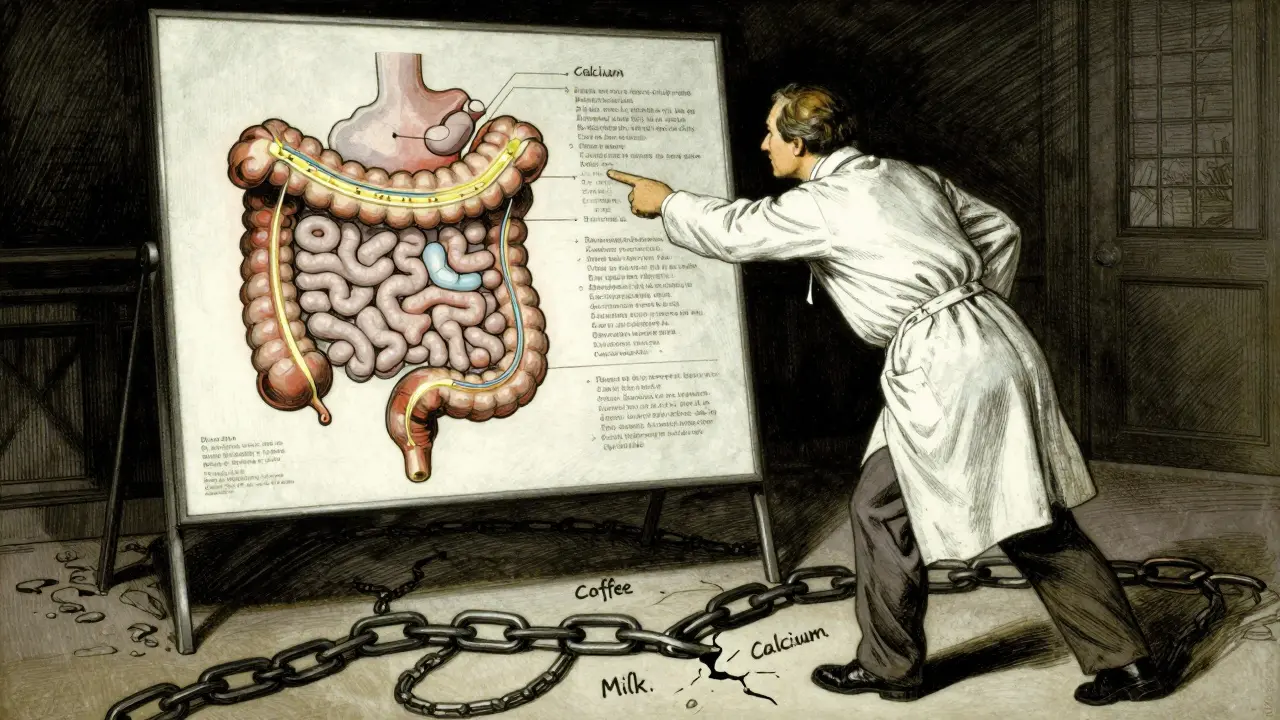
Bisphosphonates like alendronate (Fosamax), risedronate (Actonel), and ibandronate (Boniva) are designed to slow down bone loss. They work by sticking to bone surfaces and blocking cells that break down bone tissue. But here’s the catch: these drugs are terrible at getting absorbed in the first place. Only about 1% of the pill you swallow actually makes it into your bloodstream. The rest just passes through. Calcium is the main culprit. When calcium-whether from a pill, milk, yogurt, or even fortified orange juice-mixes with bisphosphonates in your stomach, they bind together. This creates a hard, insoluble compound your body can’t absorb. A 2019 study in the Journal of Clinical Pharmacology found that taking calcium carbonate with alendronate reduced absorption by 94%. That’s not a small drop. That’s nearly wiping out the entire benefit of the drug. Even calcium citrate, often marketed as "easier to absorb," still cuts absorption by 88%. It doesn’t matter if it’s a 500 mg tablet or a multivitamin with calcium. If it’s in your system at the same time, it’s sabotaging your treatment.The Exact Timing Rules You Need to Follow
There’s no wiggle room here. The rules are strict, and they’re based on real science-not guesswork.- Take your bisphosphonate first thing in the morning, on an empty stomach.
- Use only plain water. No coffee, tea, juice, milk, or soda. Even a sip of orange juice can reduce absorption by 50-60%.
- Wait at least 30 minutes after taking alendronate before eating or drinking anything else. For risedronate, wait 60 minutes.
- Stay upright-sitting or standing-for the full waiting period. Lying down increases your risk of severe esophageal irritation. Mayo Clinic data shows 62% of GI side effects happen when people lie down too soon.
- Don’t take any other pills, vitamins, or supplements for at least 30 to 60 minutes after your bisphosphonate.
When to Take Calcium Supplements (and Vitamin D)
You still need calcium-your bones need it. But timing is everything. The solution? Take your calcium supplement at least two hours after your bisphosphonate. Most people find it easiest to take calcium with dinner. That way, you’re not rushing to fit it in before bed, and your body absorbs it better when paired with food. Vitamin D is different. It’s fat-soluble, so it absorbs best with a meal that contains some fat. Take it with your evening meal. No need to wait two hours after your bisphosphonate-just make sure it’s not in the same window as your morning dose.What About IV Bisphosphonates?
If you’re on zoledronic acid (Reclast) or IV ibandronate, you’re off the hook for the morning routine. These are given once a year or every few months through an IV drip. No fasting. No waiting. No water-only rule. But there’s a trade-off. IV bisphosphonates can cause flu-like symptoms-fever, chills, muscle aches-for a day or two after the infusion. About 15-30% of people experience this. It’s usually mild and goes away on its own. Still, some patients find it worth avoiding the daily pill hassle. Also, your doctor will check your calcium and vitamin D levels before the infusion. If they’re low, you’ll be given supplements to take beforehand. Otherwise, the IV can cause a temporary drop in blood calcium, which can be dangerous.
Why So Many People Fail at This
It’s not that people don’t want to follow the rules. It’s that the rules are hard to stick to. A 2022 study from Osteoporosis Canada found that only 42% of patients were still following the correct timing after six months. Why? Morning coffee. Multivitamins taken with breakfast. Forgetting the 30-minute wait. Taking calcium at night but then grabbing a snack before bed that contains it. On patient forums like Reddit and HealthUnlocked, 74% of people who switched from oral to IV bisphosphonates said they did it just to avoid the morning ritual. One 68-year-old woman in Melbourne told her doctor she’d been taking her alendronate with her morning tea for months because "it was just easier." Her bone density dropped. She had two vertebral fractures in 18 months. Even small mistakes matter. A 2022 Johns Hopkins case study showed a 79-year-old woman taking five different medications. She took her bisphosphonate, then her calcium pill 20 minutes later-thinking she was being careful. She didn’t realize the damage she was doing.How to Make It Work
You don’t have to give up your routine. You just have to tweak it.- Use a pill organizer with clear labels: "Bisphosphonate AM" and "Calcium PM."
- Set two phone alarms: one for your morning dose, and one for your evening calcium.
- Keep your bisphosphonate by your sink, with a glass of water already poured. No coffee pot in sight.
- Take all other morning medications (blood pressure pills, thyroid meds, etc.) at least 60 minutes after your bisphosphonate.
- Ask your pharmacist for a free medication schedule sheet. Many pharmacies offer them.
What Your Doctor Should Be Checking
When you start a bisphosphonate, your doctor should test your blood for:- 25-hydroxyvitamin D (aim for >30 ng/mL)
- Serum calcium (should be above 8.5 mg/dL)
- Phosphorus and parathyroid hormone (PTH)
What If You Mess Up?
Accidentally took your bisphosphonate with coffee? Ate breakfast too soon? Took calcium an hour after? Don’t panic. Don’t double up the next day. Just skip that dose. Wait until tomorrow morning, fast again, and start fresh. Taking two doses close together increases your risk of stomach upset and doesn’t improve effectiveness. It’s better to miss one dose than to risk side effects.Alternatives If This Is Too Hard
If you’ve tried and failed to stick to the timing, you’re not alone. And you’re not out of options. Denosumab (Prolia) is a monthly injection that doesn’t require fasting or timing restrictions. It’s just as effective at reducing fractures. But it’s more expensive and requires regular visits. Abaloparatide (Tymlos) is a daily injection that actually builds new bone. It doesn’t interact with calcium. But it costs over $2,900 a month-far more than generic bisphosphonates. Newer bisphosphonate formulations are being tested. A 2022 phase 2 trial showed an enteric-coated alendronate that could be taken with food-absorption was 38% higher than the standard version. It’s not available yet, but it’s coming.Bottom Line
Calcium supplements and bisphosphonates don’t mix. Not even a little. But you can still take both-just not at the same time. Get the timing right, and your medication works. Get it wrong, and you’re wasting your time, money, and risking your bones. The goal isn’t perfection. It’s consistency. One morning a week you forget? You’ll be fine. But if you’re doing it every day, you’re setting yourself up for failure. Talk to your doctor. Use a reminder app. Label your pills. Take calcium at night. It’s not complicated. It’s just not optional.Can I take calcium and bisphosphonates on the same day?
Yes, but not at the same time. Take your bisphosphonate first thing in the morning with plain water, and wait at least 30 to 60 minutes before eating or drinking anything else. Take your calcium supplement at least two hours after your bisphosphonate-ideally with dinner. This keeps them separated and lets each one work properly.
What happens if I take calcium with my bisphosphonate by accident?
If you accidentally take calcium with your bisphosphonate, the medication’s absorption drops by up to 90%. Don’t take another dose that day. Skip it and wait until tomorrow. Taking a double dose won’t make up for the lost absorption and can cause stomach upset or esophageal irritation. Just reset your routine the next morning.
Is it okay to take vitamin D with calcium supplements?
Yes, and it’s actually recommended. Vitamin D helps your body absorb calcium. Take them together with your evening meal. You don’t need to wait after your bisphosphonate-just make sure vitamin D and calcium aren’t taken within 30 to 60 minutes of your morning dose.
Can I drink coffee or tea after taking my bisphosphonate?
No. Coffee, tea, juice, and milk all reduce bisphosphonate absorption by 50-60%. Even plain water is the only safe option. Wait at least 30 to 60 minutes after taking your pill before having anything else to drink. This includes herbal teas and sparkling water.
Why do I have to stay upright after taking bisphosphonates?
Bisphosphonates can irritate the esophagus if they sit there too long. Staying upright helps the pill move quickly into your stomach. Lying down within 60 minutes of taking it increases your risk of serious side effects like ulcers or esophageal damage. Mayo Clinic data shows 62% of GI issues happen when people lie down too soon.
Are IV bisphosphonates better than oral ones?
They’re easier to take-no fasting, no waiting, no timing rules. But they come with trade-offs. IV bisphosphonates like zoledronic acid can cause flu-like symptoms for a day or two after the infusion. They’re also more expensive and require a clinic visit. They’re a good option if you struggle with the daily routine, but they’re not automatically "better." Your doctor will help you choose based on your health, lifestyle, and preferences.
How do I know if my bisphosphonate is working?
Bone density scans (DEXA) are the best way. Most doctors recommend a scan every 1-2 years to track changes. If your bone density stays stable or improves, your treatment is working. If it drops, your doctor will check your timing, calcium and vitamin D levels, and whether you’re taking other medications that interfere. Consistent, correct dosing is the biggest factor in success.
Can I take antacids or proton-pump inhibitors with bisphosphonates?
Antacids (like Tums or Rolaids) contain calcium and magnesium, which interfere with absorption. Wait at least two hours after your bisphosphonate before taking them. Proton-pump inhibitors (PPIs) like omeprazole don’t directly interfere with absorption, but they can reduce stomach acid, which may affect how well bisphosphonates dissolve. Talk to your doctor if you’re on long-term PPIs-your treatment plan may need adjustment.
Herman Rousseau
December 21, 2025 AT 22:25Just started my bisphosphonate last month and I was literally taking my calcium with breakfast-no wonder my doctor looked at me like I’d just admitted to drinking bleach. Changed my routine after reading this: water only at 6 AM, no coffee, no multivitamin until dinner. Set two alarms. My bone density scan in 6 months better show progress or I’m switching to the IV. 🙏
Jeremy Hendriks
December 23, 2025 AT 06:00Let me break this down for the 90% of you who think science is a suggestion box. The 1% absorption rate isn’t a bug-it’s a feature of evolutionary biology. Your gut evolved to reject foreign compounds unless they’re paired with fat or bile. Calcium? It’s a molecular handcuff. The real tragedy isn’t the 94% loss-it’s that your doctor didn’t explain this in 20 seconds instead of making you Google it after 3 fractures. You’re not lazy. The system is broken.
Ajay Brahmandam
December 25, 2025 AT 04:36My mom’s on alendronate and she used to take her calcium with tea. She didn’t even know it was a problem until she fell and broke her hip. Now she takes it at dinner with her curry and a glass of milk. No more hospital visits. Simple fix. Just gotta remember the timing. I made her a sticky note on the fridge. Works like a charm.
Nader Bsyouni
December 25, 2025 AT 13:04So let me get this straight-you’re telling me the entire pharmaceutical industry is built on the assumption that people can’t follow basic instructions? That we’re all just too dumb to wait 30 minutes? The real problem isn’t calcium-it’s that we’ve outsourced our biology to pills and now we expect them to work like magic. Wake up. Your body isn’t a vending machine. Stop blaming the medicine and start taking responsibility.
jenny guachamboza
December 26, 2025 AT 18:34Wait… so if I take my bisphosphonate with water and then drink sparkling water 25 mins later… is that still bad?? I read somewhere that carbonation messes with stomach acid and maybe that’s why I get heartburn?? Also my cousin’s friend’s neighbor took her pill with orange juice and now she’s in a wheelchair?? I think the government is hiding something. #BisphosphonateGate 🤔💊
Kiranjit Kaur
December 28, 2025 AT 14:12My sister switched to Prolia last year after 2 years of forgetting her timing. She said the monthly shot is a game-changer-no alarms, no fasting, just a quick visit to the clinic. Yeah, it’s pricey but she’s finally sleeping through the night without worrying about her next dose. If you’re stressed about this routine, don’t feel guilty-there are other options. Your bones don’t care how you get the treatment, just that you get it.
Aliyu Sani
December 29, 2025 AT 16:06Man… this hits deep. I’ve been on Fosamax for 4 years. Took calcium at night like they said. But I didn’t know about the vitamin D thing-thought it was just for bones. Turns out I was low as hell. My PTH was through the roof. Doc finally caught it after my last scan. Now I take D3 with dinner and a spoon of olive oil. My levels are up. No more muscle cramps at night. Small tweaks. Big difference. Stay consistent, fam.
Vikrant Sura
December 29, 2025 AT 22:14Study says 42% adherence after 6 months. That’s a 58% failure rate. Why are we still prescribing this if compliance is this low? The real cost isn’t the pill-it’s the fractures, the ER visits, the nursing homes. This isn’t a patient problem. It’s a systemic failure. We need better delivery mechanisms. Or just give everyone the IV and be done with it.
Gabriella da Silva Mendes
December 30, 2025 AT 09:13Look, I get it. You’re all about your little morning rituals. But let’s be real-this whole thing is a capitalist scam. Why do you think they made bisphosphonates so finicky? So you’d keep buying calcium pills, vitamin D, pill organizers, reminder apps, and then switch to Prolia when you finally give up. Meanwhile, Big Pharma rakes in billions. Just eat more dairy, walk outside, and stop buying into this pill-based nonsense. Your bones don’t need a PhD to survive.
Tarun Sharma
December 30, 2025 AT 10:44