

When antibiotics save your life, they can also set you up for something far worse. For many people, a simple course of pills for a sinus infection or pneumonia leads to something no one warns you about: C. diff colitis. It starts with diarrhea. Then comes cramping, fever, and sometimes, a hospital stay that lasts weeks. In the worst cases, it kills. And it’s not rare. In the U.S. alone, over half a million people get it every year. Most of them didn’t even have a gut problem before they took the antibiotics.
How Antibiotics Turn Your Gut Against You
Your gut isn’t just a tube for food. It’s a bustling city of trillions of bacteria - most of them helpful. They digest fiber, make vitamins, and keep harmful bugs like Clostridioides difficile in check. But when you take antibiotics, especially broad-spectrum ones, you don’t just kill the bad bacteria. You wipe out the good ones too. That’s when C. diff, which may have been lying low in your gut all along, takes over.Not all antibiotics are created equal when it comes to triggering C. diff. Some are far more dangerous than others. A 2023 study tracking over 33,000 hospital patients found that piperacillin-tazobactam - a common antibiotic used for serious infections - nearly doubled the risk of C. diff compared to other drugs. Carbapenems and later-generation cephalosporins like ceftriaxone were almost as bad. Even more surprising? Clindamycin, a drug often prescribed for skin infections, carries one of the highest risks of all. It’s so risky that doctors now avoid it unless absolutely necessary.
On the flip side, tetracyclines like doxycycline are much safer. They don’t wreck your gut microbiome the same way. If you’re at risk for C. diff - say, you’re over 65, have had it before, or are in the hospital - ask your doctor if a lower-risk antibiotic will work. It might save you months of suffering.
And it’s not just which drug you take - it’s how long you take it. Each extra day on antibiotics increases your C. diff risk by 8%. The danger spikes after 14 days. That’s why guidelines now say: review your antibiotics within 48 to 72 hours. If the infection is clearing, stop. Don’t finish the whole bottle just because you were told to. Your gut will thank you.
Why Stopping Antibiotics Isn’t Always Enough
You might think: if antibiotics cause C. diff, then just stop them, and you’ll get better. For some people, that’s true. Their gut bacteria bounce back on their own. But for others - especially those who’ve had C. diff before - stopping the drug isn’t enough. The C. diff spores are still there, stubborn and resilient. They wait. And when the gut environment is disrupted enough, they wake up again.That’s why recurrence is so common. About 20% of people get C. diff a second time. For one in four of those, it comes back a third or fourth time. Each recurrence makes the next one more likely. And each episode gets harder to treat. Vancomycin, the old standby, works - but only about 70% of the time for first-time cases. For recurrent ones? It drops to 30%.
And here’s the cruel twist: the more times you’re treated with antibiotics for C. diff, the more you damage your gut. You’re not curing the problem - you’re deepening it. That’s why doctors now avoid giving vancomycin more than once for the same infection. It’s a band-aid that makes the wound worse.
The Game-Changer: Fecal Transplants
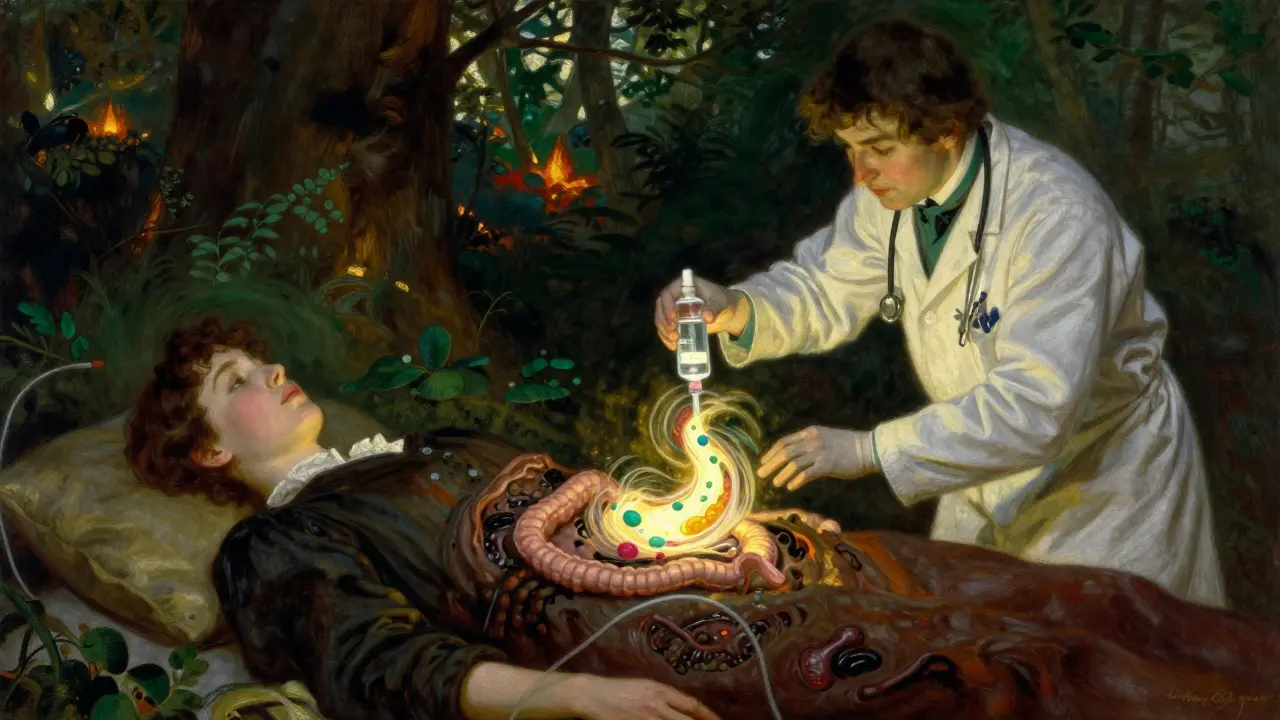
In 2013, a study in the New England Journal of Medicine changed everything. Researchers gave people with recurring C. diff a simple treatment: stool from a healthy donor, delivered via colonoscopy. The results? 94% of patients were cured after one or two treatments. Compare that to vancomycin’s 31% cure rate. It wasn’t just better. It was revolutionary.That’s fecal microbiota transplantation - FMT. It’s not as gross as it sounds. Donor stool is screened for viruses, parasites, and dangerous bacteria. It’s processed into a liquid, frozen, and delivered either through a colonoscopy, an enema, or - increasingly - in pill form. The pills? They’re tasteless, easy to swallow, and just as effective.
Today, FMT is the gold standard for people who’ve had three or more C. diff infections. Success rates? 85% to 90%. It works because it doesn’t just kill the bad bacteria - it brings back the good ones. The healthy microbes crowd out C. diff, restore balance, and rebuild your gut’s natural defenses. It’s like reseeding a lawn after a fire.
And it’s not just experimental anymore. In 2022 and 2023, the FDA approved two standardized FMT products - Rebyota and Vowst - made from carefully screened donor material. These aren’t messy jars of poop. They’re FDA-regulated, shelf-stable, and available in pharmacies. Hospitals that once hesitated to offer FMT now have formal programs. In 2015, only 5% of U.S. hospitals did. Today, it’s 35%.
What About Probiotics?
You’ve probably heard that yogurt or probiotic supplements can prevent C. diff. The truth? It’s not that simple. Some studies show a small benefit. Others show no effect. And here’s the scary part: in people with weak immune systems, probiotics can cause dangerous infections. A 2020 review found cases of bloodstream infections from probiotic strains - especially in hospitalized patients.The Infectious Diseases Society of America doesn’t recommend probiotics to prevent C. diff. Not because they’re useless - but because the risks aren’t worth it when better options exist. If you’re healthy and taking antibiotics, a probiotic might help. But if you’re in the hospital, older, or have had C. diff before? Stick to proven treatments. Don’t gamble with your gut.
Why This Matters Beyond the Hospital
Most people think C. diff is a hospital problem. But since 2011, community cases have risen by 14% every year. That means you don’t have to be sick in a hospital to catch it. You can get it after a simple antibiotic for a tooth infection or a urinary tract infection. And once you’ve had it, you’re more likely to get it again - even years later.The economic cost is staggering. Each hospital stay for C. diff averages $11,000. A single FMT? Around $2,500. That’s why hospitals are now investing in antibiotic stewardship programs - teams of doctors and pharmacists who review every antibiotic prescription. The goal? Cut unnecessary use. Shorten treatment times. Avoid the drugs with the highest risk.
And it’s working - just not fast enough. Hospital C. diff rates dropped 24% between 2009 and 2015. But since then, progress has stalled. Community cases keep climbing. The CDC still calls C. diff an “urgent threat.” That means it’s not just a medical issue. It’s a public health crisis.
What You Can Do Right Now
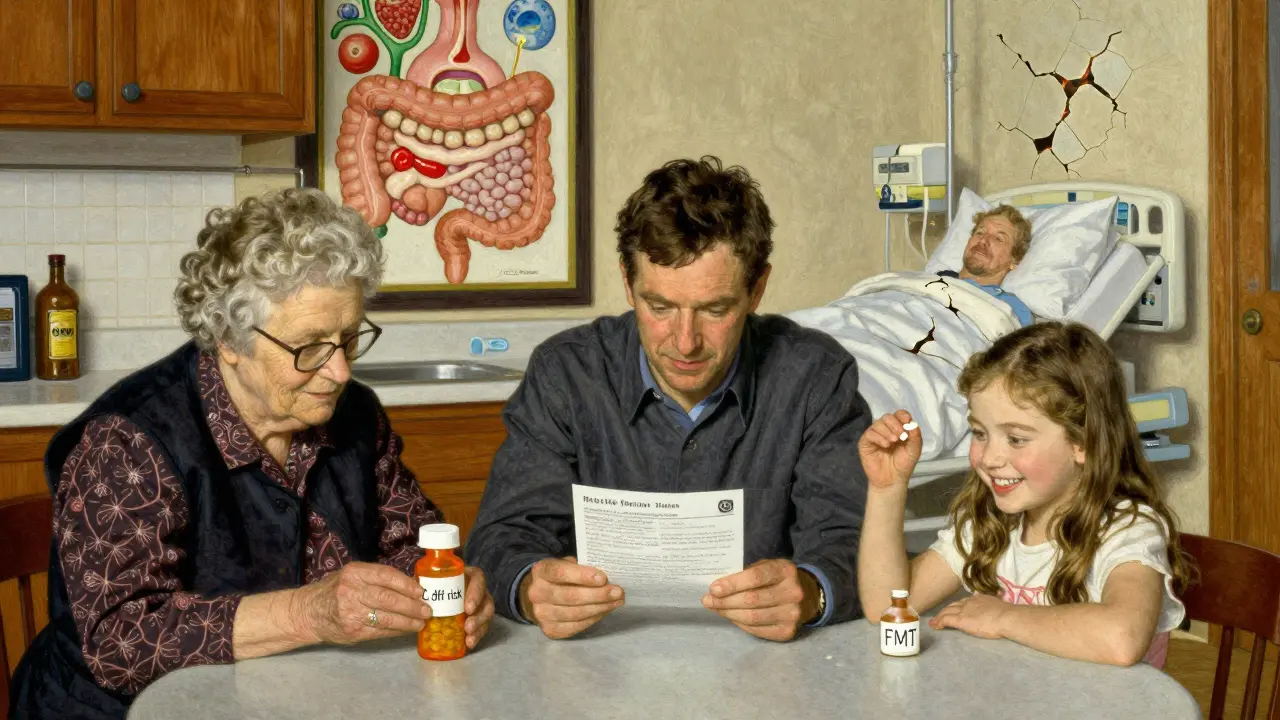
If you’re prescribed an antibiotic, ask these three questions:- Is this really necessary? Some infections - like colds or mild sinusitis - don’t need antibiotics at all.
- Is there a lower-risk option? Ask about tetracyclines or narrow-spectrum drugs instead of broad-spectrum ones.
- Can I stop early if I feel better? Don’t assume you need the full course. Many infections clear in 3-5 days.
If you’ve had C. diff before, talk to your doctor about FMT before you ever need it. Don’t wait until you’re on your third recurrence. Prevention is easier than cure.
And if you’re in the hospital? Ask if they have an antibiotic stewardship team. If they don’t, ask why. Your life might depend on it.
What’s Next for C. diff Treatment
The future isn’t just about poop pills. Scientists are developing targeted therapies that restore the gut without using donor stool. One drug, SER-109, is made from purified bacterial spores - no feces involved. In trials, it cured 88% of recurrent C. diff cases. It’s already under FDA review.Another promising approach? Monoclonal antibodies like bezlotoxumab. Given as a single IV infusion, it neutralizes the toxin C. diff produces. It doesn’t kill the bacteria - it just stops the damage. When paired with vancomycin, it cuts recurrence rates by 10%.
And researchers are even looking at ways to protect people before they get sick. Could we screen for C. diff carriers before they go into the hospital? Could we give them a protective treatment before antibiotics? Early data suggests yes. The next big breakthrough might not be a new drug - it might be a simple test that tells you if you’re at risk before you even take the first pill.
Can C. diff go away on its own without treatment?
In mild cases, especially in younger, healthy people, yes - the immune system can clear C. diff without medication. But this is rare. Most people need treatment, especially if symptoms last more than a few days or include fever, severe pain, or bloody stools. Waiting too long can lead to life-threatening complications like toxic megacolon or colon perforation. Don’t assume it’ll just go away.
Is fecal transplant safe?
When done through approved programs using screened donors, FMT is very safe. The FDA requires strict testing of donor stool for pathogens like HIV, hepatitis, and drug-resistant bacteria. Serious side effects are rare. The most common are mild bloating or cramping. Long-term risks - like changes in weight or metabolism - are still being studied, but no major issues have been confirmed in over a decade of use. The bigger risk is doing it improperly - through unregulated sources or DIY methods, which can be deadly.
Why isn’t FMT used for first-time C. diff infections?
FMT is powerful, but it’s not needed for first-time cases. Standard antibiotics like fidaxomicin or vancomycin work well in most people. FMT is reserved for recurrent infections because it’s more complex, expensive, and carries small risks. Using it too early would be like using a sledgehammer to crack a nut. Guidelines recommend FMT only after three or more recurrences - or after two recurrences if the patient is at high risk for another.
Can you get C. diff from someone else?
Yes - but not the way you might think. You don’t catch it like a cold. C. diff spreads through spores in feces. If someone with C. diff doesn’t wash their hands well, they can leave spores on doorknobs, toilets, or bedrails. If you touch those surfaces and then touch your mouth, you can ingest the spores. That’s why hospitals have strict cleaning protocols. In the community, it’s often spread through contact with someone who’s recently been in the hospital or taken antibiotics.
Are there any long-term effects after FMT?
Most people feel better quickly and stay better. But researchers are watching for long-term changes. Some studies suggest FMT might affect weight, mood, or metabolism - possibly because the gut microbiome influences these systems. So far, no major harms have been proven. The biggest concern is unintended transfer of diseases, which is why donor screening is so strict. If you’ve had FMT, your doctor may monitor you for unusual symptoms, but for most, it’s a one-time fix with lasting results.
Oladeji Omobolaji
January 21, 2026 AT 21:32Man, I never thought about how antibiotics could wreck your gut like that. I took clindamycin for a tooth infection last year and ended up in the ER with crazy diarrhea. No one warned me. Now I’m paranoid about every prescription.
But honestly? I’m kinda glad they’re making poop pills legal. Sounds wild, but if it works, why not?
Janet King
January 23, 2026 AT 16:52Antibiotic stewardship is critical in reducing Clostridioides difficile infections. The data supporting restricted use of broad-spectrum agents, particularly cephalosporins and clindamycin, is robust and well-documented in peer-reviewed literature.
Early de-escalation and duration review within 72 hours significantly reduce colonization risk and recurrence rates. This is not anecdotal-it is evidence-based practice.
Andrew Smirnykh
January 24, 2026 AT 12:40I’ve seen this play out in my family. My grandma got C. diff after a routine surgery. She was fine until the antibiotics started. FMT saved her. I used to think it was medieval. Now I see it as science catching up to nature.
It’s funny how we’ve spent decades trying to kill everything, then realized we need to bring things back.
Sue Stone
January 25, 2026 AT 02:11My mom had three recurrences. Vancomycin didn’t touch it. Then she did the pill version of FMT. Three days later she was baking cookies again. I’m telling you, if you’ve had it more than once, don’t wait. Ask for it now.
Vanessa Barber
January 25, 2026 AT 23:09So you’re telling me the solution to a bacterial infection is… more bacteria? And we’re calling that medicine now? Cool. I’ll just eat some dirt next time I have a cold.
Stacy Thomes
January 26, 2026 AT 15:07THIS IS THE MOST IMPORTANT THING I’VE READ ALL YEAR. If you’re on antibiotics right now, STOP READING THIS AND ASK YOUR DOCTOR THESE THREE QUESTIONS. YOUR GUT IS COUNTING ON YOU. NO EXCUSES. DO IT NOW.
dana torgersen
January 26, 2026 AT 17:10So… like… antibiotics… they kill the good bugs… and then the bad one takes over… and then… you… you… need poop from someone else??!!?? I mean… I get it… I get it… but… wow… I just… I didn’t think… I mean… I guess… science… is wild…
Dawson Taylor
January 26, 2026 AT 19:52Effective microbiome restoration requires targeted intervention. FMT addresses dysbiosis at the ecosystem level, not merely the pathogen level.
Antibiotic duration should be minimized. Duration correlates linearly with recurrence risk.
Probiotics lack consistent evidence and carry iatrogenic risk in immunocompromised hosts.
Sallie Jane Barnes
January 28, 2026 AT 16:25I’m so glad this post exists. My sister almost died from C. diff after a simple pneumonia treatment. We didn’t know any of this. Please share this with someone you love. It could save their life.
And if you’re a doctor-please, please talk to your patients about this. We need more awareness.
Laura Rice
January 29, 2026 AT 01:46OMG I just found out my cousin got FMT and now she’s like… a totally different person? Like, she’s less anxious, sleeps better, and even lost 15 lbs. Is that… is that a thing? Like… can your gut change your mood??
I need to read more about this. My brain is melting.
charley lopez
January 30, 2026 AT 23:21The microbiota-mediated inhibition of C. difficile spore germination via secondary bile acid production is a well-characterized mechanism. FMT restores this metabolic function, which vancomycin fails to do.
Moreover, the pharmacokinetic profile of tetracyclines demonstrates lower disruption of the colonic microbiome, per the 2023 Lancet ID meta-analysis.
Kerry Evans
January 31, 2026 AT 14:14Of course you’re going to get sick if you take antibiotics like candy. People these days think a runny nose needs a prescription. You’re not a child. Stop being lazy. Your gut is paying for your ignorance.
Susannah Green
February 1, 2026 AT 23:38My mom’s doctor refused to even talk about FMT until her fourth recurrence. She cried in the parking lot. I’m so mad. This should be standard info. Like, right after the script is written. Why is this not common knowledge??
Also-seriously-don’t finish the whole bottle. I’m telling you. I’ve seen it.