
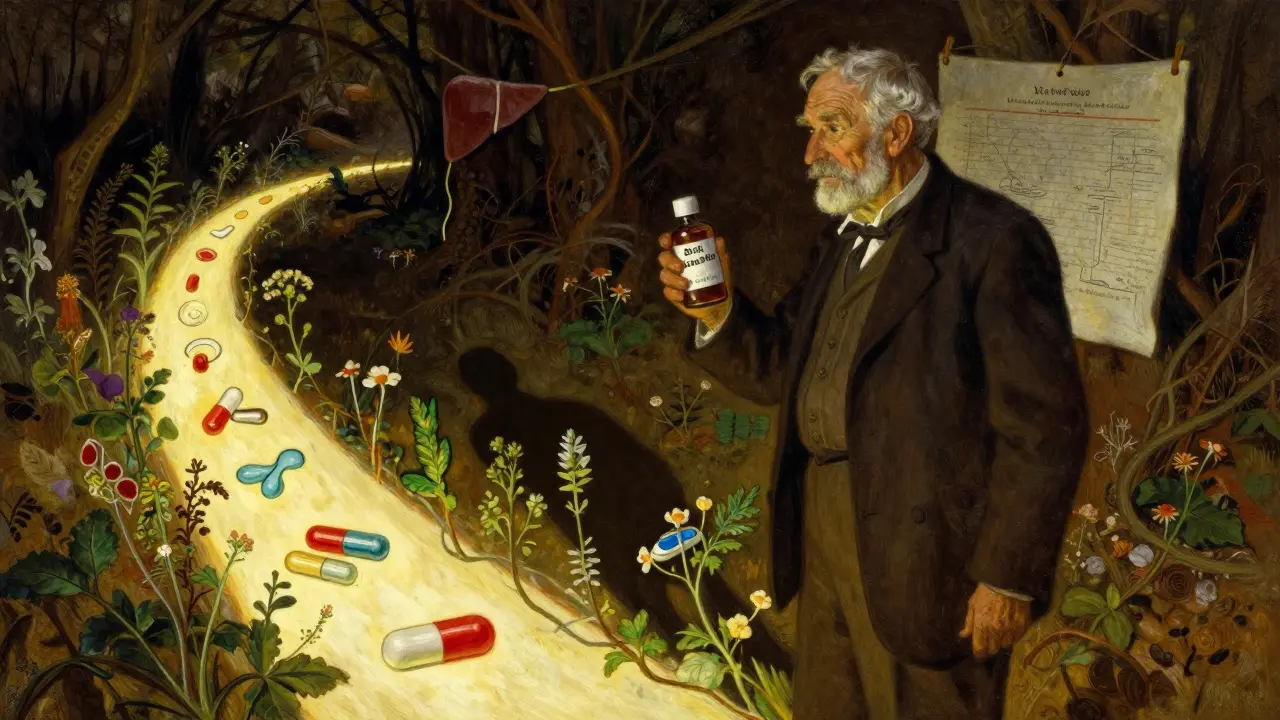
Many people assume that if something is labeled "natural," it must be safer than a pill from the pharmacy. You see it on labels: "100% herbal," "no synthetic chemicals," "gentle on the body." It sounds reassuring. But here’s the truth: natural doesn’t mean safe-and mixing natural products with prescription drugs can be dangerous, even deadly.
The Myth of "Natural = Safe"
The idea that nature is inherently good and medicine is inherently bad is deeply rooted in culture. But it’s not science. Natural products-like herbal supplements, vitamins, teas, and essential oils-are not regulated like pharmaceuticals. They don’t need to prove they work before hitting store shelves. They don’t have to show how they interact with other drugs. And they’re not monitored closely after they’re sold. The Dietary Supplement Health and Education Act (DSHEA) of 1994 made this official in the U.S. It classified supplements as food, not medicine. That means companies can sell them without FDA approval, as long as they don’t claim to cure diseases. The result? Thousands of products with unknown safety profiles are available to anyone, anytime. Meanwhile, pharmaceuticals go through years of testing. Clinical trials, manufacturing audits, post-market surveillance-all required by law. If a drug causes liver damage, heart problems, or dangerous interactions, regulators act. That’s not perfect, but it’s a system designed to catch risks before they hurt people.When "Natural" Turns Dangerous
Some of the most common supplements carry serious risks when mixed with medications. St. John’s wort, often taken for mild depression, can make birth control pills fail. It can also reduce the effectiveness of blood thinners like warfarin, antidepressants, and even some cancer drugs. People taking it might think they’re being careful-until they get pregnant, develop a blood clot, or their tumor starts growing again. Kava, used for anxiety, has been linked to severe liver damage. In some countries, it’s banned. Yet it’s still sold online and in health stores as a "natural relaxant." Ephedra, once popular for weight loss and energy, was pulled from the U.S. market in 2004 after causing heart attacks and strokes. But similar stimulants are still sold under different names-like "ma huang" or "energy boosters." Even something as simple as garlic or ginkgo can thin your blood. If you’re scheduled for surgery, or already taking aspirin or clopidogrel, these can increase your risk of dangerous bleeding. And then there’s foxglove. It’s a wildflower. But it contains digitalis-the same chemical used in the heart medication digoxin. Eat the plant? You could die. Take a standardized extract under medical supervision? It could save your life. The difference isn’t natural vs. synthetic. It’s dose, purity, and control.The Hidden Gap in Safety Data
You might hear that only 100,000 people die each year from pharmaceuticals, while herbal deaths are "rare." That’s true-but misleading. Pharmaceutical deaths are tracked. They’re reported. They’re counted. If you have a bad reaction to a prescription drug, your doctor files a report. The FDA gets it. The system works, even if it’s not perfect. For supplements? Not so much. Most people don’t connect their nausea, dizziness, or liver pain to that turmeric capsule they started taking last month. Doctors don’t always ask about supplements. And when they do, patients often lie-or forget. A 2022 study found that 70% of people don’t tell their doctor what supplements they’re taking. The FDA received only 1,200 adverse event reports for dietary supplements in 2022. Compare that to 120,000 for prescription drugs. Does that mean supplements are 100 times safer? No. It means they’re vastly underreported. People don’t know to report them. They assume it’s "just a natural side effect."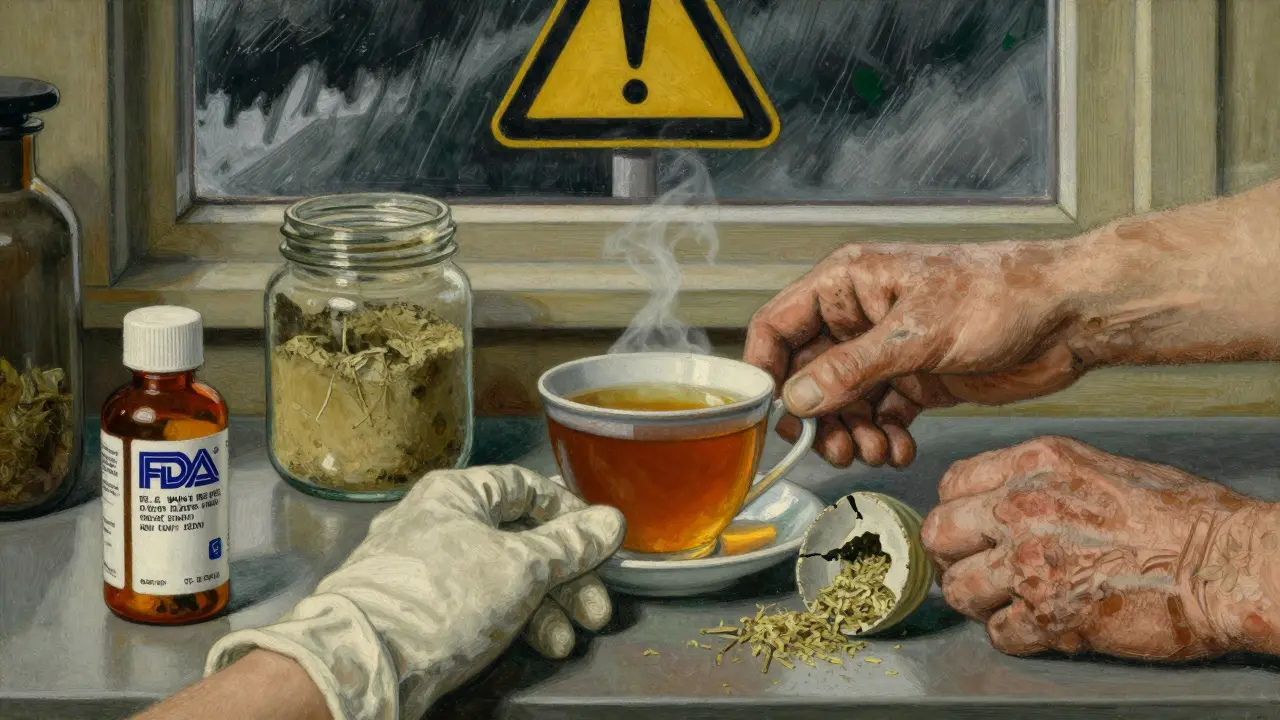
Manufacturing Chaos
Here’s another problem: you have no idea what’s actually in the bottle. Pharmaceutical companies must prove their product contains exactly what’s on the label-down to the milligram. They test every batch. Their factories are inspected regularly. Supplement manufacturers? They follow basic sanitation rules. They test for heavy metals or microbes. But they don’t have to prove potency. They don’t have to show that the ginseng in your pill is real ginseng-or that it contains any active compounds at all. A 2020 study by Consumer Reports found that one in four herbal supplements didn’t contain the herb listed on the label. Some had fillers like rice flour or powdered leaves from unrelated plants. Others had hidden pharmaceuticals-like sildenafil (the active ingredient in Viagra) in "male enhancement" supplements. That’s not just misleading. It’s illegal. And it’s common.Who Gets Hurt?
Older adults are at the highest risk. They’re more likely to take multiple medications. They’re more likely to use supplements for arthritis, memory, or sleep. And their bodies process drugs differently. A small dose of St. John’s wort might be harmless to a 25-year-old. For a 70-year-old on blood pressure meds? It could trigger a stroke. People with chronic conditions-diabetes, heart disease, cancer-are also vulnerable. Supplements can interfere with treatments. Turmeric might reduce the effectiveness of chemotherapy. Green tea extract can raise liver enzymes in people with hepatitis. Melatonin might worsen autoimmune disorders. Even healthy people aren’t safe. Mixing supplements without knowing the interactions is like playing Russian roulette with your liver, kidneys, and heart.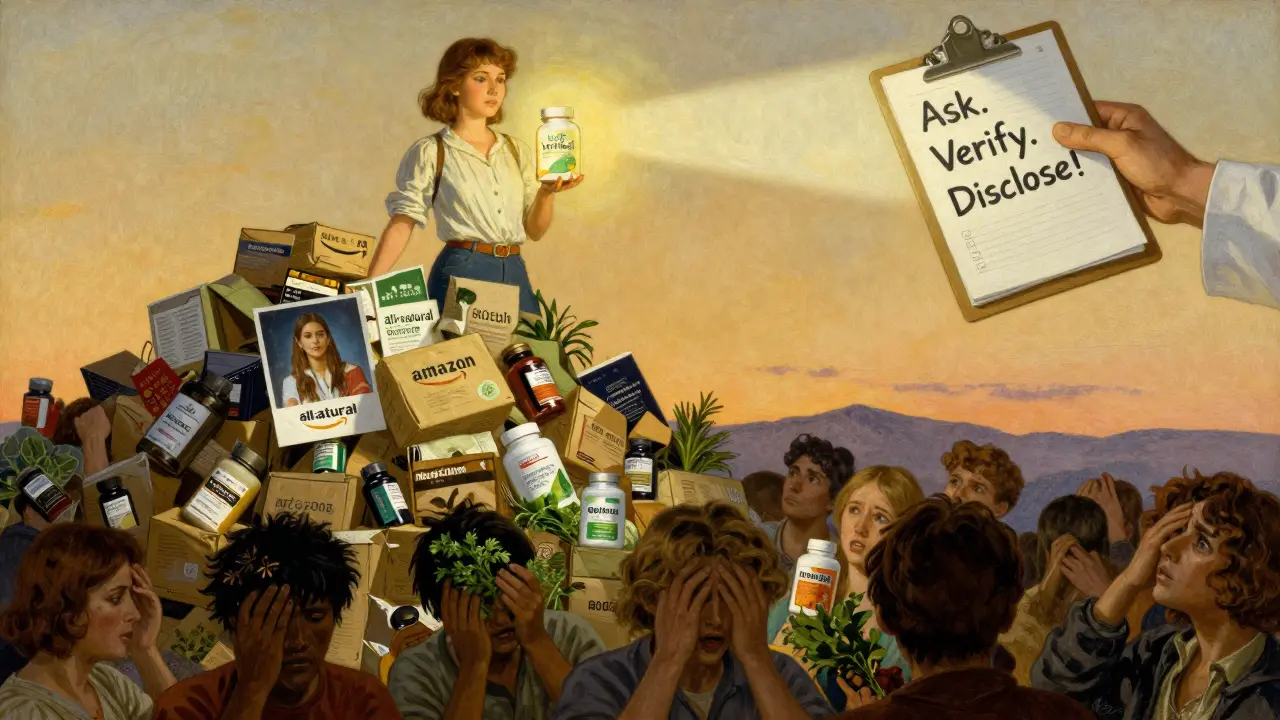
The Real Answer: It’s Not About Natural or Synthetic
The question isn’t whether natural products are safer than pharmaceuticals. It’s whether you understand what you’re taking-and how it interacts with everything else. Pharmaceuticals have risks. So do supplements. The difference is transparency. Prescription drugs come with detailed warnings. Supplements? Often, the only warning is a tiny disclaimer on the back: "This product is not intended to diagnose, treat, cure, or prevent any disease." If you’re taking a prescription drug, don’t assume a supplement is safe just because it’s "natural." Ask your doctor. Ask your pharmacist. Bring your bottles with you to appointments. Look for third-party verification. Products with the USP Verified Mark have been tested for purity, potency, and contamination. That’s not a guarantee of safety-but it’s a lot better than nothing. And if you’re thinking about skipping your medication to try a "natural alternative?" Don’t. That’s not bravery. It’s dangerous.What You Should Do Right Now
- Make a list of every supplement, herb, vitamin, and tea you take-even if you think it’s "harmless."
- Take that list to your doctor or pharmacist. Ask: "Could any of these interact with my medications?"
- Stop taking anything that doesn’t have clear labeling or third-party testing.
- Don’t trust Amazon reviews. Don’t trust influencers. Trust science.
- Use the NIH Office of Dietary Supplements website for evidence-based info-not marketing sites.
Bottom Line
Natural doesn’t mean safe. Synthetic doesn’t mean evil. What matters is knowledge. Control. Transparency. And honesty-with yourself and your healthcare providers. The safest choice isn’t always the pill. But it’s never the assumption that "it’s just natural."Are herbal supplements regulated like prescription drugs?
No. Herbal supplements are classified as dietary supplements under U.S. law, not medications. That means they don’t need FDA approval before being sold. Manufacturers aren’t required to prove they’re safe, effective, or free from contaminants. Prescription drugs, on the other hand, must pass rigorous clinical trials, undergo factory inspections, and be monitored for side effects after release.
Can natural supplements interfere with my prescription medications?
Yes, and it’s more common than most people realize. St. John’s wort can make birth control, antidepressants, and blood thinners less effective. Garlic, ginkgo, and ginger can increase bleeding risk when taken with aspirin or warfarin. Kava may interact with sedatives and cause liver damage. Even common vitamins like vitamin K can interfere with blood thinners. Always check with your doctor before starting any new supplement.
Why do so many people believe natural products are safer?
It’s a psychological bias. People associate "natural" with purity, tradition, and safety-and "synthetic" with chemicals, corporations, and danger. But nature produces toxins, too: poison ivy, arsenic, and deadly mushrooms are all natural. The idea that nature is inherently good is a myth, not science. Studies show that even healthcare professionals sometimes fall for this bias, which makes patient education even harder.
How can I tell if a supplement is trustworthy?
Look for the USP Verified Mark on the label. This means an independent lab tested the product for purity, potency, and whether it contains what’s listed on the label. Other trusted seals include NSF International and ConsumerLab.com. Avoid products with vague claims like "all-natural," "pure," or "traditional formula"-those terms have no legal meaning. Also, check if the manufacturer has a phone number or website you can contact. Reputable companies are transparent.
Should I stop taking supplements before surgery?
Yes. Many supplements-including fish oil, vitamin E, ginkgo, garlic, and ginger-can increase bleeding risk during surgery. Others may interfere with anesthesia or affect blood pressure. Most surgeons recommend stopping all supplements at least one to two weeks before any procedure. Always tell your surgical team everything you’re taking, even if you think it’s "just a vitamin."
Are there any natural products that are proven safe and effective?
Some are. For example, melatonin can help with jet lag and sleep onset in certain people. Folic acid reduces birth defects in pregnant women. Vitamin D helps with bone health in those with low levels. But these are exceptions. Most herbal supplements-like echinacea for colds or ginkgo for memory-have been tested in large studies and found ineffective. The fact that something is natural doesn’t make it useful. Always check science, not marketing.
Why don’t more people report bad reactions to supplements?
Most people don’t connect their symptoms to a supplement. If you feel nauseous after taking turmeric, you might blame it on food or stress. Doctors rarely ask about supplements during checkups. And even when they do, patients often forget or think it’s not important. The FDA’s reporting system for supplements is underused because the public doesn’t know it exists-or doesn’t believe it matters. This creates a dangerous blind spot.
Manan Pandya
December 29, 2025 AT 23:33It’s scary how many people think "natural" means harmless. I’ve seen friends take St. John’s wort while on SSRIs and wonder why they’re suddenly anxious or dizzy. No one tells them it’s the supplement. Doctors don’t ask. Pharmacies don’t warn. It’s a systemic blind spot.
And the labeling? Absolute chaos. One bottle says "pure ginseng"-next thing you know, it’s got caffeine and synthetic stimulants. I’d trust a pharmacy prescription over 90% of what’s on Amazon shelves any day.
Knowledge isn’t elitist. It’s survival.
Nisha Marwaha
December 30, 2025 AT 15:49The regulatory asymmetry between pharmaceuticals and dietary supplements is a textbook case of policy failure masked as consumer freedom. Under DSHEA, the burden of proof for harm is placed on the FDA post-market-a reactive, underfunded, and legally constrained framework.
Contrast this with the pre-market rigor of the New Drug Application (NDA) process: pharmacokinetics, toxicology, Phase I-III trials, CMC validation, and post-marketing Phase IV surveillance. Supplements bypass all of it. The result? A pharmacovigilance vacuum.
Moreover, adulteration isn’t anecdotal-it’s epidemiological. Studies using LC-MS/MS confirm clandestine pharmaceutical analogs in "herbal" weight-loss and sexual enhancement products. This isn’t misinformation. It’s public health negligence.
Paige Shipe
December 31, 2025 AT 20:31Look, I get it. People want to feel like they’re in control of their health. But you can’t just swap your blood pressure med for some tea you bought off a guy on Instagram. I had a neighbor who stopped her statin because "turmeric is better." She had a heart attack at 58.
And don’t even get me started on the "clean eating" influencers. They’re not doctors. They’re not scientists. They’re just people with good lighting and a Patreon.
Stop romanticizing nature. Poison ivy is natural. Botulism is natural. The fact that something grows in the ground doesn’t make it medicine.
Nicole K.
December 31, 2025 AT 23:04It’s disgusting how people risk their lives for some fancy vitamin bottle. You think your body needs more "natural" stuff? Your body knows what it needs. If you’re taking more than a daily multivitamin, you’re probably just wasting money-and maybe poisoning yourself.
And don’t say "it’s my choice." Your choice affects your family, your insurance, your doctor, your hospital. You don’t get to play Russian roulette and expect everyone else to clean up the mess.
Amy Cannon
January 1, 2026 AT 04:10It is, perhaps, a profound irony that in a society that so fervently champions individual autonomy and personal freedom, we simultaneously permit the unregulated proliferation of substances whose pharmacological profiles are not merely unknown, but actively obscured by opaque labeling, misleading marketing, and a complete absence of standardized dosing protocols.
When one ingests a product labeled "Ashwagandha Root Extract 500mg," one is, in effect, participating in a blind clinical trial-without informed consent, without oversight, and without recourse. The FDA’s inability to mandate pre-market efficacy or purity testing is not a feature of the system-it is its fundamental flaw.
And yet, we are told to trust the market. To trust the brand. To trust the influencer. To trust the testimonial. This is not consumer empowerment. This is consumer exploitation dressed in the garb of wellness.
Himanshu Singh
January 2, 2026 AT 17:52Man, I used to take all kinds of herbs for energy and sleep. Thought they were safe. Then I got a weird rash and my heart started racing. Turned out the "green tea extract" had hidden caffeine and some weird stimulant. Scared the crap outta me.
Now I only take stuff with USP on it. And I tell my doc everything-even the turmeric. He laughs but he’s glad I told him.
Don’t be like me. Ask questions. Don’t guess.
Jasmine Yule
January 4, 2026 AT 01:08I used to be one of those people who thought natural = better. I took kava for anxiety. Thought it was harmless. Then I read the liver damage reports. I stopped. I felt ashamed.
But I also felt alone. No one talks about this. No one says, "Hey, your chamomile tea might mess with your antidepressants."
We need to stop shaming people for trying to heal themselves. We need to give them real info. Not fear. Not guilt. Just facts.
And yes-I still take melatonin. But I bought it from a pharmacy. With USP. And I told my doctor. Because I’m learning.
Lisa Dore
January 4, 2026 AT 11:45I’m a nurse. I’ve seen people come in with liver failure because they took "natural detox teas" with senna and aloe. They didn’t know it was a laxative. They thought it was "cleansing." I’ve seen diabetics stop their metformin because a YouTube guy said cinnamon "cures diabetes." I’ve seen grandmas on blood thinners take ginkgo because it "improves memory." It’s heartbreaking. Not because they’re dumb. Because they’re trusting. And the system lets them down.
We need more education. Not more judgment. More clear labels. More doctors who ask about supplements. More pharmacists who actually talk to patients.
And yes-I still use chamomile tea. But I don’t mix it with my anxiety meds. And I tell my patients to do the same.
Sharleen Luciano
January 4, 2026 AT 18:39It’s frankly pathetic how the public confuses tradition with efficacy, folklore with pharmacology, and marketing with science. The notion that ancient remedies are somehow inherently superior to modern pharmaceuticals is not just incorrect-it’s dangerously romanticized.
Let us not forget that mercury was once a "natural" cure for syphilis. Opium was a "gentle" sedative. Bloodletting was "holistic." The fact that we still tolerate this level of regulatory negligence in the supplement industry is a testament not to consumer wisdom, but to collective intellectual laziness.
If you’re going to ingest a substance with pharmacological activity, it must be held to the same standard as every other drug. Period.
And if you can’t afford a USP-certified product? Then you shouldn’t be taking it at all. Your health isn’t a bargain bin.