
Medication Safety Check Tool
Check Your Medication Safety
How many medications do you take? This tool helps identify potential risks.
Your Medication Safety Report
Based on your medications, your risk level is:
You should consider:
Why Your Annual Medication Review Might Be the Most Important Appointment You Skip
Most people think their doctor handles all their medication questions. But here’s the truth: pharmacists are the real experts when it comes to how your pills interact, what side effects you might not notice, and which ones you can safely stop taking. Every year, over 1.5 million Americans end up in the hospital because of medication problems - many of them preventable. And the biggest risk? Taking too many drugs at once.
If you’re on four or more prescription medications, especially if you’re over 65, you’re in the high-risk group. That’s not because you’re doing anything wrong - it’s because chronic conditions pile up with age. High blood pressure, diabetes, arthritis, cholesterol - each one adds another pill to your routine. But here’s the problem: no single doctor is looking at the whole picture. That’s where your pharmacist comes in.
What Happens During an Annual Medication Review
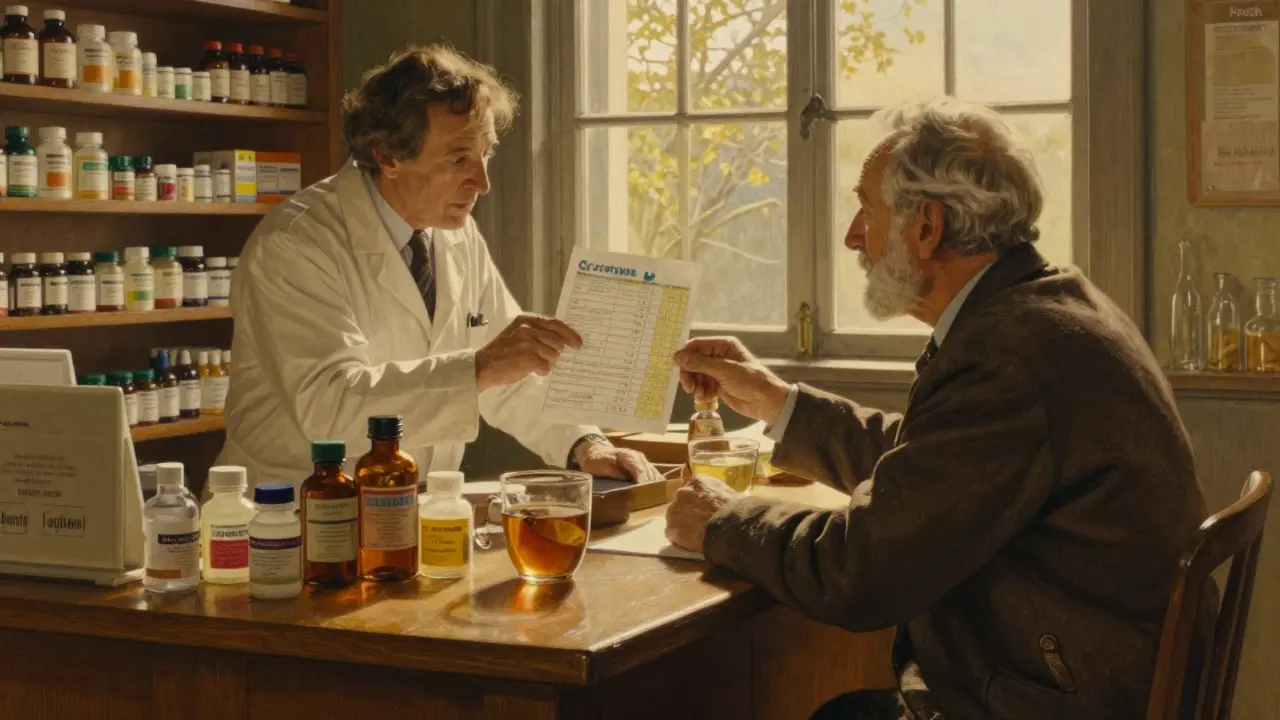
An Annual Medication Review isn’t just a quick chat. It’s a 30-minute deep dive into every pill, patch, vitamin, and herbal supplement you take - even the ones you think don’t matter. Your pharmacist doesn’t just check if you’re taking them. They ask: Why are you taking this? Is it still helping? Could it be hurting you?
Here’s how it works:
- Gather everything: Bring every medication in its original bottle - prescriptions, over-the-counter painkillers, sleep aids, fish oil, ginseng, magnesium, even that daily herbal tea you swear is harmless. Most people forget half of what they take. One study found nearly half of patients leave out supplements during doctor visits.
- Assess the whole list: Your pharmacist checks for duplicates (yes, you might be taking two pills for the same thing), dangerous interactions, and doses that are too high or too low. They look at how your body changes with age - kidneys and liver don’t process drugs the same way at 70 as they did at 50.
- Make a plan: Together, you decide what to keep, what to cut, what to change. Maybe your nighttime sleep aid is causing morning dizziness. Maybe that high-dose calcium supplement isn’t needed anymore. Maybe you can switch from a pill that causes nausea to one that doesn’t.
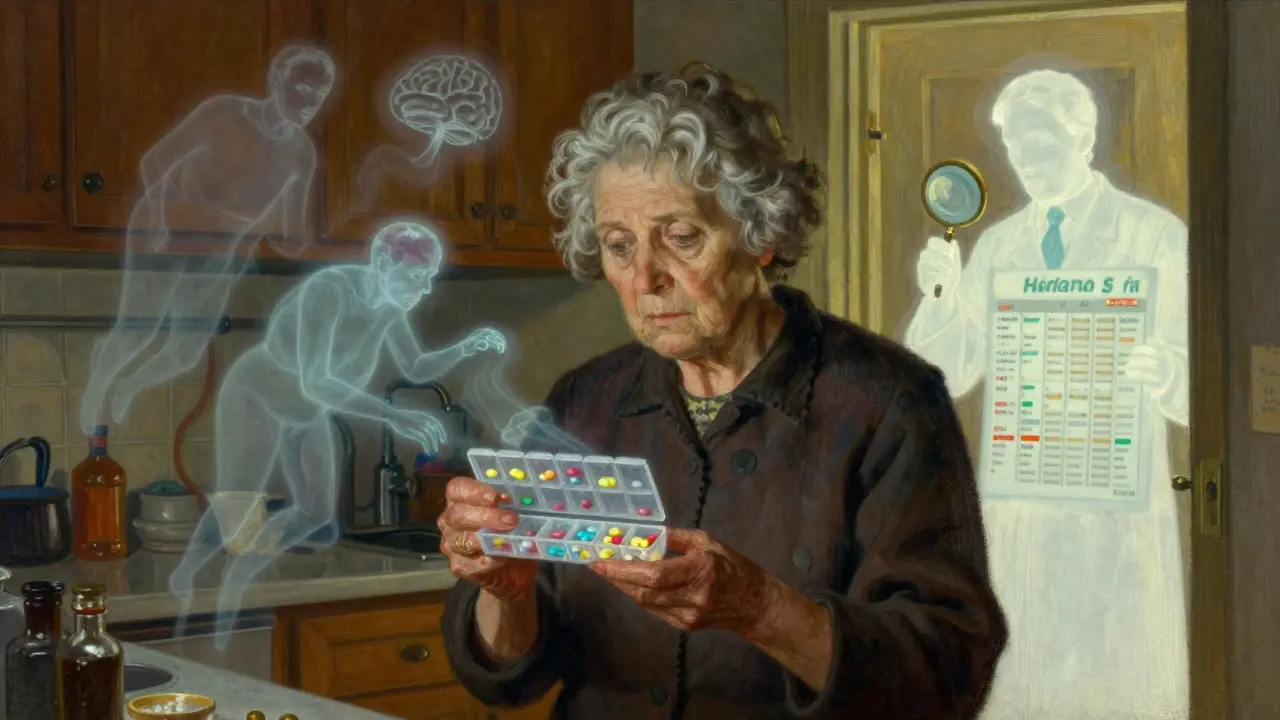
This isn’t just theory. Real patients have walked out of these reviews with fewer pills, better sleep, less confusion, and no more unexplained falls. One woman thought her memory lapses were just aging - until her pharmacist spotted that her blood pressure drug was causing brain fog. Stopping it fixed everything.
Why Pharmacists Are Better at This Than Doctors
Doctors are amazing at diagnosing illness. But they see you for 10 minutes. Pharmacists? They see your entire medication history - every refill, every interaction, every side effect report. They don’t just know what a drug does. They know how it behaves when mixed with others, how it affects older bodies, and how to make it simpler.
Pharmacists are trained to spot what others miss. For example:
- A patient taking three different drugs for acid reflux - all with the same active ingredient. Redundant. Costly. Risky.
- An elderly man on a blood thinner who started taking a new herbal supplement. The supplement made his blood too thin - he nearly bled internally.
- A woman on antidepressants who was also taking an OTC cold medicine. The combination caused dangerous spikes in blood pressure.
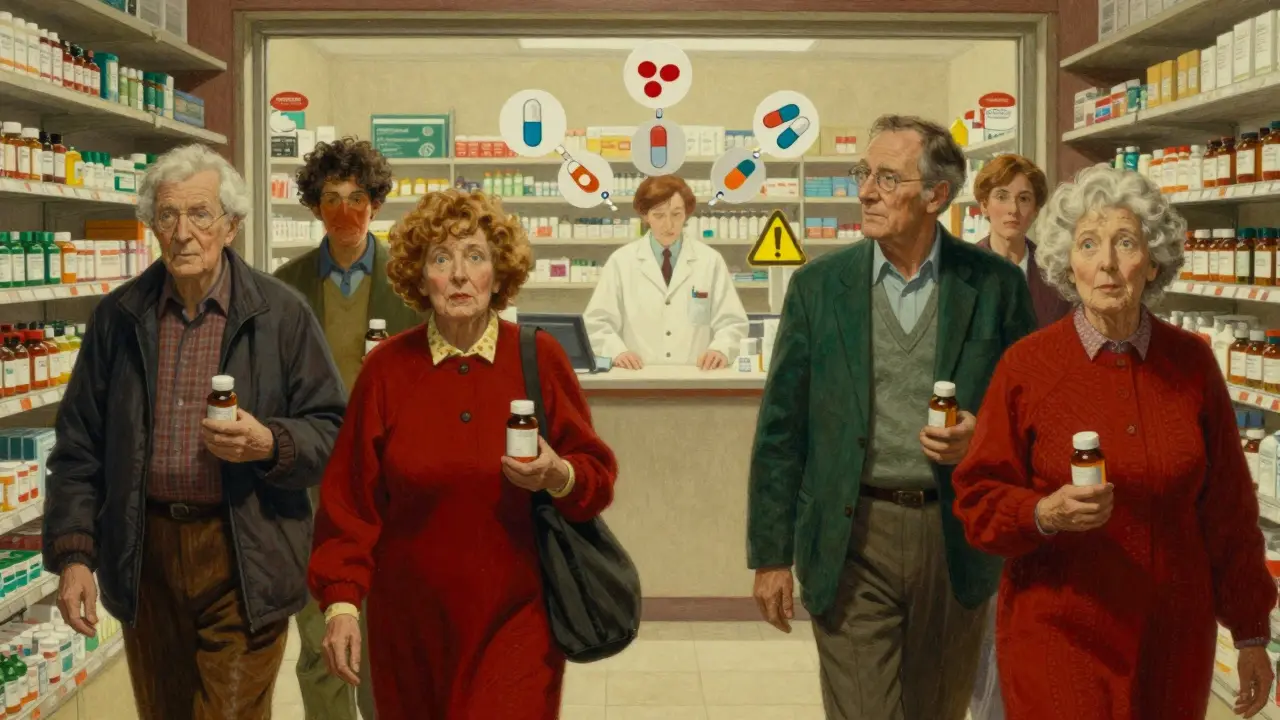
Doctors don’t have time to catch these. Pharmacists live in this world. And they’re everywhere - 90% of Americans live within five miles of a pharmacy. You don’t need an appointment. Walk in. Bring your meds. Ask for a review.
Who Benefits the Most - and Who Doesn’t
This isn’t for everyone. But if you fit any of these, you’re a perfect candidate:
- You take five or more medications daily
- You’ve had a recent hospital stay or ER visit related to meds
- You’ve noticed new side effects - dizziness, confusion, fatigue, nausea, falls
- You’re 65 or older
- You take supplements or OTC drugs regularly
- You’ve had multiple doctors prescribing for you
On the flip side, if you’re healthy, take one or two meds, and feel fine - you might not need it yet. But even then, a one-time review can give you peace of mind.
People with severe dementia or cognitive decline can’t fully participate - and that’s a problem. If you’re helping a loved one, go with them. Bring the list. Ask the questions they can’t.
What to Bring - And What to Say
Preparation makes all the difference. Don’t rely on memory. Write it down. Bring:
- All prescription bottles (even empty ones)
- All OTC meds - Tylenol, ibuprofen, allergy pills, antacids
- Vitamins, minerals, and supplements - even “natural” ones
- Herbal teas, tinctures, or remedies
- A list of symptoms you’ve noticed - “I feel tired after lunch,” “My legs shake,” “I can’t remember why I walked into a room”
And say these things out loud:
- “I’ve been having trouble remembering to take my pills.”
- “I think this medicine is making me dizzy.”
- “I’m not sure why I’m still taking this - my doctor said I could stop, but I never did.”
- “I’m worried about how many pills I take.”
There’s no judgment. Pharmacists hear this every day. The more honest you are, the better they can help.
What Comes After the Review
The review doesn’t end when you walk out. A good pharmacist will:
- Give you a written summary of what was discussed
- Send a report to your doctor with recommendations
- Help you set up blister packs or pill organizers if you need them
- Schedule a follow-up in 3-6 months if changes were made
Some pharmacies even sync your refills so everything comes in on the same day - no more juggling 10 different pickup times. Others use digital tools that alert you if a new prescription might clash with what you’re already taking.
And here’s the kicker: if you’re on Medicare Part D, this review is covered - no extra cost. Many private insurers cover it too. Ask your pharmacist. If they say no, ask again. It’s your right.
The Hidden Cost of Ignoring Your Meds
Every year, medication errors cost the U.S. healthcare system $177 billion. That’s not just money - it’s lives. About 20% of all adverse drug events lead to hospitalization. And most of them happen because someone took the wrong mix, the wrong dose, or kept a drug long after it stopped helping.
One study found that only half of people take their long-term meds as prescribed. Why? Too many pills. Too confusing. Too expensive. Too scary. An annual review fixes all of that. It simplifies. It clarifies. It protects.
Think of it like a car tune-up. You don’t wait until the engine explodes to check the oil. You don’t wait until you fall and break your hip to ask if your meds are causing dizziness. You check before it’s too late.
What’s Changing - And What’s Coming
Pharmacists aren’t just dispensing pills anymore. They’re becoming part of your care team. Telehealth reviews are growing - you can do one from your kitchen. AI tools are starting to flag risky combinations before you even get the prescription. Pharmacies are linking directly to electronic health records so your doctor sees what the pharmacist recommends.
And the need is only getting bigger. By 2030, every baby boomer will be over 65. Polypharmacy - taking four or more meds - already affects 40% of older adults. Without action, hospital stays will keep rising.
But there’s hope. The more people get their annual review, the more pharmacies will prioritize it. The more doctors will trust pharmacists. The safer we all become.
Don’t Wait for a Crisis to Act
You don’t need to be sick to get a medication review. You just need to be alive - and taking pills. If you’ve been putting it off because “I feel fine,” think again. Side effects don’t always come with a siren. Sometimes they come as fatigue, forgetfulness, or a fall that “just happened.”
Take the 30 minutes. Bring your meds. Ask the questions. Let your pharmacist do what they were trained for - keep you safe. This isn’t a luxury. It’s the most practical, proven way to reduce harm from the very drugs meant to help you.
Next time you’re at the pharmacy, don’t just pick up your script. Ask for the review. Your future self will thank you.
Adarsh Uttral
January 31, 2026 AT 03:09April Allen
February 1, 2026 AT 21:03Sheila Garfield
February 2, 2026 AT 17:45Shawn Peck
February 4, 2026 AT 06:08Holly Robin
February 5, 2026 AT 16:23Shubham Dixit
February 6, 2026 AT 11:53KATHRYN JOHNSON
February 6, 2026 AT 21:02Jodi Olson
February 7, 2026 AT 15:48Carolyn Whitehead
February 9, 2026 AT 09:31