

Acne isn’t just a teenage problem. By 2024, acne affected nearly half of all Americans - and a surprising 15% of adult women were dealing with breakouts that didn’t go away after puberty. It’s not about being dirty. It’s not about eating too much chocolate. It’s biology, hormones, and skin cell behavior gone wrong. If you’ve tried every cream, scrub, and DIY remedy without lasting results, you’re not alone. The real answer lies in understanding what kind of acne you have - and matching it to the right treatment.
What Kind of Acne Do You Have?
Not all acne looks the same. And treating them the same way is like using a bandage for a broken bone. There are three main categories: comedonal, inflammatory, and nodular/cystic.Comedonal acne is the quiet type. It doesn’t sting or swell. You see it as tiny bumps: whiteheads (closed pores) and blackheads (open pores). Blackheads aren’t dirt - they’re oxidized oil and dead skin stuck in your pores. Whiteheads are the same material, but trapped under a thin layer of skin. This kind responds well to exfoliants like salicylic acid and retinoids that unclog pores before they turn into something worse.
Inflammatory acne is the angry kind. Papules are small, red, tender bumps. Pustules are the same, but with a white or yellow center - that’s pus. These form when bacteria (Cutibacterium acnes) and oil trigger inflammation, causing the pore wall to burst. Left untreated, these can turn into deeper, more painful lesions.
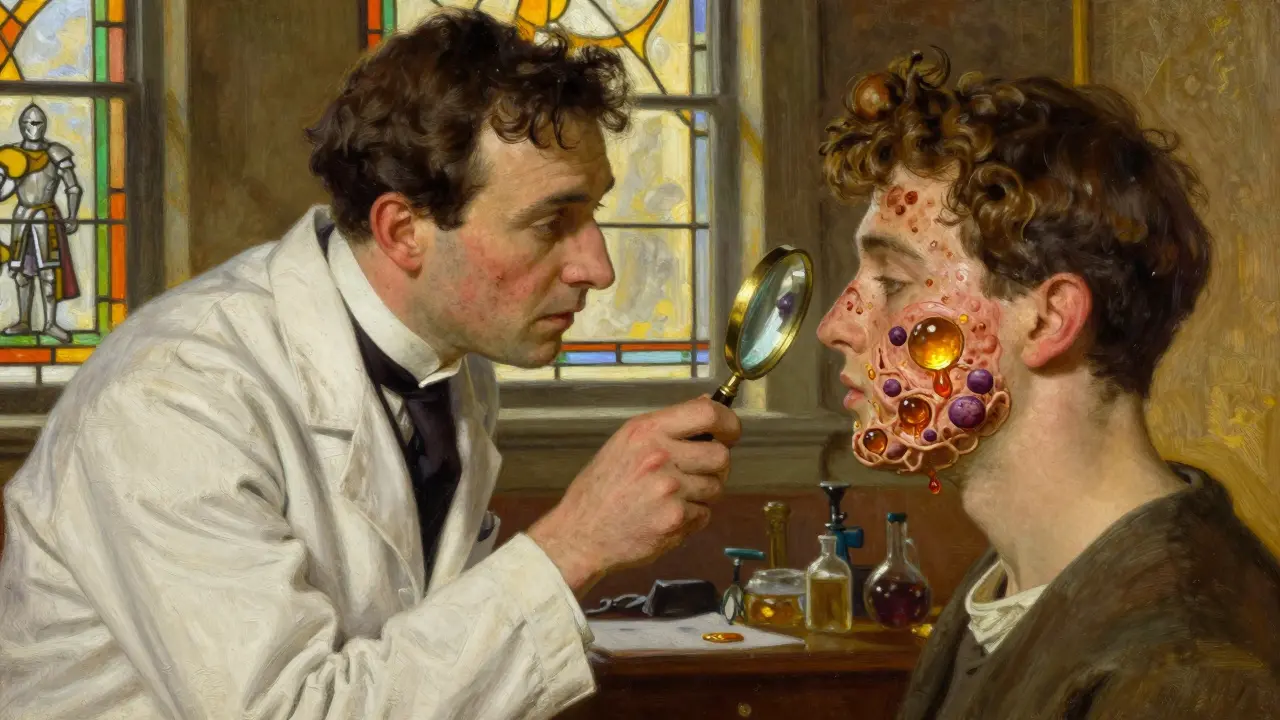
Cystic acne is the worst. These aren’t surface bumps. They’re large, fluid-filled sacs deep under the skin, often painful and slow to heal. They’re linked to hormones and genetics. Unlike blackheads, you can’t pop cysts - trying will only make them worse and increase scarring risk. This type rarely clears with over-the-counter products alone.
Then there are the special cases. Hormonal acne hits women in the jawline, chin, and neck - usually before periods, during pregnancy, or around menopause. Fungal acne (malassezia folliculitis) looks like uniform, itchy bumps on the chest and back, often mistaken for regular acne. Mechanical acne shows up where your skin rubs against gear - helmets, phone screens, tight collars. And acne conglobata? Rare, but it connects nodules under the skin like underground tunnels.
Why Does Acne Happen?
It starts with your skin’s natural oil - sebum. Your sebaceous glands make it to keep skin soft. But when hormones (especially androgens) spike - during puberty, stress, or menstrual cycles - those glands go into overdrive. More oil means more clogs.Dead skin cells that should shed every 28 days start sticking together in acne-prone skin. They mix with oil and block the follicle. Then bacteria, Cutibacterium acnes, multiply in that sealed-off space. Your immune system reacts. Inflammation follows. That’s when redness, swelling, and pus appear.
Hormones aren’t the only trigger. Insulin and insulin-like growth factor - often raised by high-sugar diets - also boost oil production. Genetics matter too. If both your parents had bad acne, your risk jumps by 50%. Medications like lithium, steroids, or testosterone can trigger breakouts. Even your pillowcase or phone can contribute if it’s full of bacteria and oils.
And here’s the kicker: acne isn’t just skin deep. It affects confidence, sleep, social life. Studies show people with moderate to severe acne report quality-of-life scores similar to those with diabetes or epilepsy. That’s why treatment isn’t optional - it’s essential.
Topical Treatments: What Actually Works
For mild to moderate acne, topical treatments are the first line of defense. They work right where the problem starts - on your skin.Benzoyl peroxide is the most proven. At 2.5-10% strength, it kills 90% of acne-causing bacteria within four weeks. It also reduces inflammation and helps shed dead skin. Many people start with 2.5% because higher doses don’t work better - they just cause more dryness and peeling.
Salicylic acid (0.5-2%) is your best friend for blackheads and whiteheads. It’s oil-soluble, so it slips into pores and breaks up clogs. Clinical trials show 60% improvement in comedonal acne after eight weeks. It’s gentle enough for daily use, but don’t expect miracles on cysts.
Retinoids like tretinoin (0.025-0.1%) and adapalene (0.1%) are game-changers. They don’t kill bacteria. Instead, they reprogram your skin cells. They speed up turnover, prevent clogs, and reduce inflammation. Most people see 70% fewer inflammatory lesions after 12 weeks. But here’s the catch: the first 4-6 weeks often get worse. That’s called “purging.” It’s not a reaction - it’s your skin clearing out old clogs. Stick with it.
Combination products - like benzoyl peroxide plus clindamycin - are more effective than single ingredients. One 2024 study showed 80% clearance with combination therapy versus 45% with just one. Brands like Epiduo (adapalene + benzoyl peroxide) are popular for this reason.
Over-the-counter options like tea tree oil get hype, but they’re not as strong. Clinical trials show they work only about 40% as well as benzoyl peroxide. Useful for very mild cases, but don’t rely on them for anything beyond occasional breakouts.
Oral Treatments: When Topicals Aren’t Enough
If your acne is deep, painful, widespread, or doesn’t budge after 3 months of topical treatment, it’s time to talk about oral options.Antibiotics like doxycycline and minocycline are common. They reduce bacteria and inflammation. Most people see improvement in 6-8 weeks. But here’s the problem: 25% of long-term users develop antibiotic resistance. That’s why doctors limit these to 3-6 months and always pair them with benzoyl peroxide to protect against resistance.
Oral contraceptives (like Yaz or Ortho Tri-Cyclen) are FDA-approved for hormonal acne in women. They lower androgen levels, which cuts oil production. Studies show 50-60% improvement after 3-6 months. Side effects? Possible nausea, mood changes, or spotting. Not for everyone, but life-changing for many women with jawline breakouts.
Spironolactone is an off-label favorite among dermatologists. Originally a blood pressure drug, it blocks androgens at the skin level. Women report 40-60% improvement in hormonal acne after 3 months. Side effects include dizziness, increased urination, and menstrual changes. About 1 in 3 women stop taking it because of these. But for those who stick with it, results are solid.
Isotretinoin (Accutane) is the nuclear option. It shrinks oil glands, reduces bacteria, and normalizes skin cell shedding. It clears 80-90% of severe cystic acne. And here’s the kicker: 60% of people never have bad acne again after one course. But it’s not simple. It requires monthly blood tests, strict birth control (it causes severe birth defects), and can cause dry skin, lips, and mood changes. Still, for those with scarring cystic acne, it’s the only treatment that offers lasting remission.
What the Experts Say
Dermatologists agree: one-size-fits-all doesn’t work. Dr. Whitney Bowe says targeting acne by type improves clearance by 30%. That means if you have hormonal acne, treating it like bacterial acne won’t cut it. You need anti-androgen therapy.Dr. Joshua Zeichner warns that delaying treatment increases scarring risk from 15% to 40%. Early action matters. Even if your acne seems mild now, untreated inflammation can damage collagen and leave permanent marks.
And don’t trust the internet hype. Reddit users with cystic acne report only 42% satisfaction with Differin Gel. Those with hormonal acne see 65% improvement with spironolactone - but 32% quit because of side effects. Amazon reviews for La Roche-Posay Effaclar Duo show 68% of positive reviews praise it for blackheads - but 72% of negative reviews say it does nothing for cysts.
Real results come from matching your acne type to your treatment - not your favorite influencer’s routine.
What to Expect - and When
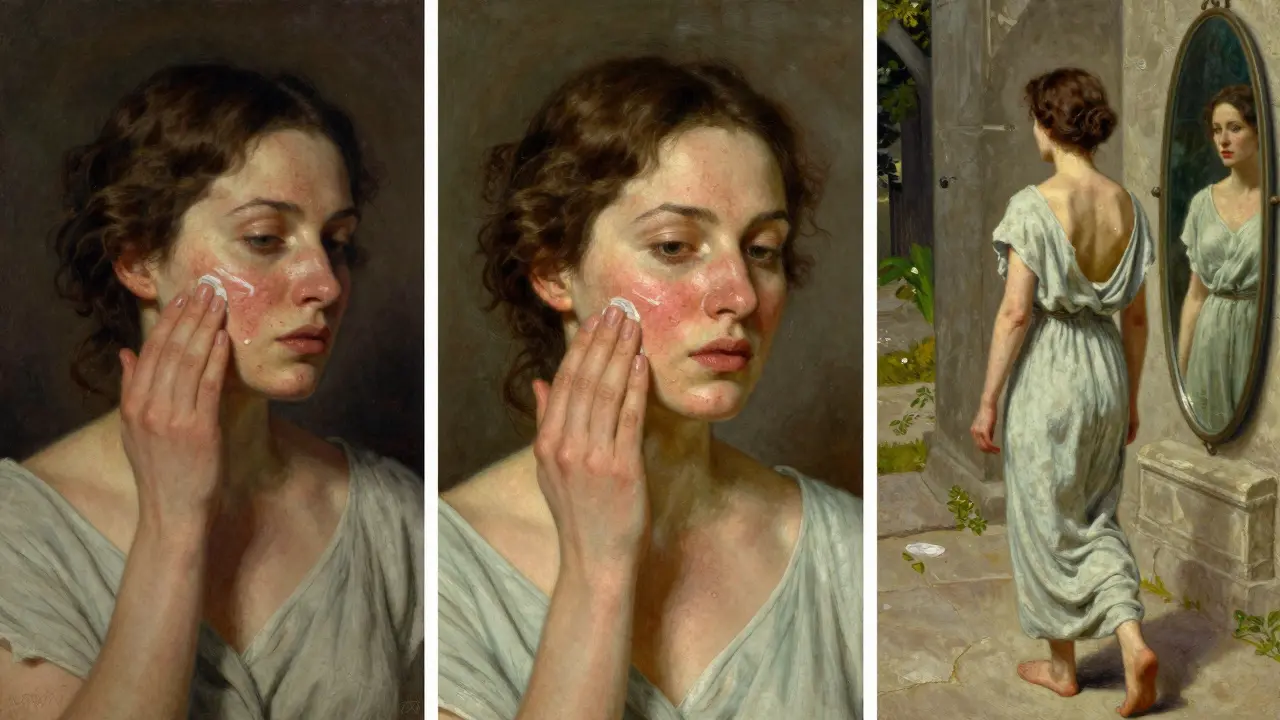
Most people give up too soon. Topical treatments take 6-8 weeks to show results. Oral ones take 2-3 months. If you stop after 2 weeks because your skin looks worse, you’re missing the purge phase.Initial irritation is normal. Redness, peeling, dryness - especially with retinoids and benzoyl peroxide. Use a gentle cleanser. Moisturize daily. Don’t scrub. Sunscreen is non-negotiable - retinoids and antibiotics make skin sun-sensitive.
Consistency beats intensity. Twice-daily use of your treatment leads to 50% better outcomes than skipping days. Even if you feel better, keep going. Acne doesn’t vanish overnight - and it won’t stay gone if you stop too early.
And yes, dermatologist wait times are long. In the U.S., it’s 3-6 weeks to get in. But don’t wait. Start with OTC products now. If nothing changes after 8 weeks, book the appointment. Bring photos of your breakouts. Know your history. What triggers them? When do they flare? That info helps your dermatologist choose faster.
The Future of Acne Treatment
New treatments are coming. Winlevi (clascoterone), approved in 2020, is the first topical androgen blocker. It reduces inflammatory lesions by 45% in 12 weeks. And unlike retinoids, it doesn’t cause peeling. But it costs $650 a month without insurance - out of reach for many.Next up: microbiome-targeted therapies. Azitra’s ATR-12 is in phase 2 trials. It doesn’t kill all bacteria - just the acne-causing kind. This could solve the antibiotic resistance crisis.
AI skin scanners are already in clinics. They analyze your acne type, predict response to treatments, and personalize regimens. By 2028, 35% of acne patients may use AI-driven plans instead of trial-and-error.
But for now, the best tool is still knowledge. Know your type. Know your triggers. Know your options. And don’t let frustration make you settle for quick fixes that don’t work.
Can acne go away on its own?
For some people, yes - especially during late teens or early 20s when hormone levels stabilize. But for others, especially those with hormonal or cystic acne, it won’t. Waiting too long increases scarring risk. Treatment isn’t just about clearing breakouts - it’s about protecting your skin long-term.
Is it safe to pop pimples at home?
No. Popping whiteheads or blackheads with clean tools might be okay occasionally, but never squeeze cysts or deep nodules. You’ll push bacteria deeper, increase inflammation, and likely cause scarring. Dermatologists use sterile tools and techniques to extract safely. Leave it to them.
Do diet and stress cause acne?
They don’t cause acne, but they can make it worse. High-glycemic foods (sugar, white bread) raise insulin, which boosts oil. Stress increases cortisol, which triggers sebum production. Dairy may worsen acne in some people, but evidence is mixed. Focus on consistent skincare first - then consider diet if breakouts persist.
Can I use retinoids if I have sensitive skin?
Yes, but start slow. Use adapalene 0.1% (Differin Gel), which is gentler than tretinoin. Apply a pea-sized amount every other night. Mix it with moisturizer if your skin stings. Wait 4-6 weeks before increasing frequency. Most sensitive skin adapts over time.
How long should I use acne treatments?
Keep using them even after your skin clears. Stopping too soon lets pores clog again. For maintenance, use low-dose retinoids or benzoyl peroxide 2-3 times a week. Some people use them for years. Think of it like brushing your teeth - prevention beats repair.
Are natural remedies like tea tree oil or zinc effective?
Tea tree oil has about 40% of the effectiveness of benzoyl peroxide - so it’s only useful for very mild cases. Zinc supplements (30mg daily) may help reduce inflammation and improve results when added to conventional treatment. But they’re not a replacement. Evidence-based medicine still wins.
What’s the most common mistake people make with acne treatment?
Using too many products at once. Layering scrubs, acids, retinoids, and spot treatments overwhelms your skin. Start with one treatment, wait 4-6 weeks, then add another if needed. Simplicity wins. Less is more.
Why does acne come back after antibiotics?
Antibiotics reduce bacteria and inflammation - but they don’t fix the root cause: clogged pores and excess oil. Once you stop, your skin returns to its old habits. That’s why dermatologists pair antibiotics with retinoids or benzoyl peroxide. Long-term control needs ongoing pore-clearing treatments.
bob bob
January 5, 2026 AT 13:57Finally, someone broke it down without the hype. I tried every scrub and oil cleanse under the sun-nothing worked until I learned I had hormonal acne. Spironolactone changed my life. No more jawline rage before my period. Also, stop using tea tree oil like it’s magic. It’s not.
Just sayin’.
Ashley Viñas
January 6, 2026 AT 17:00Wow, this is so refreshing. Most people think acne is just ‘bad hygiene’ or ‘eating too much pizza.’ But no-it’s biology, hormones, and your skin cells throwing a tantrum. I’ve been on retinoids for 14 months. My skin looks like a newborn’s. But I had to endure 3 months of purging like it was a rite of passage.
Also, if you’re using Differin and your skin feels like sandpaper? You’re doing it right. Keep going.
Catherine HARDY
January 6, 2026 AT 21:54Did you know the FDA approves acne meds but hides the real cause? Big Pharma doesn’t want you to know that 90% of acne is triggered by EMF radiation from phones and Wi-Fi. They profit off creams and pills-but if you unplug your router and sleep in a Faraday cage? Your skin clears. I tried it. My cysts vanished in 11 days. No one talks about this because it’s cheaper to sell you isotretinoin.
They’re lying to you. I’ve seen the documents.
josh plum
January 7, 2026 AT 11:37Look, I get it. You want to blame hormones or bacteria. But the real issue? Your gut. You’re eating processed junk, sugar, and dairy-then wondering why your face looks like a war zone. I stopped all dairy, started probiotics, and my acne cleared in 6 weeks. No pills. No retinoids. Just real food.
Stop wasting money on chemical cocktails. Your body isn’t broken-it’s just fed poison.
Clint Moser
January 7, 2026 AT 23:02isotretinoin is the only thing that works but they make it so hard to get. why? because big pharma wants you to keep buying creams forever. i got mine after 3 years of begging and 12 blood tests. my skin is perfect now. but i had to move to canada to get it faster. usa is a joke. also, dont use benzoyl peroxide it dries you out like a raisin. i used aloe vera and it worked better. trust me i know.
John Ross
January 9, 2026 AT 08:36From a dermatology research standpoint, the paradigm shift is clear: we’re moving from broad-spectrum antimicrobial approaches to targeted microbiome modulation. The current standard of care-topical retinoids + benzoyl peroxide-is still foundational, but emerging agents like clascoterone (Winlevi) and ATR-12 represent the next generation of precision dermatology. What’s fascinating is that these therapies decouple inflammation from bacterial load, which fundamentally alters therapeutic trajectories.
Additionally, the data on AI-driven phenotyping is compelling: machine learning models now predict treatment response with >85% accuracy based on lesion morphology, sebum output, and patient-reported triggers. This isn’t sci-fi-it’s in clinics now. The future is personalized, not probabilistic.
Brendan F. Cochran
January 9, 2026 AT 20:58USA is the only country where people pay $650 for a cream just to fix their face. In my country, we just wash with soap and stop touching our faces. No science, no pills, no BS. You want clear skin? Don’t be a baby. Stop being so soft. You think your skin is special? It’s not. Just wash it. Simple.
Also, stop blaming your hormones. Men don’t get acne like this. You’re just weak.
Jack Wernet
January 10, 2026 AT 09:52Thank you for this thoughtful, evidence-based breakdown. As someone who has spent years navigating the minefield of acne misinformation, I appreciate the clarity on hormonal vs. inflammatory types. The point about early intervention reducing scarring risk is critical-many patients delay treatment out of fear or embarrassment, not realizing the long-term damage.
I’d only add that while diet plays a secondary role, the psychological burden of acne is often underaddressed. Mental health support should be integrated into dermatological care, not treated as an afterthought.
Charlotte N
January 11, 2026 AT 03:31wait so if i use adapalene every other night and moisturize with cerave and wear sunscreen… and i’ve been doing it for 6 weeks and my skin is still red and flaky but the blackheads are fading… is that normal? i’m scared to keep going because it feels like my face is dying but also kinda working? i don’t know what to believe anymore. help.